




How do I manage a diverse team of colleagues? How can I get consensus rather than compliance? What makes teams and performance sustainable? These are questions even experienced leaders revisit from time to time.
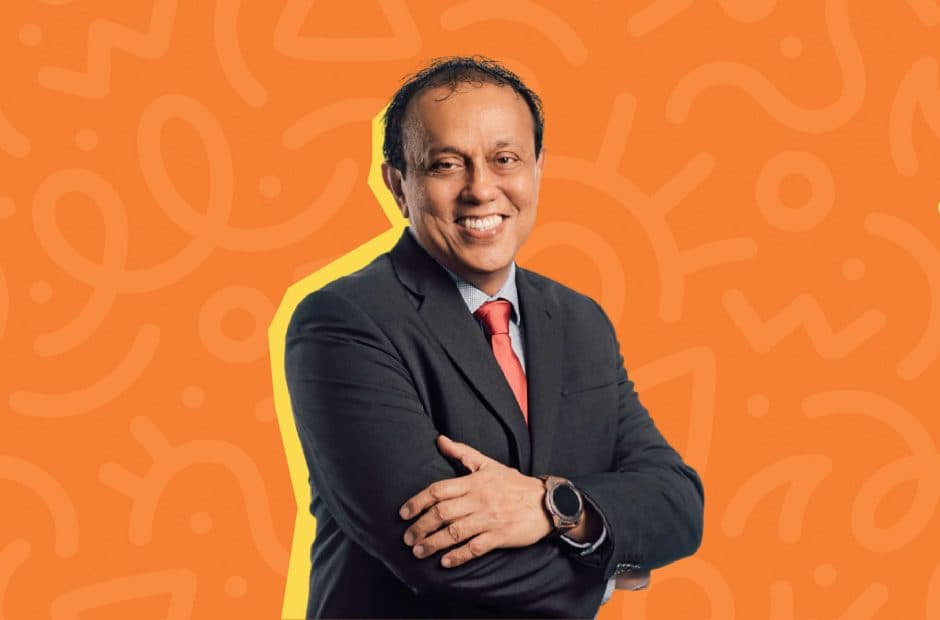
People management is about developing individuals into their best selves at work or in school — something Mr Michael de Silva practised with commitment and distinction across almost four decades as an educator and leader.
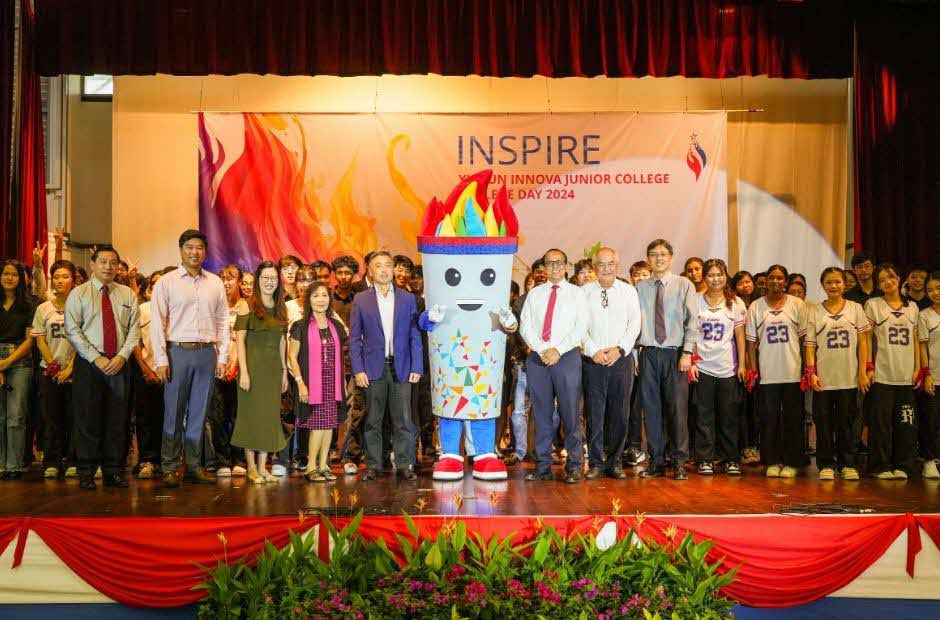
Beyond his roles at MOE HQ as a cluster superintendent and head of the Educational Leadership Development Centre, he served as Principal of Innova Junior College from 2013 until its merger with Yishun Junior College. He then helmed the newly formed Yishun Innova Junior College from 2019 until his retirement last year.
“In schools, many of us spend more time with our colleagues than with our own families. Because so much of our lives is lived in the workplace, people management isn’t a separate leadership function — it is the work. As we teach and support students, we also grow as individuals, and we grow the people around us.”
Drawing on decades of leadership while delivering measurable outcomes for students, he offers field-tested practices that strengthen teams in schools and workplaces alike.
1. Care is the work
On balancing leading with care and with efficiency, Mr de Silva makes a simple assertion: the two are not separate. “They are actually the same work,” he says. If we want good outcomes for students, the people doing the work — our teachers — must be supported, respected, and well. This is not a soft idea. It is simply practical.
“Even if someone takes a very instrumental view and sees teachers as a means to an end, the conclusion is the same: if you rely on a tool to get good results, you make sure that tool is in good condition and sharpened. People are obviously not tools, but the principle still applies.” When teachers feel valued and supported, they do better work. Care is not a distraction from performance; it is what makes performance sustainable.
Leading with heart begins with acknowledging what is already felt. At the start of a new term, he might tell his staff that he, too, wished the holidays were longer — “you know what’s in their hearts, because that’s in your heart too,” he explains. Such small acts of honesty build connection, trust, and emotional safety.
Care does not mean lowering expectations. “In practice, I try to understand the real pressures teachers face and give support or clarity where needed, while still holding clear expectations and timelines.”
Insight: Leaders who care deliberately and consistently create healthier, more motivated, and more resilient teams — proving that care is not separate from performance, but the foundation of it.
2. Anchor the team on purpose and outcomes
Once people feel understood and cared for, they can align meaningfully around the work that truly matters.
In schools, purpose is concrete and widely shared: educating young people well, shaping character, and helping every student thrive. In the Singapore context, most educators already feel a strong connection to this mission. The leader’s task is to make the link between purpose and daily work explicit, so staff see how their efforts advance outcomes for students.
“Anchoring leadership on moral purpose and values, helping staff grow in leadership capacity, linking teacher work back to student outcomes, and encouraging innovation and design thinking — these tend to work,” says Mr de Silva.
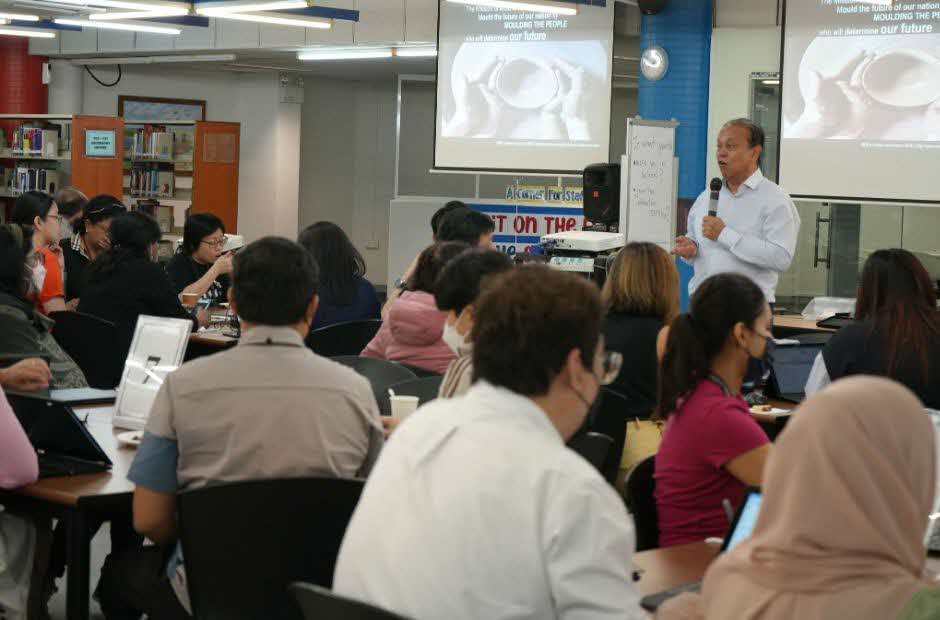
Purpose also carries accountability. Schools are mission-driven, but they are still workplaces with responsibilities and standards. When leaders clarify why the work matters and how each role contributes to student learning or wellbeing, expectations feel coherent rather than imposed.
“You’ve got to make work meaningful,” he adds — not by adding slogans, but by helping people understand the significance of the work already in their hands.
Insight: Organisations stay aligned when leaders make purpose tangible — showing people how their work advances a shared mission and why it deserves their best effort.
3. Set the conditions for safe, honest, and meaningful dialogue.
Leaders often unintentionally shut down creativity when every comment is interpreted as an instruction.
“I have to make clear when something is an idea, or a direction,” says Mr de Silva. “Otherwise, people act on what I say simply because of my rank.”
Psychological safety is essential. Staff must know that half-formed ideas are welcome, that proposing an idea does not mean inheriting the entire workload, and that exploratory thought will not be judged.
“We need to create space for divergent thinking. So give permission to disagree and ask permission to criticise,” he says. These invitations must be genuine and without repercussion.
Teams often withhold bold ideas because they fear they will not be able to justify them later. But that fear belongs much later in the process. If early-stage thinking is policed by imagined scrutiny, valuable ideas disappear before they even surface.
“A lot of leaders go straight to the point, but that preamble — the permission-giving and the facilitation that sets up a real discussion — is actually necessary. Without it, the moment your back is turned, a potentially valuable idea may never see the light of day.”
Insight: Leaders who distinguish exploration from execution create environments where innovation thrives.
4. Recognise that today’s expectations may exceed yesterday’s training.
In Singapore, the work of teaching extends far beyond delivering lessons. Teachers are expected to develop 21st Century Competencies, nurture character and citizenship, support students’ social-emotional growth, and develop young leaders. These expectations are legitimate and important — but they also mean that today’s teacher must hold a far broader skillset than what many were originally trained for.
“We all face this conundrum — the citizens of yesterday teaching the citizens of today how to be citizens tomorrow,” says Mr de Silva. “It’s not about age; anyone can have a skills gap.”
While these demands span the full spectrum of student development, Mr de Silva often uses educational technology as a clear example of how varied skillsets can be managed across a staff team. Some teachers are strong in pedagogy or assessment, others in curriculum innovation or digital fluency. The leader’s work is to recognise both the strengths people bring and the gaps that matter for the outcomes the school is pursuing.
“I form teams with the different expertise needed to bridge those gaps,” he explains. At the college, beginning teachers brought confidence with technology but needed time to deepen their pedagogical judgment and assessment literacy. Teacher leaders had deep classroom expertise but were still developing proficiency with newer digital tools. Colleagues who understood edtech well acted as translators, helping others integrate technology meaningfully into teaching and learning.
When these complementary strengths were brought together, the collective capability far exceeded what any individual could achieve. People did not need to excel at everything; they needed opportunities to learn from one another in intentional, well-designed teams.
Insight: Leaders strengthen organisations by designing peer-learning structures where complementary strengths combine — enabling the whole team to meet 21st-century expectations even when no single individual possesses every skill required.
5. Build a culture — and pathways — where people grow together.
Identifying gaps is only the first step. Sustainable performance requires a culture where growth is expected, encouraged, and embedded in the organisation’s identity.
Schools, by nature, are long-term institutions. Their stability and success depend on educators who continue to grow throughout their careers.
Mr de Silva often quotes a fellow educator from England who joked that teachers are so instinctively nurturing they would start a developmental conversation with anyone — even the tea-lady. The humour underscores a deeper truth: educators are wired to grow people.
“The Singapore philosophy for educational leaders is that leaders grow leaders — and by extension, educators grow educators,” he explains. Schools therefore invest deeply in developing those already in the system rather than relying on ready-made expertise.
Across their careers, teachers experience training, coaching, mentorship, and opportunities for increasing responsibility. Cohort-based programmes, professional networks, and exposure to organisational leadership frameworks strengthen educators not just as teachers, but as leaders of learning.
“We take the time to develop those who truly care for students,” says Mr de Silva. “That nurturing mindset sits deep within our profession.” Development becomes cultural — not merely procedural.
Insight: When growth is deeply embedded into a school’s culture and systems, teams become stronger, more confident, and more resilient — ensuring sustainability across generations of educators.
6. When faced with competing “rights”, stay with the tension long enough for clarity to emerge.
During the merger of two junior colleges, decisions were rarely binary. Heritage or renewal? Stability or change? Belonging or future readiness? Each option held value.
“These decisions required holding two or more ‘rights’ at the same time,” he reflects. Leaders often feel pressure to decide quickly, but premature certainty risks losing something essential.
When shaping the college’s culture, he asked staff what would be best for students — and trusted their professionalism. Their decision honoured both colleges while orienting the new one towards the future. This clarity emerged only because the tension was held long enough for a principled answer to form.
Insight: Leaders build trust by holding competing ideas with patience and integrity until a coherent way forward becomes clear.
7. Leadership is difficult, so be kind to yourself.
People management is often the most complex part of school leadership. “You often have to act without full clarity,” says Mr de Silva. Unlike technical tasks with established procedures, leading people involves emotions, relationships, values, and differing perspectives — all of which evolve in real time. Patterns become clear only in hindsight, yet leaders must still take action in the moment.
The Cynefin framework captures this reality well. In complexity, leaders probe, sense, and respond: they take small, thoughtful steps, observe how people react, and adapt their approach as new insights emerge. “Good intent and steady adjustments are what real leadership looks like,” he reflects. “There have been many times when I felt I could have done better. Leading people is difficult, and you need to be kind to yourself.”
True leadership clarity in people management is not about predicting every outcome or having the perfect response. It is the wisdom to experiment our way forward — to try what is plausible with a team, observe reactions honestly, hold conversations with openness, and respond with courage. Hindsight may give us a tidy explanation for why something worked, but it cannot guide the emotional and relational realities of leading people through uncertainty.
In people leadership, clarity is not the certainty of being right. It is the confidence to take wise action amid incomplete information, to listen closely to what emerges from the team, and to adjust our stance as understanding deepens. Leaders who embrace this stance are less paralysed by the fear of a misstep — and more grounded in the disciplined practice of learning with, and through, their people.
Insight: Leading people is inherently complex. Courage, empathy, and reflection — guided by self-compassion — allow leaders to navigate uncertainty while building trust and clarity in their teams.