



In a Primary 3 English class at Blangah Rise Primary School (BRPS), a single cue from the teacher sets the room in motion. Students swivel their fan-shaped tables to form circles, and the groups huddle over a debate topic to discuss their talking points.
Ten minutes later, the tables are rearranged again, this time into a U-shaped debate arena. One by one, the groups send out their first speakers to make their arguments as the rest lean in to listen intently.
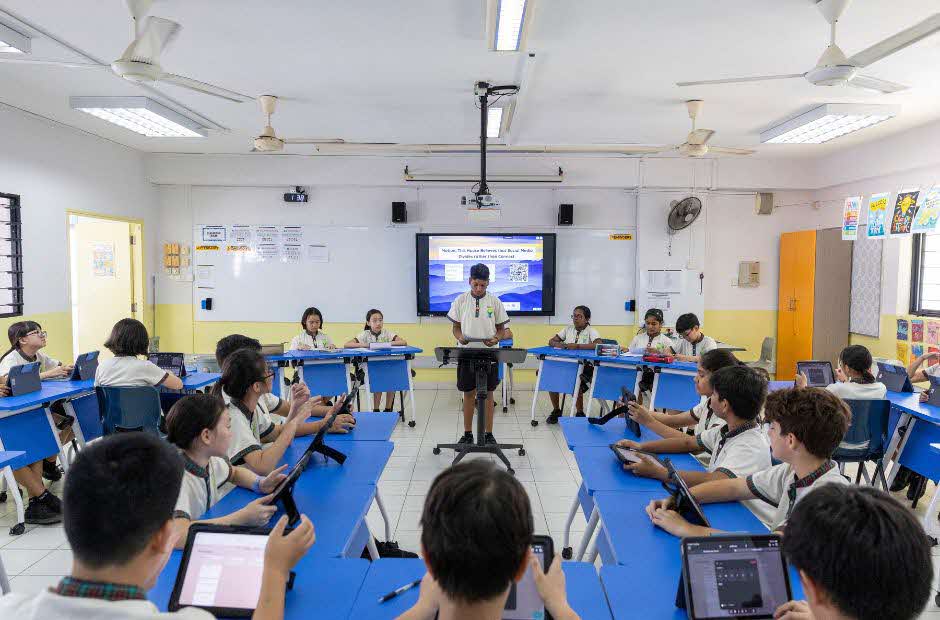
Students arrange differently shaped tables on caster wheels into various layouts to facilitate performance, peer assessment, and collaborative discussions.
“This arrangement makes the experience of a debate feel more authentic,” says Mdm Uuchi Mashaida Virtucio, an English and Social Studies teacher at BRPS. “When students are put in this kind of environment, they start to wear a different hat and take the work more seriously.”
From moodboards to white boards
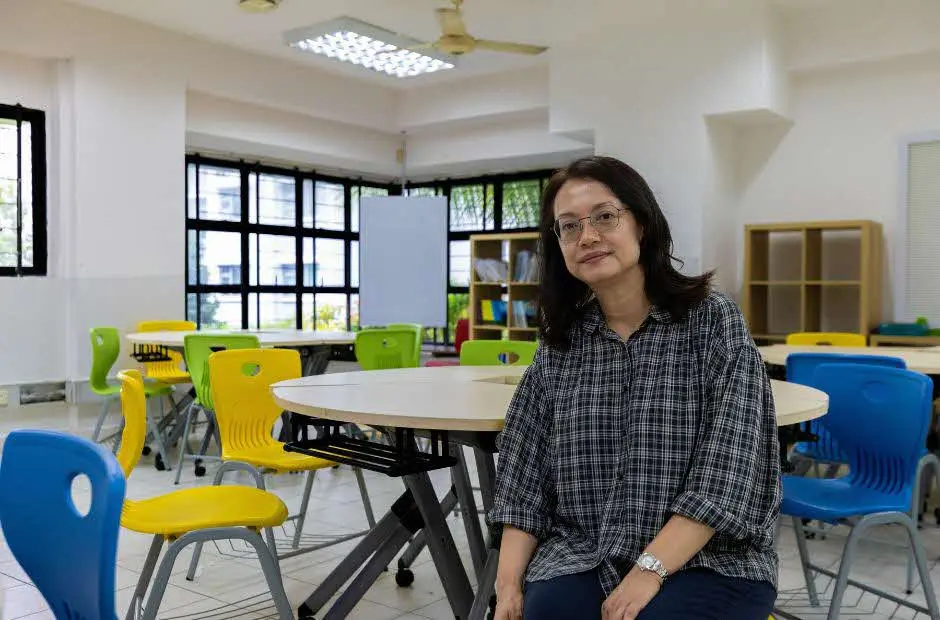
Launched in 2023, this pilot to redesign learning spaces in the school was spearheaded by Mdm Uuchi and her colleagues. Having spent years in architecture and graphic design before becoming a teacher in 2019, Mdm Uuchi brought a creative lens to the process and was especially attuned to how built environments can make or break learning experiences.
“I never thought that these two worlds of mine would ever meet each other, but I’m glad it did,” she says.
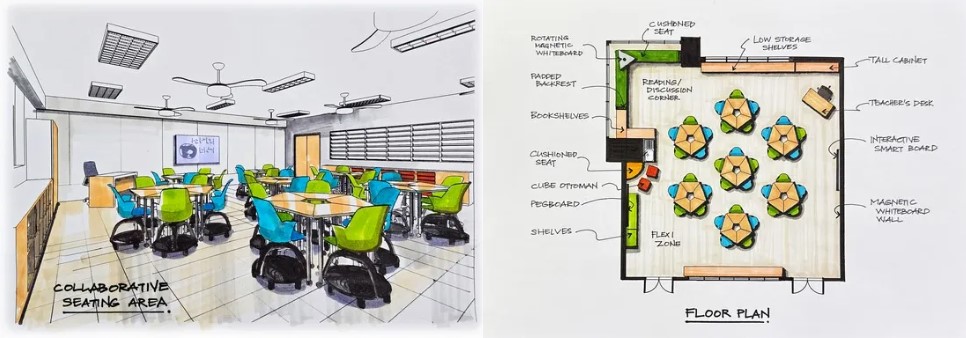
Mdm Uuchi’s artist impression drawings of the reimagined learning spaces.
This wasn’t the first time Mdm Uuchi found herself wearing two hats as both teacher and designer. One of her earliest projects when she first joined BRPS was redesigning the school’s collateral. She recalls, “The school asked how I’d feel about doing something I’d supposedly ‘left behind’. But I told them that being a designer is a natural extension of who I am.”
Ironically, the simple act of putting a stylus to her tablet gave her a sense of confidence during her mid-career switch, especially as she was still getting used to a new working environment and trying to build rapport with students. “It was like I’m suddenly this other person who knows what I’m doing. I thought: Hey, I can contribute to this school based on my industry experience.”
When the time came to turn an underutilised Physical Education (PE) equipment room into a mini library, Mdm Uuchi took to it like a fish in water. She paid attention to details that the untrained eye might miss: Where would a librarian naturally need power points? How can shelves be mounted so students of different ages can reach them? How do we arrange the space so it invites students to linger?
“You can’t separate designing a space from designing an experience, because the way we arrange things in the room can shape user behaviours,” she explains.
A classroom for every learner
This same thinking guided the pilot project in 2023, which is sparked by the Ministry of Education’s (MOE) funding to refresh learning environments across schools in Singapore to keep pace with evolving educational needs.
BRPS saw it as an opportunity to double down on its commitment to active learning. But instead of simply telling teachers to “do more group work”, the school introduced modular tables on wheels to make collaboration easier. And when it was time to bring everyone back together, technology helped. To share a student’s work with the rest of the class, for instance, teachers could simply snap a photo and cast it onto an interactive panel – yet another feature of the pilot.
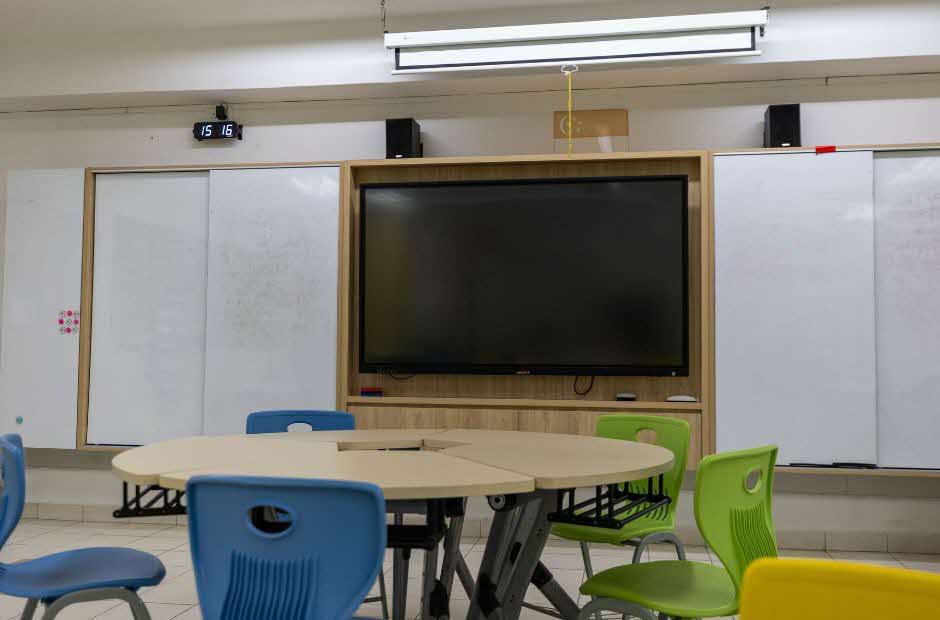 Interactive panels in the classrooms support wireless screencasting.
The benefits quickly became obvious once the pilot rolled out. Time saved on moving furniture at the start and end of lessons aside, teachers circulating between groups also shifted their dynamic with students, nudging lesson designs to be more student-centred.
“When I discuss a student’s work with them, being right beside them creates the sense that we are going on this learning journey together,” she explains.
With modular tables, teachers can group their students more intentionally, allowing multiple modes of learning to take place simultaneously. For instance, students of similar abilities can be seated together and assigned tasks based on their level of preparedness. They learn from the questions their peers ask, and some may even find it easier to try answering questions and be less afraid of making mistakes.
Permission to experiment
Teachers’ feedback has been encouraging, too. Group work happens more naturally, students are more engaged in class, and peer learning picks up.
But one recurring challenge emerged: teachers found it hard to communicate the different layouts they needed to students, which sometimes led to a bit of chaos.
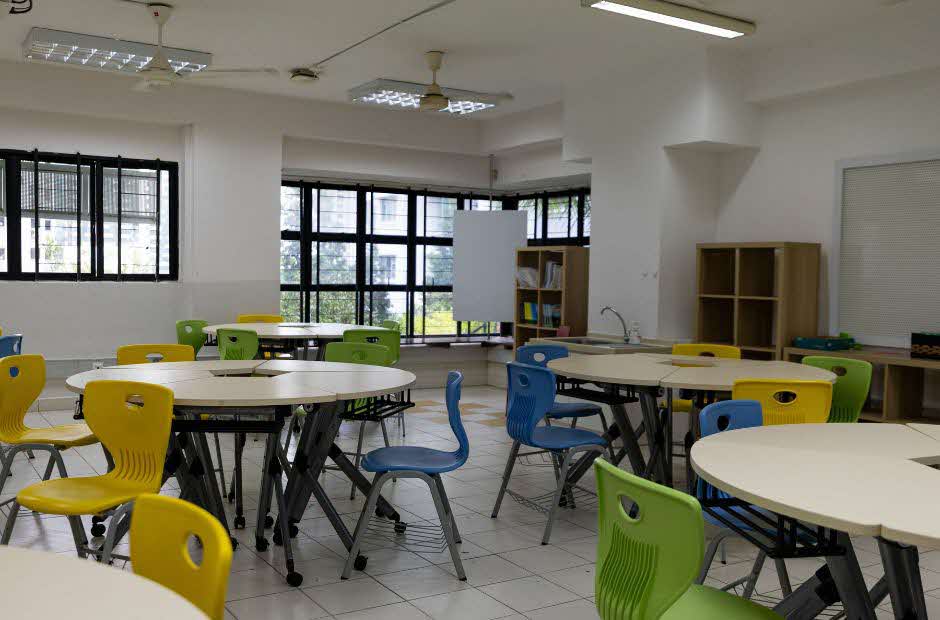 While the fan-shaped tables worked well for circular groupings, they were less suited for other configurations.
For Prototype 2, which will extend the pilot to upper primary classrooms, Mdm Uuchi and her team plan to introduce a shared “classroom language” so teachers and students can switch layouts more smoothly. This vocabulary will be based on David Thornburg’s learning archetypes, which include different ways students learn best.
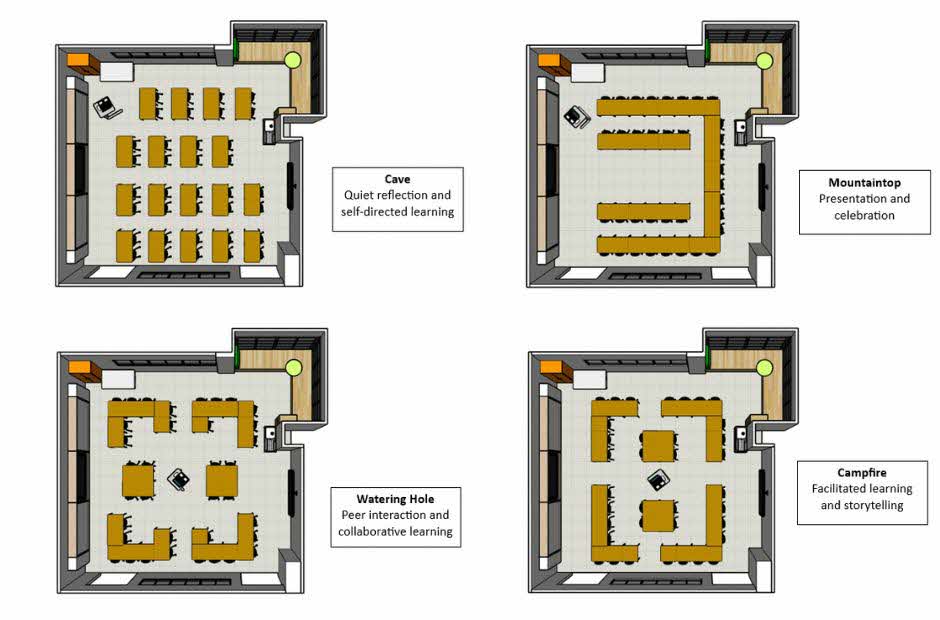 Examples of David Thornburg’s learning archetypes include (clockwise, from top left) the “cave” for individual work, the “mountaintop” for presentations, the “campfire” for teacher-led instruction, and the “watering hole” for group work.
Swopping the fan-shaped tables for square ones on wheels, which may support a wider range of layouts, is an alternative that is being considered too. While it might sound like a step backwards, Mdm Uuchi sees “productive failure” as a natural part of the design process.
“As a designer, I’m used to making iterations so I’m not too hard on myself,” she explains. “It helps that our principal assured the team that even if we fail, it’s OK. We just had to start somewhere.”
This spirit of innovation is now moving beyond the classroom, as both teachers and students came together reimagine how the school canteen can be purposefully used as a learning space. A design thinking workshop was held for Primary 3 and 4 students in October 2025 to gather ideas.
Smart vertical gardens, a collaborative workspace where students can tinker with tools, a stage for student performances or inclusive calm corners to support the self-regulation of students with additional needs – these are just some of the ideas staff and students came up with.
Says Mdm Uuchi, “These will give the students many new experiences and opportunities to showcase their untapped talents. It will also enable teachers to reimagine how we teach. I get genuinely excited just thinking about it.”
Photos courtesy of: Blangah Rise Primary School

.jpg&w=3840&q=75)