



When Mr Kassidy began his teaching journey at NIE in 1999, he was trained to teach English, Mathematics and Social Studies. But a few years into his career as an educator he felt that he could make a greater impact on his students by pivoting to teaching physical education (PE).
“I’ve always been quite outdoorsy, and I enjoy seeing children grow not just in skill, but in character,” sharesd Mr Kassidy, who is now the Head of Department (HOD) for PE and Co-Curricular Activities (CCA) at Rosyth School.
There was just one big hurdle standing in Mr Kassidy’s way then: the low enrolment number for NIE’s PE in-service diploma, which he had to take to make the switch to becoming a PE teacher. So, he and a group of like-minded friends started gathering other teachers with similar inclinations. Eventually, they got a group of 30 teachers together, so classes could commence.
Nearly two decades after his move, Mr Kassidy faced a similar challenge when he joined Rosyth School in January 2025. “We have a lot of students in each CCA, but not everybody can take part in competitions at the national level. I can sense the students’ disappointment when they’re unable to,” he said. So, he wanted to expand the N1 Cluster Invitational Games, which schools in his area had been hosting until it was put on pause due to the pandemic.
Reopening and expanding the games
Launched in 2017 for primary and secondary school students in the N1 Cluster, the games gave students who did not take part in the National School Games (NSG) – either because they were not selected or the numbers were too small to form a team for the NSG – a chance to compete. However, post-Covid, only the primary school basketball and football girls competitions were revived and organised by Rosyth School due to resource and manpower constraints.
Mr Kassidy thought about bringing the games back because he has seen firsthand how sports and CCAs build resilience, and knows competitions offer students the character-building experience of failing and bouncing back. “Whether it’s the NSG or cluster games, we want the kids to have the experience of competing; to learn about being humble in victory and gracious in defeat,” he elaborated.
With a fresh pair of eyes, since he was new to the school, he started asking: why not let more students join the games by expanding it to include both boys and girls from the basketball, football, and badminton CCAs?
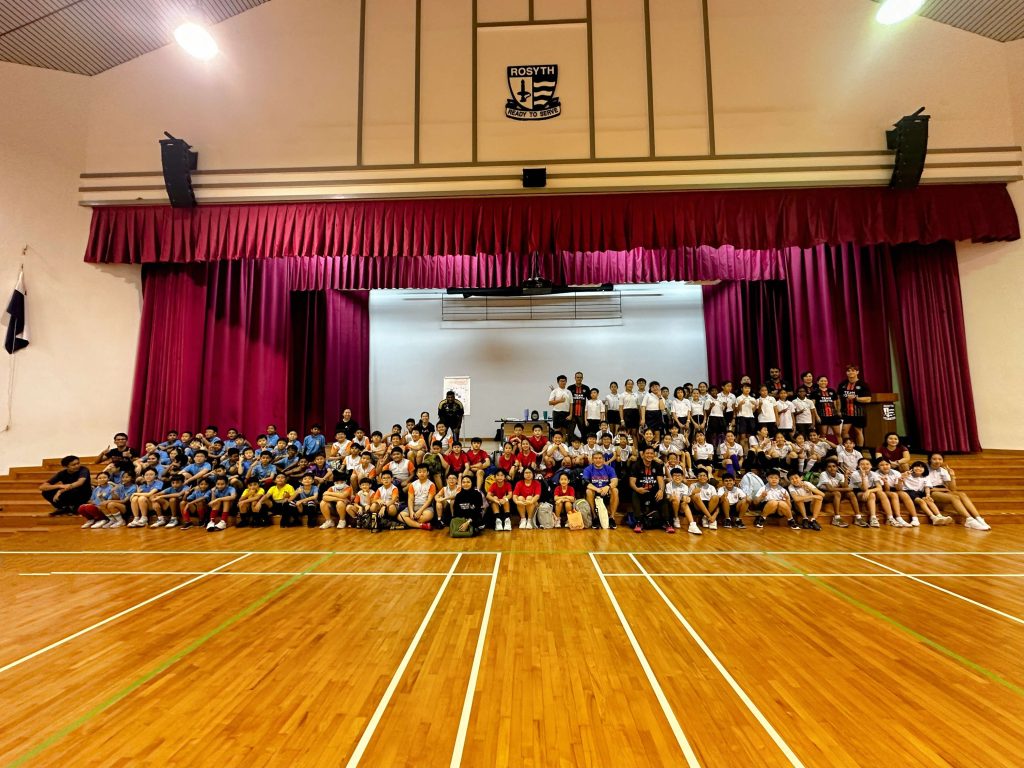
The N1 Cluster Invitational Games in 2025 was its biggest edition yet.
Overcoming constraints with support from all around
When Mr Kassidy floated his proposal to fellow teachers and school leaders, he was met with overwhelming support. Even teachers who didn’t lead a sports CCA resonated with his vision and volunteered to help out.
However, getting the other schools on board was a challenge due to scheduling constraints. Since the decision to expand the games was made on short notice, Mr Kassidy and his team knew they had a tight timeline of just five months to get all the pieces in place.
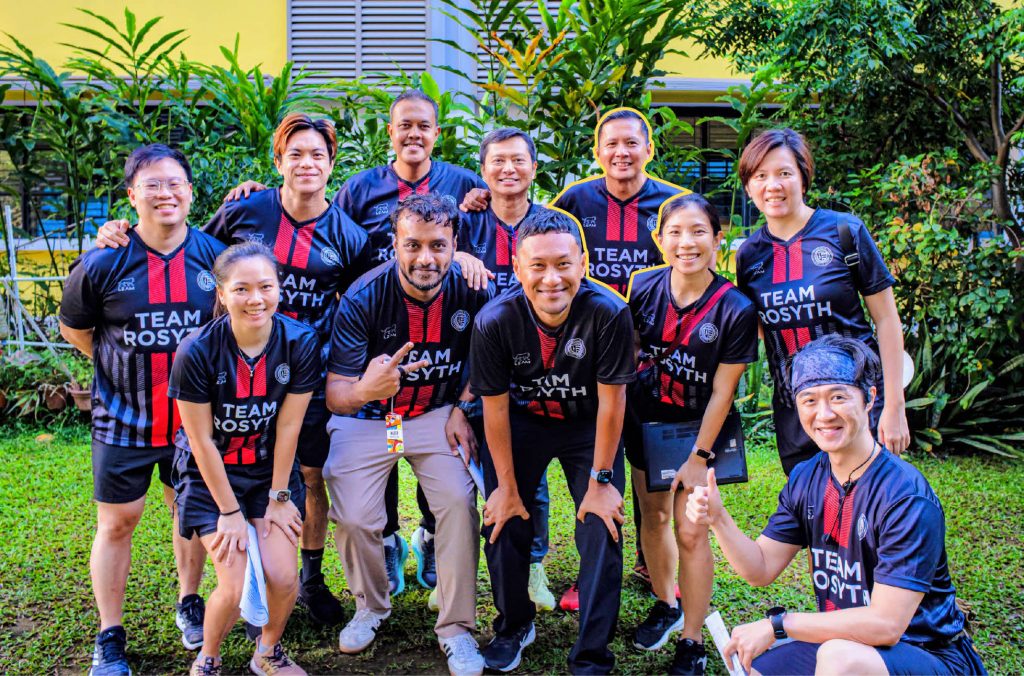
Mr Kassidy and teachers from the PE and CCA department came together to make the games happen.
Some hurdles were easy to overcome, such as holding the event on a regular CCA day to avoid adding another date to the school calendar. This also meant that coaches were on hand to support, putting less pressure on the teachers.
Other challenges required a little more creativity. With a larger crowd, the team had to tweak the programming to keep everyone engaged between matches. Mr Kassidy’s solution? Carnival games manned by teachers, which participants could visit at their own time.
This not only entertained the participants but also created a more welcoming atmosphere around the competition; it was another way in which Mr Kassidy wanted to reinvent the games. “I didn’t want it to feel too ‘hostile’. Sometimes, students focus on winning so much that they forget about the values we want to imbue through such competitions.”
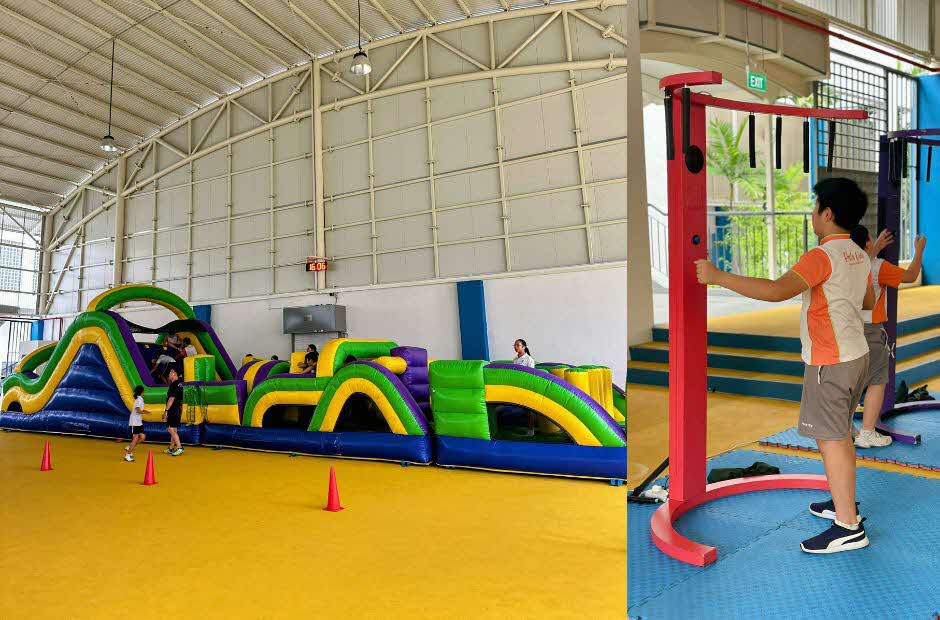
Students who weren’t part of the competition got to enjoy the carnival games during recess.
To make the most of the carnival games, the booths were opened to all Rosyth students during recess on the day of the cluster games. With obstacle courses and reflex-based challenges, there was something for every child to enjoy, no matter their fitness level or physique.
“Sometimes, we think physical activity is all about sports. But I want students to know there are other ways to enjoy it,” Mr Kassidy said.
Beyond the competition
After dismissal on 2 September 2025, students from five other primary schools – Rivervale Primary School, Xinmin Primary School, Palm View Primary School, as well as Nanyang Primary School and Hougang Primary School, which are not in the N1 Cluster – streamed into Rosyth School’s multipurpose hall to kick off the games. In total, over 100 students from these six schools participated in the event.
Over the next few hours, participants followed the schedule planned by Mr Kassidy and his team, moving from venue to venue and heading to the carnival games when their matches ended early.
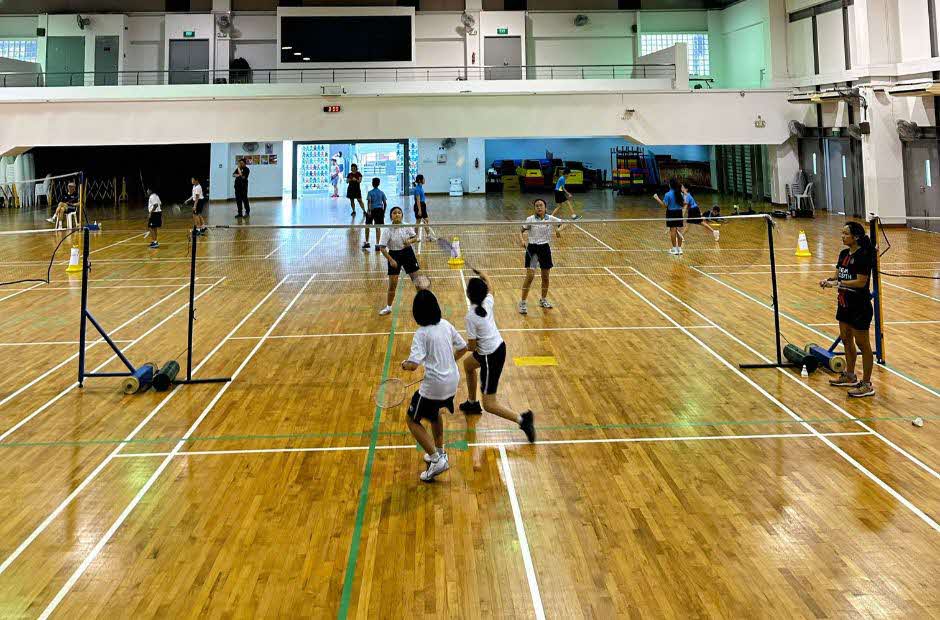
Students moved across venues autonomously and reported for their matches at the allotted time slots.
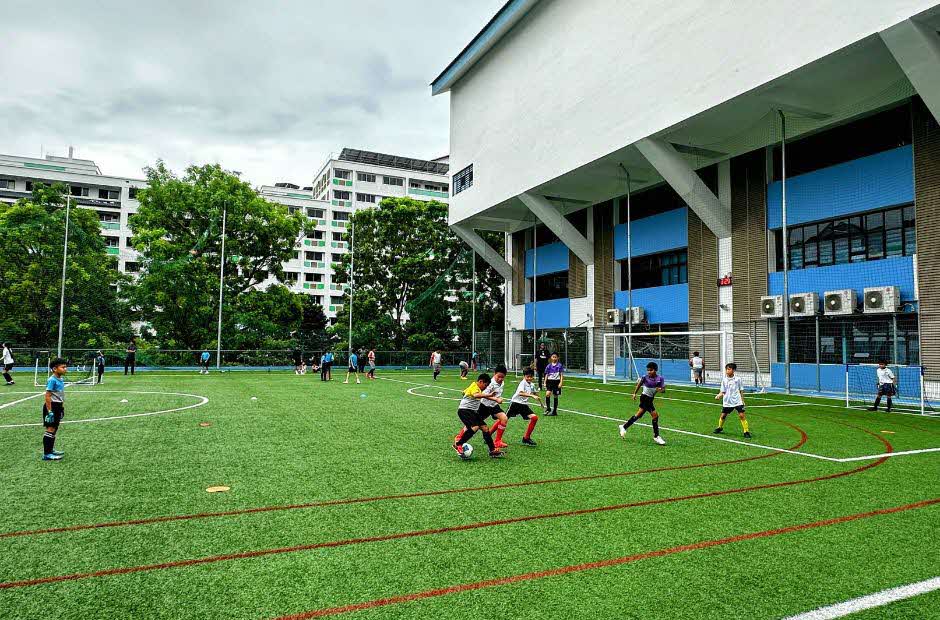
Thanks to good weather, the football games held outdoors could go according to plan.
As Mr Kassidy made his rounds, he felt a sense of accomplishment. It wasn’t just because the event ran smoothly, but because he could see that its goals had been achieved. The students got to shine in their sports, forge new friendships, and, most importantly, experience the spirit of sportsmanship that competition brings.
“I like that the kids were cheering for one another, and shaking hands before and after the game. It was what I had envisioned it to be,” he said.
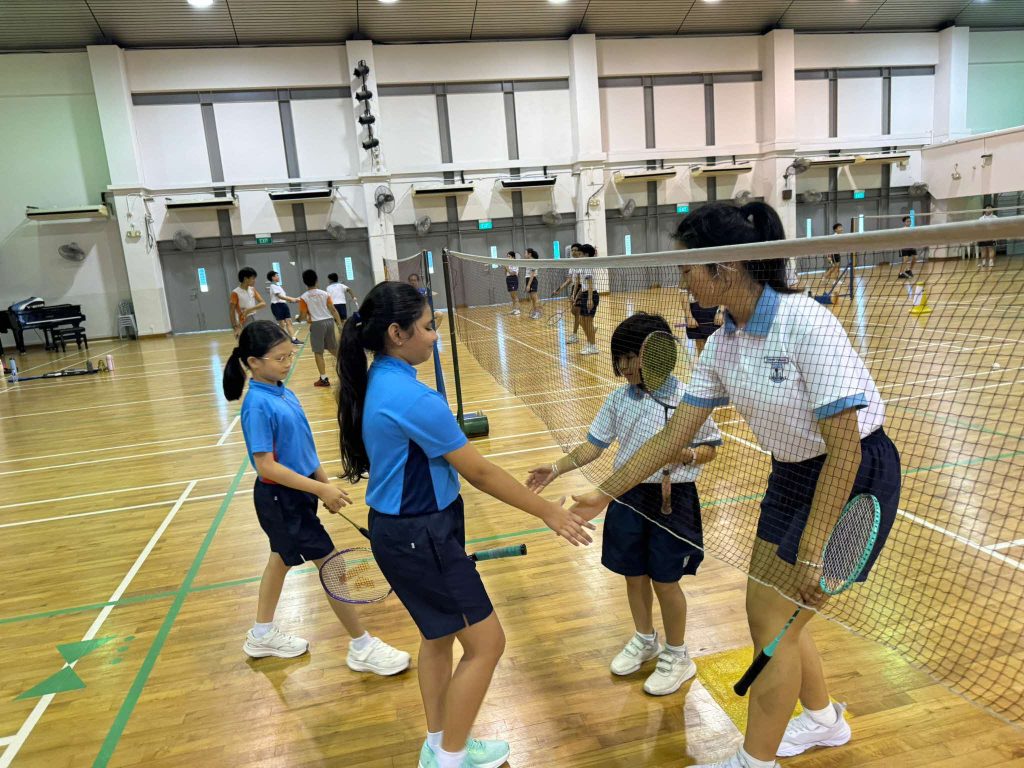
Mr Kassidy was heartened by the displays of sportsmanship as he made his rounds.
As the afternoon drew to a close, each participant walked away with a medal or trophy – half of which were upcycled and relabelled by hand. It was an ingenious way for Mr Kassidy to work around limited resources while ensuring every participant felt valued. “Kids being kids at this age, having something to bring back, regardless of what’s on the medal or trophy, will make them feel happy.”
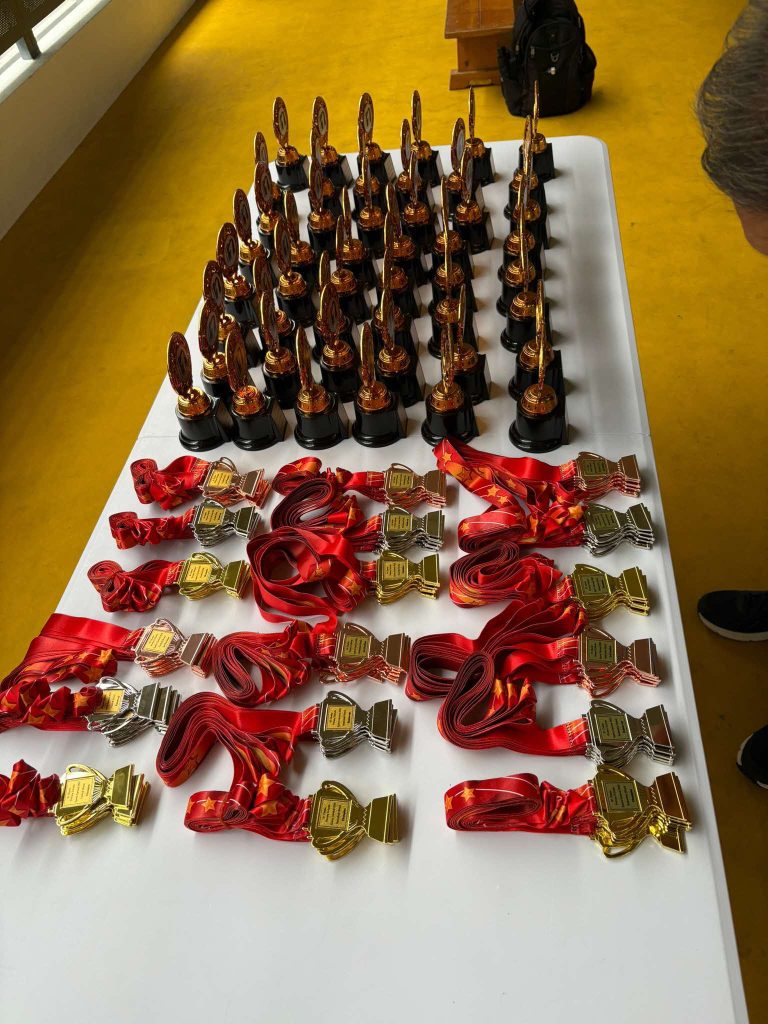
Every participant walked away with something to remember the day by.
The uplifting effect on the students was still palpable weeks after the event. One day, as Mr Kassidy walked along the corridor, a Primary 4 boy approached him to thank him and the PE department for organising the games. The gesture was especially meaningful to Mr Kassidy, as the boy had shown gratitude – one of Rosyth’s core values – and reminded him of the starfish parable.
“We may not be able to give every student the opportunity to compete, but it means the world to those who get the chance,” he said.
The real impact, however, lies in recognising that just because something has always been done a certain way does not mean it cannot be changed.
Having successfully pulled off the cluster games, Mr Kassidy and his team are now considering station-based games for Rosyth School’s next sports day — an event that has traditionally involved only a small group of students, leaving many others on the sidelines.
“When we’re not caught up in the same routine, it opens our minds to unconventional ways of doing things,” he said.
Photos courtesy of: Mr Kassidy, Rosyth School