


Imagine you’re a teacher. Two students keep saying unkind things to each other. What do you do? Lecture them. Inform their parents. Then what?
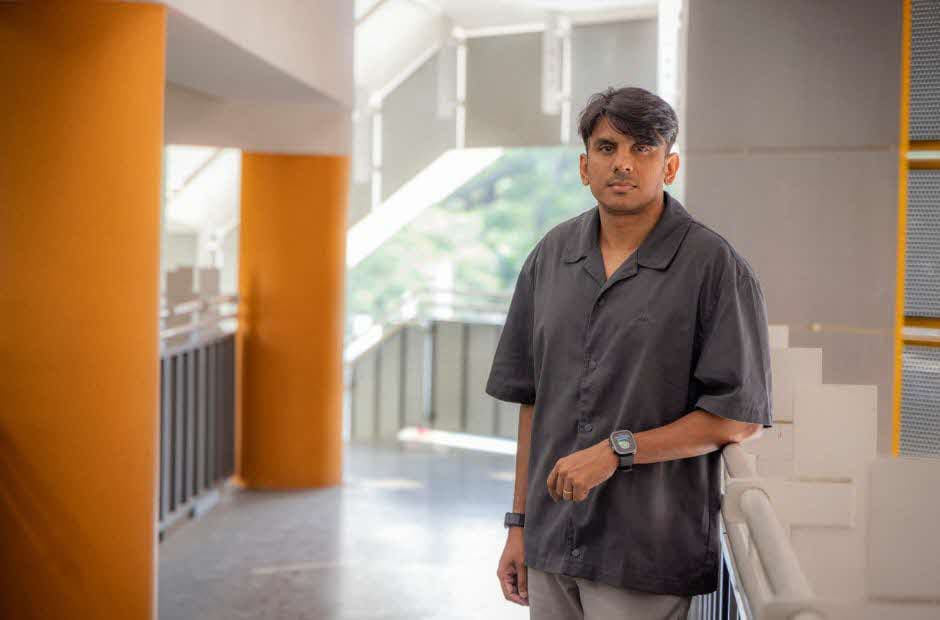
If you’re Mr Joel Vinson, you ask them to report to you together every morning before lessons and say three nice things to one another. It may seem unintuitive, even baffling. But the “punishment” is grounded in thoughtfulness—and creativity.
“This check-in with them is a subtle reminder of the appropriate behaviour,” says the Head of Department (Student Management & CCA), who has been teaching at First Toa Payoh Primary School for a decade and a half. “They learn and understand that saying mean things is not nice. Our first school value is respect – so they learn to link it back to that too.”
Peripherally, the students also learn to observe what each other is doing well. “The nicest thing I’ve heard is one of them saying that the other one was kind, because he saw him helping another child. And once, when one student came with a different hairstyle, the other one complimented him on his hairstyle,” Mr Joel says with a laugh.
Dignity in discipline and logical consequences
Mr Joel’s natural rapport with students was one of the reasons his School Leader approached him in 2016 to take on his current portfolio. He originally joined the school as a PE teacher (he still is one) and served as Subject Head, and then HOD (PE & CCA).
To Mr Joel, the goal is clear.
We don’t want to take away the dignity from the students. We want to help them develop ownership and awareness, to understand the impact of and take responsibility for their actions. At the same time, we teach them skills involved in making better decisions.
Because children may make sense of their actions or decisions differently from adults, Mr Joel taps on his creativity to frame consequences logically for them. “If I ask a child who was caught littering to stay back during recess and stand outside the office, he or she will not see a logical link between the action and consequence.” Instead, he gets the child to spend part of the recess picking up litter.
He draws the same parallel with an example of students who are caught being disrespectful to someone else, say a teacher. “If it happened during a one-on-one talk, then the apology is made in private. But if it is done in front of a class, I expect the apology to be made in front of everyone too,” he explains.
School-home partnership and consistency are important, but so is seeing the child behind the behaviour
Consistency between school and home, Mr Joel says, is another crucial factor that determines whether a child's behaviour changes. “If something is not allowed in school, but it’s fine at home, it can get confusing for the child.”
But he also emphasises, “We need to be firm on expectations, but we also have to always see the child behind the behaviour.”
“When a child acts out, it's not so much about just breaking the rules. I see it as they don't have the skills to manage their emotions to make better choices.”
This doesn’t mean that the behaviour is excused. But even as we correct the child’s actions, we need to teach them the right thing to do too. “From an educative point of view, yes, there are disciplinary measures to make the child compliant, but that's not going to benefit them in the long run," he says.
The challenge then, is patience, since restorative and educative discipline takes time. There is also the fact that as primary school children are still young, they may not have reached a level of maturity to be able to make better decisions despite guidance.
“It may take repeated occurrences for the child to actually understand and make better choices,” Mr Joel admits. “You just keep nudging them towards the improvement, by creating a supportive network and school environment.”
What parents can do
Mr Joel says that schools have processes in place. Teachers know how to evaluate cases – is it a behavioural issue, learning issue, or social-emotional issue, or a mix – and when to escalate them.
Circling back to ensuring consistency through a strong school-home partnership, Mr Joel says parents also need to let the child know that the school is there to help. He explains, “We want to teach the child independence by guiding them to reflect on their choices and consider the impact of their actions on others. We also want them to develop the confidence and judgment to do what is right. Our aim is to help them build the habits and values that will enable them to make responsible decisions independently in the future.”
At the end of the day, we want our children to become resilient and kind people who make good decisions.
Photo courtesy of: Mr Wayne Toh