



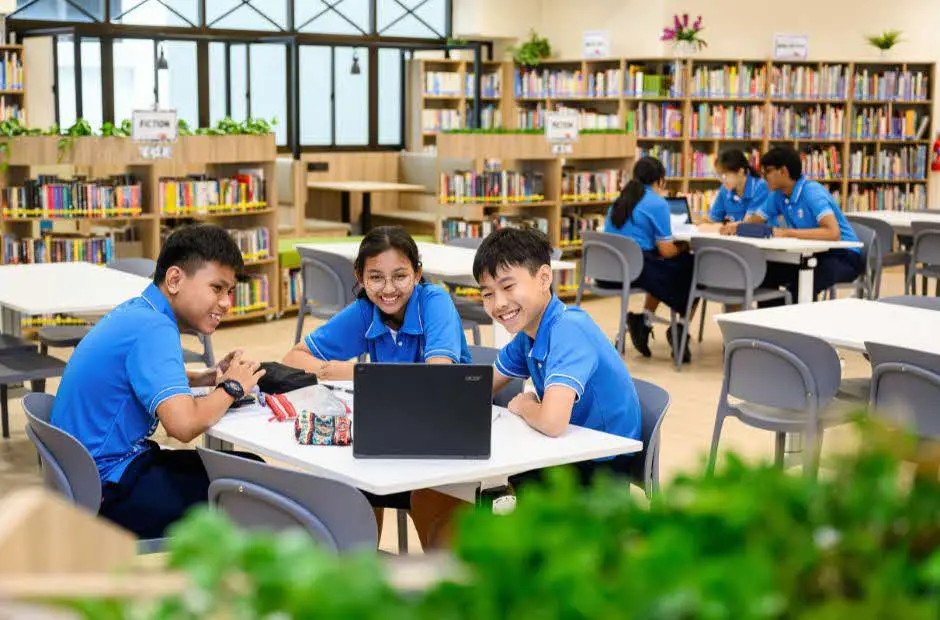
Of late, you're more likely to hear the buzz of quiet collaboration than the traditional "shhhhh" at Queenstown Secondary School's library.
The space that goes by the catchy new name of Learning Commons @ Quest has become a magnet for students who come not just to borrow books, but to engage, create, and connect.
"More students come in, to read, revise, do their homework, have discussions in one of the meeting rooms, or just stay a little longer than they usually would," says Ms Park Han Na, Head of Department for English Language at Queenstown Secondary School, who oversees the library space.
The renovation of the library, which reopened last year, represents a reimagining of how libraries can support modern use and learning. Gone are the tall, stationary ranks of metal bookshelves, limited seating and heavy atmosphere. The space now has mobile bookshelves in wood, and flexible-use spaces, all bathed in natural light and designed with calming earthy tones.
Secondary 3 student Mohamed Noh bin Mohd Norhisam has been spending more time there; he likes the “clean look”, compared to the previous space which had “weird colour combinations”. He also appreciates the library’s different zones for different group sizes — “it creates a conducive environment for everyone to learn and study”.
Secondary 4 student Chloe Pang is also a fan. "The revamped library has really changed how I study in school. It’s now a space I choose to go to, whether it’s to revise, finish up work, or just read quietly,” she says. “The environment feels more comfortable and less stressful, which helps me stay focused for longer."
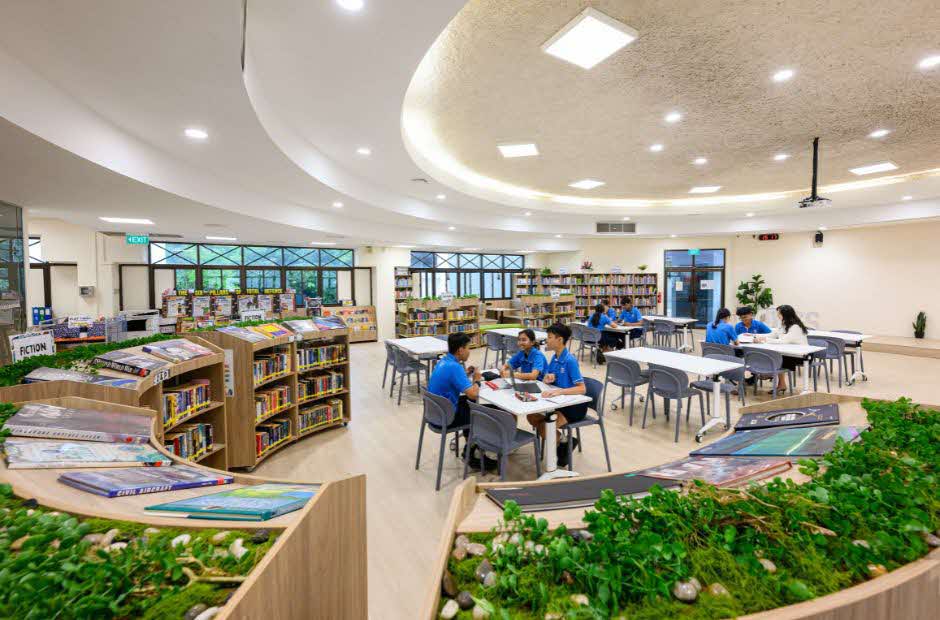 The space demonstrates how thoughtful design can multiply its educational value, unlocking potential for learning in every corner.
Three zones, endless possibilities
The new Learning Commons borrows design guidelines from MOE’s English Language and Literature Branch (ELLB) for the School Library of the Future, where curriculum can be experienced, the love for reading catalysed, and students supported to explore and initiate inquiry and research.
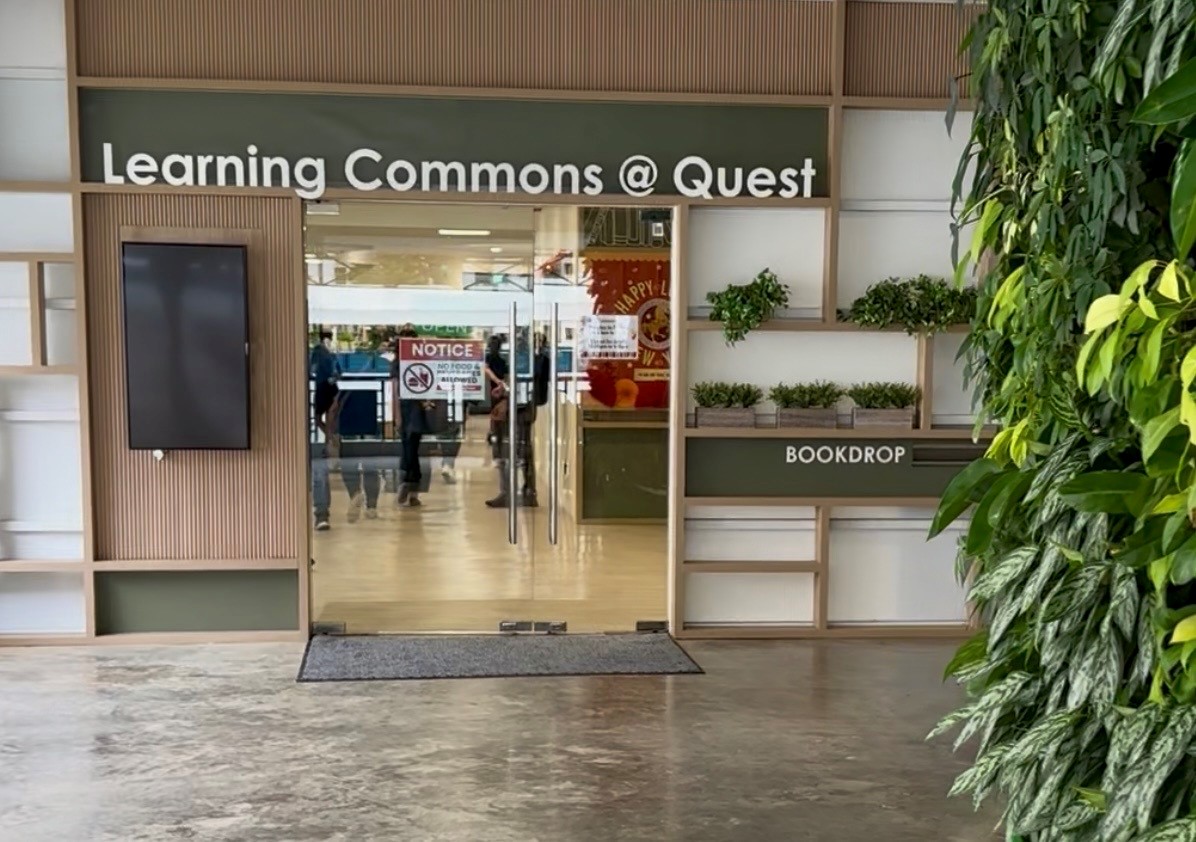
This experience starts from the moment the visitor enters the Welcome Area, which draws students in with bright and engaging displays curated by the Library Assistant according to monthly themes such as subject focus and festive occasions.
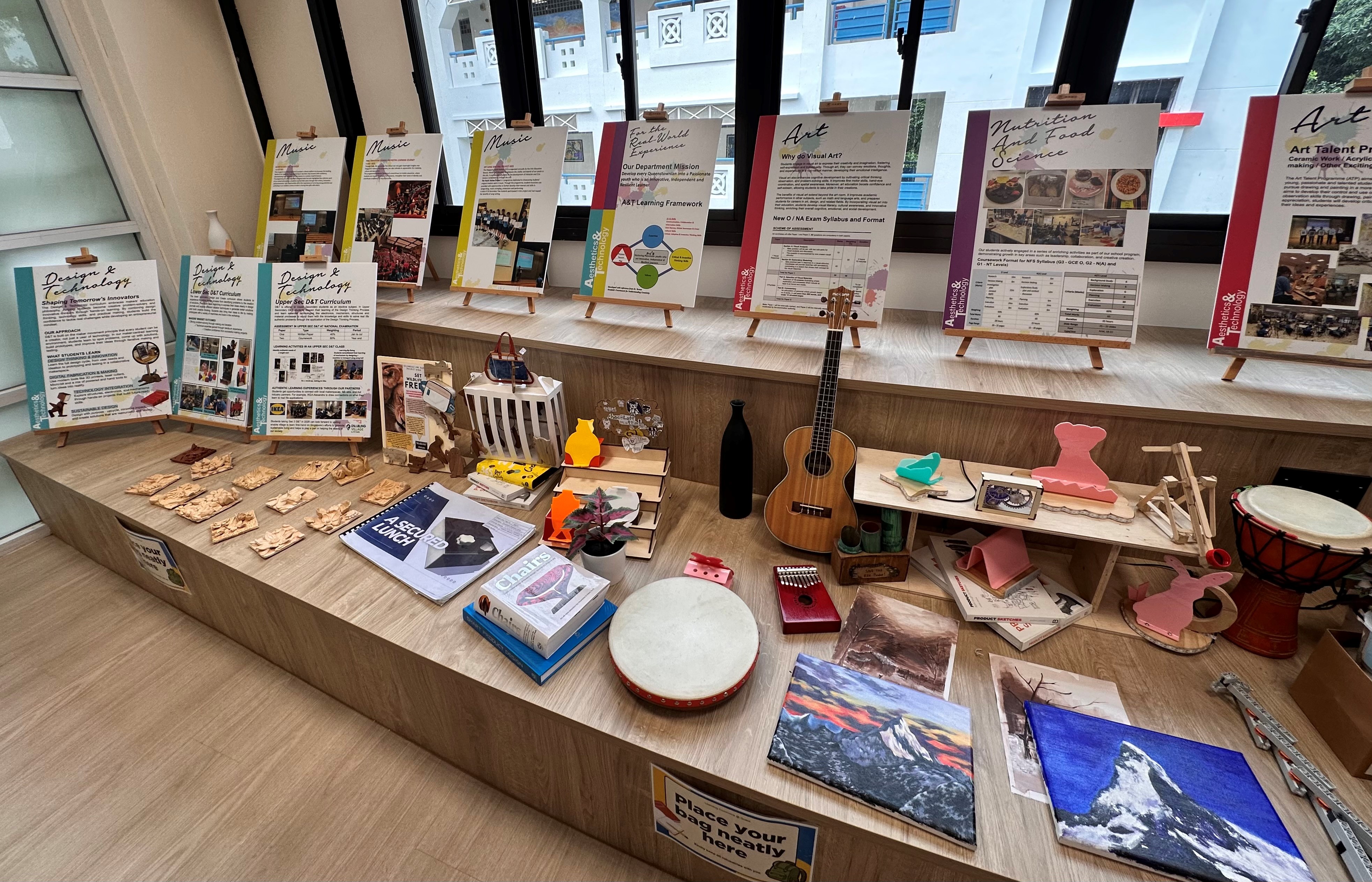
Further in, each of the three zones serves distinct learning needs whilst maintaining the flexibility to adapt as students' requirements change throughout the day.
The Reading & Discovery Zone features comfortable and varied seating arrangements, including reading nooks that foster quiet reading, alongside reading benches designed to encourage social interaction around books. Front-facing book displays invite browsing.
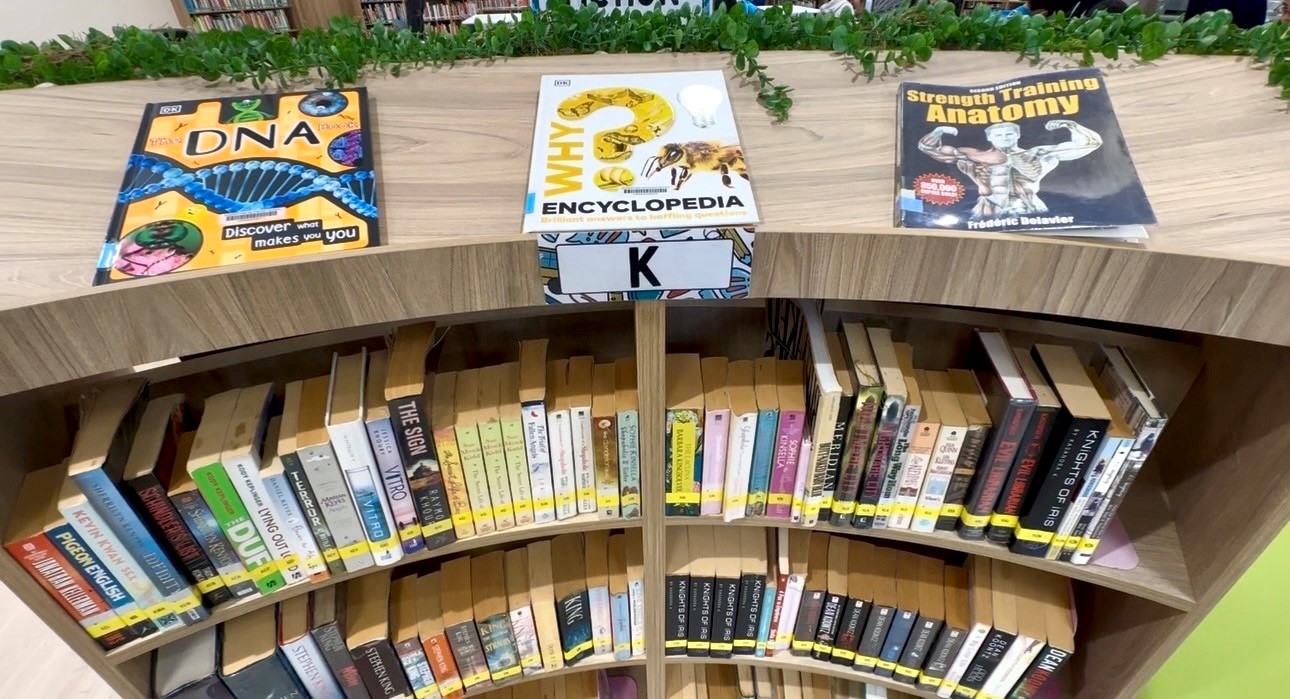
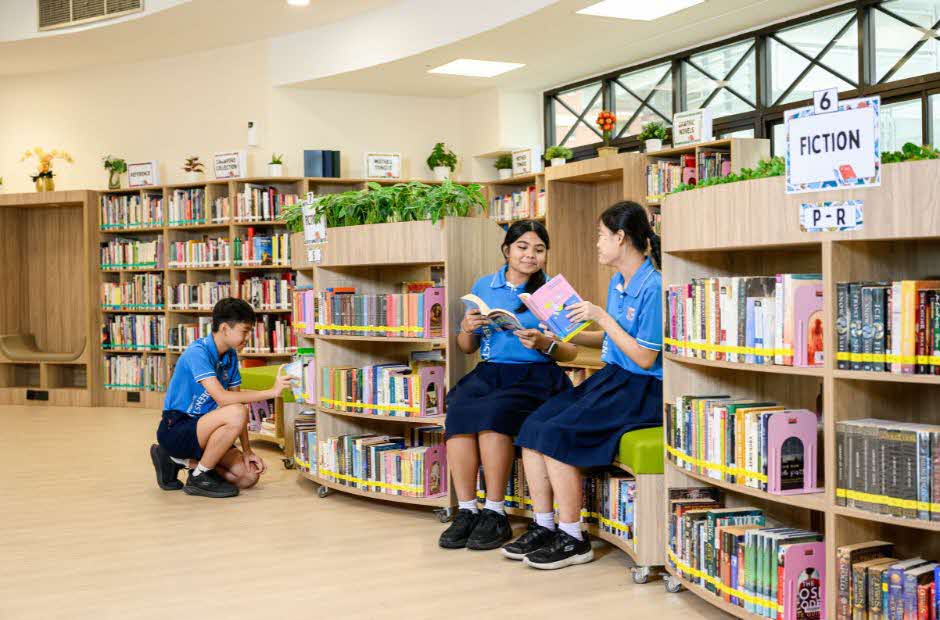 Lingering over a book is highly encouraged here.
The Studying Zone offers seating arrangements that accommodate both individual study and group discussions. This design creates a collaborative environment that actively encourages social learning while preserving dedicated spaces for independent study.
The modular furniture can be moved, making way for an open space and mini stage that students can use for public-speaking and performances.
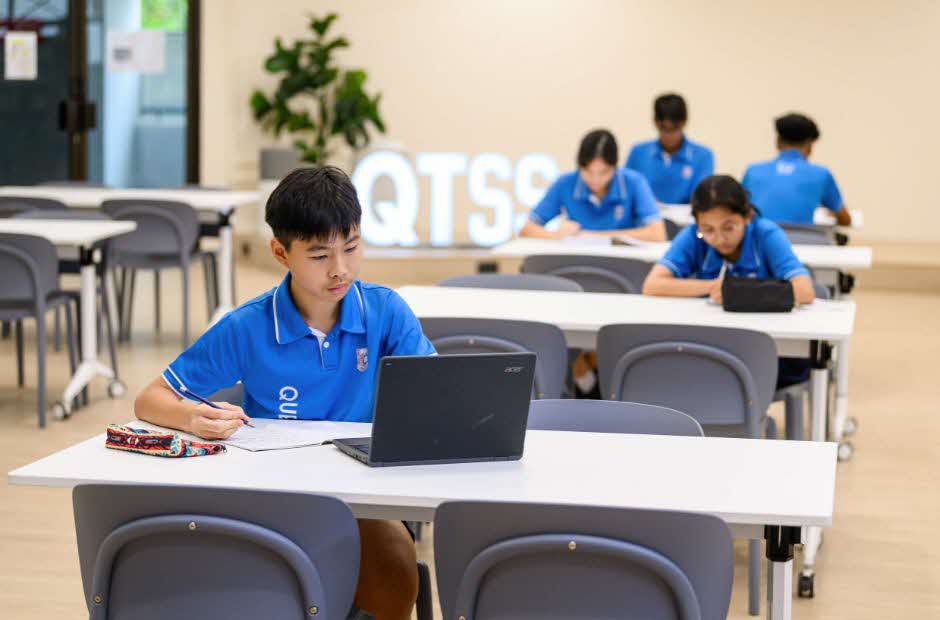 Studying solo or with friends in small or bigger groups is easy, thanks to the mobile tables.
The Discussion and Collaboration Zone is made up of what the school calls “Synergy rooms”. The rooms are equipped with whiteboards and smart TVs, and glass walls contain the noise but maintain connection to the activity outside. Students can book these rooms for group discussions, such as CCA and student leadership meetings.
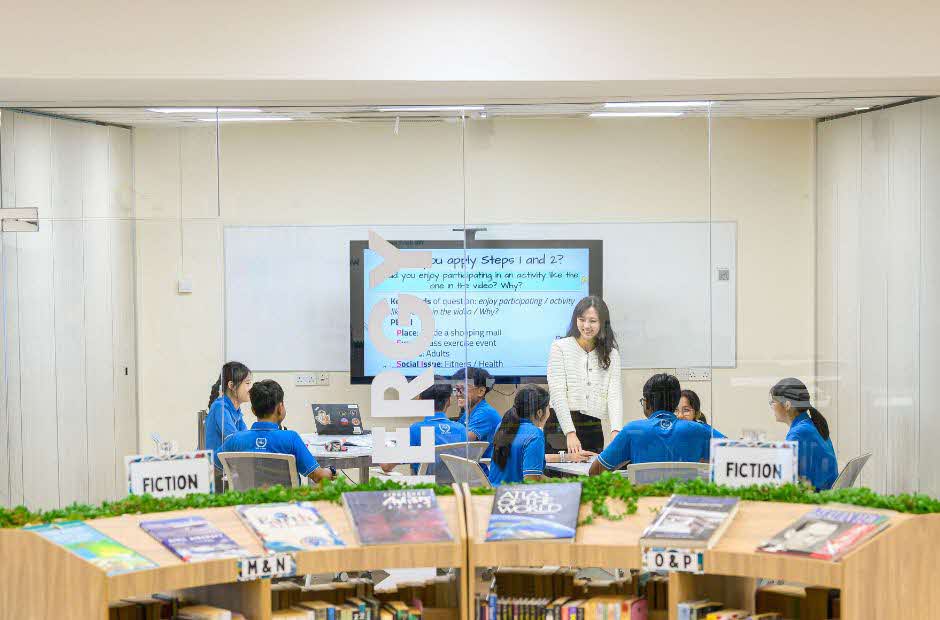 Space was carved out of adjacent rooms to create these glass-walled Synergy discussion rooms,which teachers and students can book.
The library’s transformation began with a student-led initiative in June 2023. For its Community Youth Leadership project, a group of students identified the school library as a space that could be made more inviting for students to read, learn, and study, while supporting a wider range of learning activities such as presentations and group discussions.
The students then collected feedback and proposed redesign ideas, including a dedicated studying zone with individual carrels, and rooms that students can book for group discussions.
With ideas in hand, teachers in the school's Future Learning Spaces and Pedagogies Committee developed a plan with design input from ELLB.
"The teachers were heavily involved in designing the experiences we want for our students," explains Ms Park, “down to the choice of materials, colour of the laminates, mobility and height of the bookshelves, plants, and lovely little alcoves for discussions or quiet work.”
The 18-month journey culminated in the student-led official opening of Learning Commons @ Quest on 23 May 2025.
Aligning with the future of learning
Globally, school and public libraries are undergoing significant transformation through the emergence of hybrid library spaces that are multi-functional, and leverage both technology and traditional library functions.
Queenstown Secondary’s library upgrade reflects that broader movement in Singapore schools towards experiential learning spaces that develop 21st-century competencies such as information and digital literacy and communication.
"We deliberately aligned with contemporary library trends that recognise learning as a social, collaborative process rather than a silent, individual activity," says the school’s Principal, Mr Sim How Chong. He has been leading the school's comprehensive space upgrades as it approaches its 70th anniversary celebrations this year.
"The shift from traditional 'pin-drop silence' to purposeful low-noise engagement reflects our understanding that students need to develop communication skills and learn from peers, not just teachers."
The name "Learning Commons @ Quest" itself reflects this evolution – from a conventional library to a dynamic learning hub where students innovate, connect and grow. The use of the word "Quest" harks to the school's identity and heritage, referencing the affectionate term used by alumni for Queenstown Secondary Technical School, Singapore's first technical school established in 1956, before it was renamed in 1993.
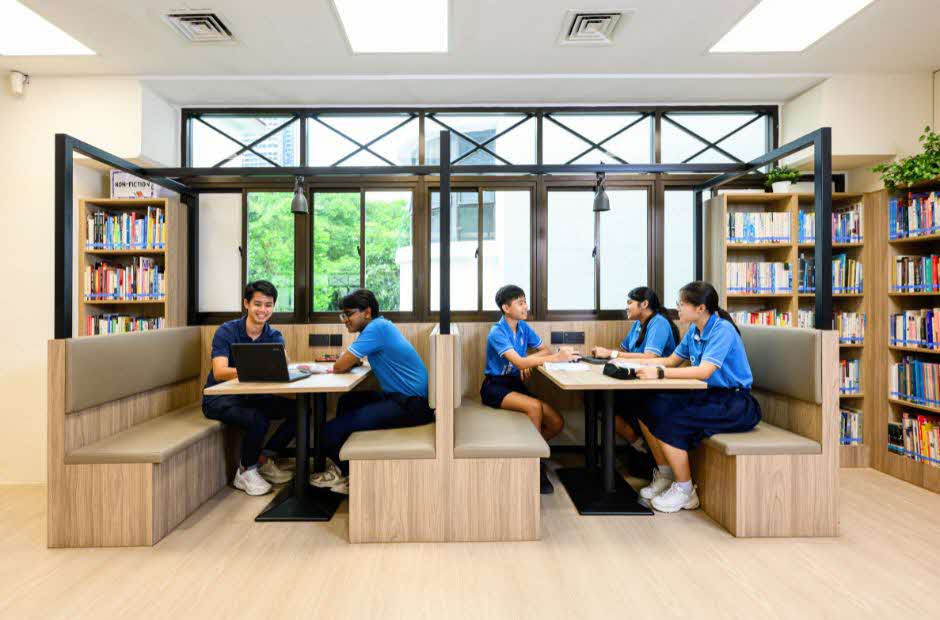 Benches add cosiness and variety to the seating arrangements available. Teachers and students are often seen having informal discussions there.
"Students consistently highlight the cooler, more comfortable environment, the modern aesthetic appeal, and the variety of collaborative spaces as their favourite improvements," notes Mr Sim.
“The space now supports diverse activities from individual study to group presentations, teacher-led lessons to student consultations, and even special events like our choir's Singapore Youth Festival showcase to parents and teachers.”
For Queenstown Secondary, Learning Commons @ Quest represents more than upgraded facilities – it's a testament to how collaborative vision, student voice, and educational research can transform traditional spaces into dynamic environments that prepare students for the future of learning.
“In this digital era, where information is plentiful but discernment is key, the school library stands as the reliable gateway for students to navigate the vast sea of knowledge with guidance and purpose. It is no longer just a place for silent study but a catalyst for intellectual exploration, encouraging critical thinking, creativity and lifelong learning.”
MOE's School Library of the Future Design Guide
.jpg&w=3840&q=75)
.jpg&w=3840&q=75)