




Step into the art room at Holy Innocents’ High School (HIHS) and it is immediately clear that this is no ordinary class in progress. Students gather over sketchbooks, digital tablets, or film footage. Not because they have to, but because they want to. Whether they are using photography, animation, or installation, they are encouraged to work in the medium that lets their message speak.
This is Mr Abdul Hadi Bin Abdul Wahab’s domain, where students are trusted to think, create, and speak through their work. “I always ask my students: Are you doing this for the grade or for yourself?” says the 35-year-old Senior Teacher (Art). “Because how you answer shapes everything you produce.”
Mr Hadi took to teaching from young – starting with always finding ways as the eldest child to amuse his brothers. “I liked to design experiences or games for them, and they seemed to enjoy themselves,” says Mr Hadi, smiling at the memory. The first signs he would wind up as an art teacher came from his youthful passions for art and filmmaking.
His inaugural posting was to a junior college, where he met students who had creative chops but dropped Art after secondary school anyway. “They were creating for grades, not for themselves. When they failed, they assumed they were not creative or skillful enough,” he says. Six years in, he was convinced he should make the switch to teaching at secondary school. “I wanted to be where the foundations were being laid.”
What does it mean to make art that matters?
These days, he focuses on building those foundations, designing a curriculum that gives students room to experiment, fail, and return to their ideas with deeper insight. Drawing and painting are just the beginning. Students in his classes explore augmented reality (AR), 3D tools, film, photography… he rarely denies their choice of media. “Art should be comforting, meaningful, and speak to their hearts,” he explains.
He uses the Art Inquiry-based Learning Model to guide this process, helping students tackle real-world themes that matter to them. And when the themes are honest, so is the work. Some projects they have made include AR trails about cultural memory, fashion pieces tied to personal identity, and other projects that ask not just what looks good, but what holds meaning. When that process happens, the learning comes naturally.
One student was feeling disconnected with the art diet of portraits and still life. When she joined Mr Hadi’s class in Secondary 4, he saw that “those things did not resonate with her”. He suggested, “Why not do something for yourself?” This was followed by yet another profound question: What would you create if this were your last artwork?
This set her on a wholly unfamiliar journey, but she was inspired. She chose to make it personal: a photo installation in tribute to her mother. It was thoughtfully composed, emotionally honest, and deeply moving, says Mr Hadi, who turned it into an exhibition piece at school.
Championing civic and global literacy through the arts
During Art classes, students can be seen creating works around climate change, social media, mental health, often combining traditional tools with newer ones like AI-generated imagery and 3D modelling. “These experiences spark curiosity and help students see that art can play a role in everything,” he says.
“Wicked problems, like creating inclusive cities or sustainable solutions, cannot be solved by one discipline alone.”
Mr Hadi
One project Mr Hadi is particularly proud of is a collaboration he facilitated with the Orang Laut community in Singapore. Secondary 2 students got to meet its members, listen to their oral histories, and create artworks that explore ideas of displacement. “We wanted students to ask: As we build the nation, who might be getting left behind?” The final pieces will be printed and shared with the community as postcards — a quiet act of connection and reflection grounded in civic awareness.
Never one to keep the fun to himself, Mr Hadi and a team also lead the school’s Applied Learning Programme for Journalism and Broadcasting. In this programme, all students are exposed to photography, videography, and digital storytelling skills.
Those who wish to develop those skills further can sign up as media representatives for the school, where they might take photos or edit videos to be showcased at school events.
In this way, students who do not take Art as a subject in their upper secondary levels, can still hone artistic skills that they could apply to any area of their studies.
Creativity means helping teachers teach differently
As an art teacher, Mr Hadi often has to advocate for the value of learning art versus something more “practical” like STEM.
However, the way he sees possibilities and is able to join seemingly disparate dots to make meaning, speaks to the benefits of an agile and creative mind.
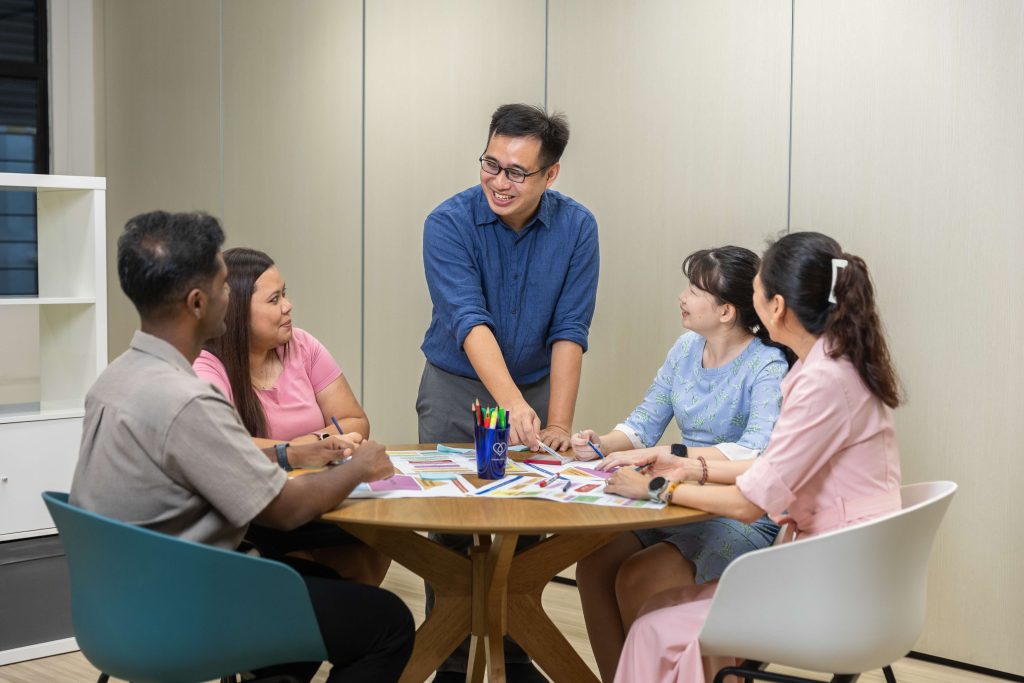
In 2024, he created a design facilitation toolkit to help his fellow teachers plan more meaningful learning experiences across disciplines. The idea was simple: What if subjects could meet in shared concepts like “change” or “movement”? What if English could sit next to PE and Maths, or Art could sit next to History and Geography, in ways that felt natural? Those questions became the starting point for a school-wide framework he co-developed with fellow teachers.
The goal was not to simply bring subjects together: It was to help students understand how these subjects interconnect and complement each other. Hence, they designed projects like poster campaigns that brought together data analysis, persuasive writing, and civic education. “We want students to see how subjects work together to solve real problems,” he says. “Wicked problems, like creating inclusive cities or sustainable solutions, cannot be solved by one discipline alone.”
The toolkit, now used across multiple subjects, has not just shifted lesson planning. It has shifted mindsets. Teachers have begun to see co-teaching as a chance to deepen learning through connection.
He also helps his colleagues in other departments use AR and visual tools to explain difficult concepts. For him, collaboration is as much a teaching strategy as it is a professional instinct.
And he does not stop there.
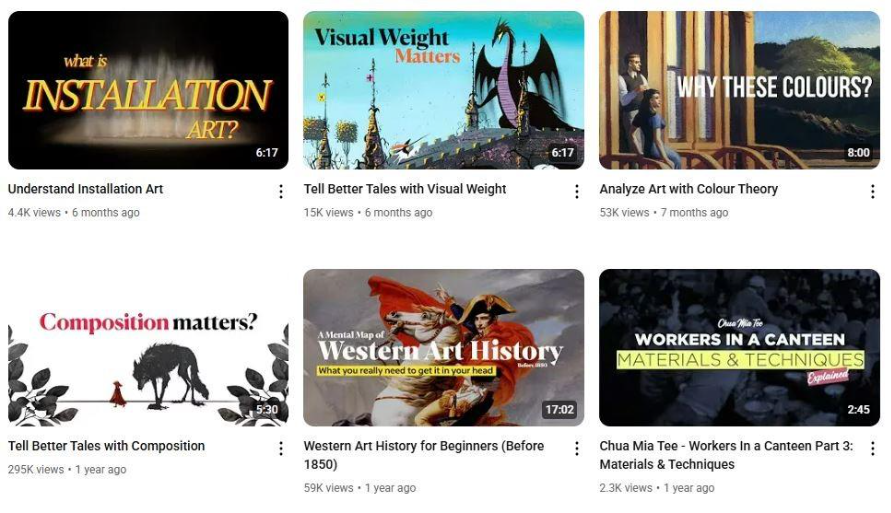
Since 2020, he has been sharing art analysis videos to support teachers tackling the Study of the Visual Arts syllabus, a gesture that has benefitted both junior colleges and secondary schools.
His contributions have extended beyond HIHS walls; in 2023, he was invited to join the MOE Arts Education Branch’s syllabus review panel.
Asked if there are downsides to his work, he quite readily calls out the administrative bits. “Google Sheets, writing emails, looking through emails…I don’t like it,” he says, nose wrinkling for once. What sustains him is remembering his original purpose – his commitment to help students grow.
A teacher first, then an Art teacher
His work with students and colleagues reflects a quote he often contemplates from German artist Joseph Beuys: “We all sculpt communities.” It captures what both art and teaching make possible. “Creativity helps us build environments that are nurturing, sustainable, and inclusive,” he says.
What drives him is the value of human connection, not much different from when he was a boy spending quality time with his siblings.
His classroom is not a place for just making art. It is where students come to feel seen and heard, without the fear of being judged. “I always tell them: ‘I am your teacher first, then your Art teacher,’” he says. “Because teaching is about the whole person. We step in not as enforcers, but as nurturers. For those without strong support systems at home, school has to be a safe space.”
Reward to him is in the small things: a student learning to believe they are capable, choosing to speak through their art, or simply coming to class with a bit more confidence than the day before. “As long as what I do is connected to how I develop that child, that will keep me going,” he says.
“Even if I only see the impact years later — that’s enough.”
“We step in not as enforcers, but as nurturers. For those without strong support systems at home, school has to be a safe space.”
Mr Hadi