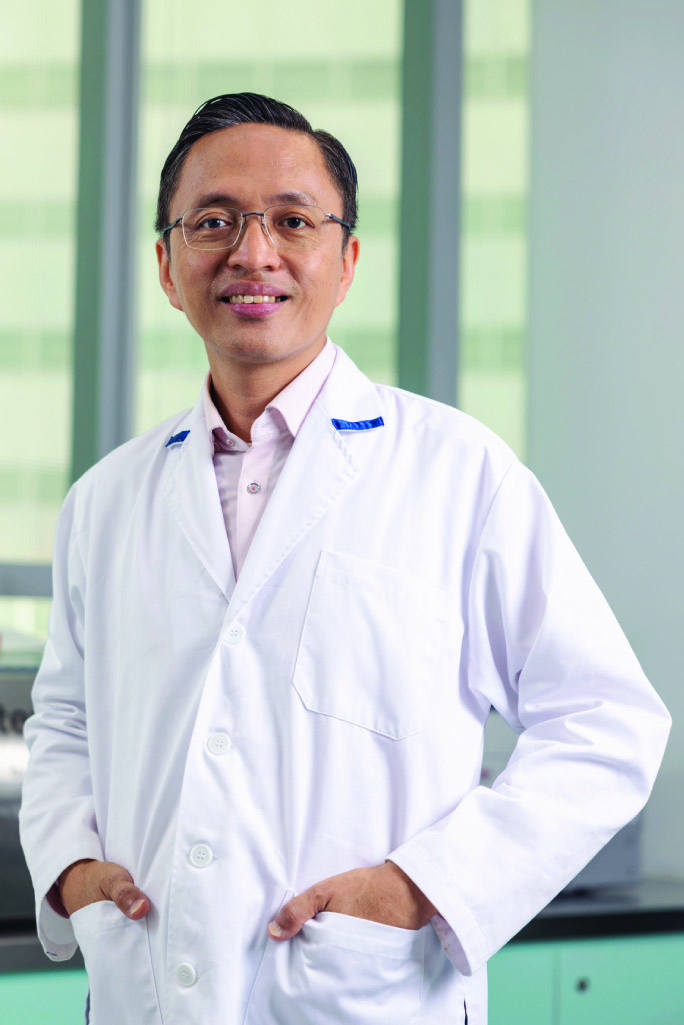




Dr Heng Kiang Soon grew up in a humble farming family in rural Malaysia, where malnutrition was common. Like many children in similar communities, his diet lacked balance and he fell sick frequently with fevers and infections.
“At one point, I was sick almost every week,” recalls Dr Heng, now a Specialist in Food Innovation at Republic Polytechnic.
It was not the only deprivation that shaped him. At four years old, an accidental eye injury permanently blinded Dr Heng in his right eye.
Growing up, he struggled with depth perception, hand-eye coordination and constant self-consciousness. Even today, reading for extended periods strains his good eye.
Those early difficulties led him to turn his childhood ambition from medicine to nutrition, believing that prevention could sometimes be more powerful than cure.
That stand would come to serve him well all through his career. After studying nutrition at university and changing his own diet, his health improved dramatically. The experience convinced him that food could transform lives – if healthy, nutritious options were made affordable and accessible to all.
Turning food waste into future food
When Dr Heng joined Republic Polytechnic, he wanted to address a gap in Singapore’s food innovation scene. Large amounts of food waste generated during processing still contained valuable nutrients, yet most were discarded.
One ingredient has since become a near-obsession of his: okara, the soybean residue left behind after making soy milk and tofu. “People saw it as waste,” he says. “But actually, it is still very nutritious.”
In 2017, after networking actively with industry partners, he began collaborating with Mr Bean – a popular local F&B chain specialising in soy-based products – to explore ways of upcycling okara into useful products.
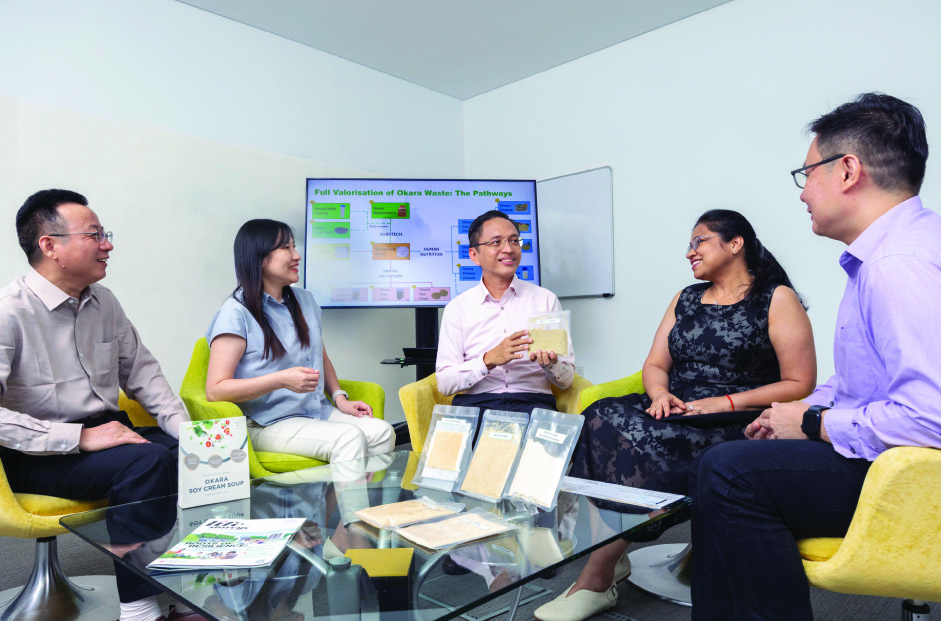
What began as a small Final Year Project eventually grew into a major research platform involving students, industry partners, and multiple intellectual properties.
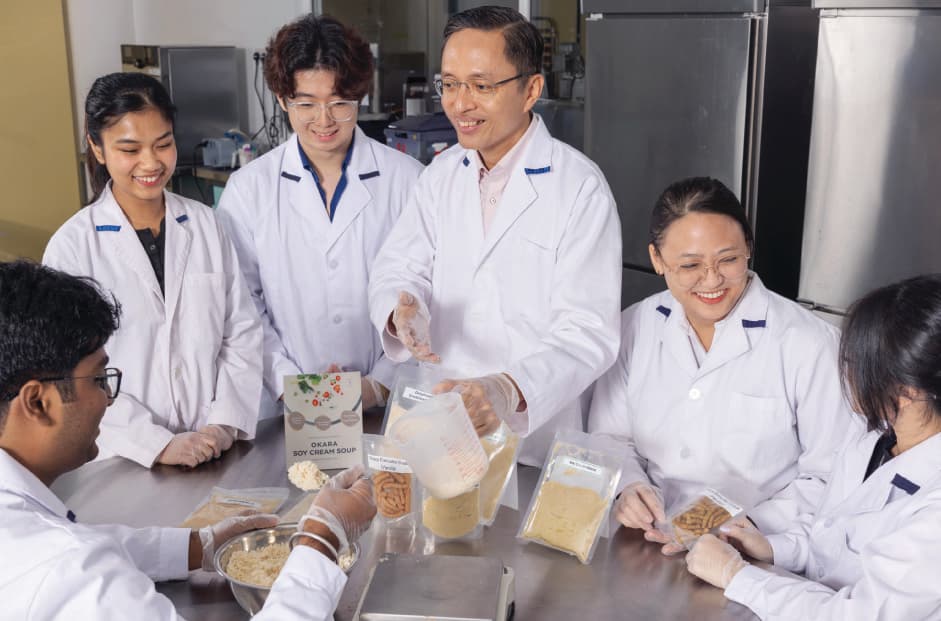
Today, Dr Heng and his teams have developed 14 okara-derived prototypes, including plant-based soy cheese, high-protein soups, skincare peptides and the world’s first Okara Biostimulant – a sustainable agricultural product now used by farms across the Asia-Pacific region.
The years it took to commercialise some products taught Dr Heng how difficult it could be to bridge the gap between laboratory research and real-world industry application.
It kickstarted another preoccupation for him. “If it was already so challenging for me,” he says, “how would students succeed without exposure?”
Attachments that start from Year 1
That question led him to actively promote Republic Polytechnic’s Short-Term Work Attachment programme. Unlike formal internships that happen in Year 3, these voluntary attachments begin as early as Year 1. During semester breaks, students could sign up to spend several weeks working on real industry problems in partnership with companies such as SoiLabs and Vivere Global.
Students do not simply observe. They formulate prototypes in the lab, visit pilot production facilities, test manufacturing processes, and present ideas to industry professionals.
For Dr Heng, the experience changes students’ confidence completely. “They become very confident in their lab work,” he says. “They have more ideas because they’ve seen how real industry operates.”
Some opportunities extend far beyond the classroom. In 2025, two student teams he mentored won first and second place at the VegeTale Challenge, after transforming traditional Chinese herbal soups into instant powder formulations. The winning formulation is now set to be licensed for mass production.
In the same year, the okara soy cream soup developed by his students was showcased at the SG60 Heart & Soul Experience exhibition as one of Singapore’s future foods.
Other students have co-presented research with him at international conferences, participated in sustainability competitions and worked directly with commercial partners.
One of them was former biotechnology student Qistina Azman. After graduation, Qistina struggled with severe eczema and couldn’t find work for years because of her skin condition. When she eventually reached out to Dr Heng, he offered her a research assistant position for one of his funded projects.
He also suggested dietary and lifestyle changes that might help manage her eczema. Over time, her condition improved significantly. Today, she is continuing her research career and working on products related to skin health – including okara-derived bioactive peptides first developed under Dr Heng’s guidance.
“This is one of my greatest satisfactions in teaching,” he says. “Nutrition knowledge is not just theory. It can translate into actual benefits for students.”
Team cheers and constant encouragement for the win
Having grown up feeling limited by disability and circumstance, Dr Heng is deeply aware that many students enter polytechnic carrying their own insecurities and stigma.
“I want to tell them that their background does not define their future,” he says.
That belief shapes the way he mentors students. Every morning, he sends motivational voice messages to his lab research team, reminding them that “today is a day full of hope and opportunities”. When their work does not turn in the desired results, he encourages them with team cheers, small gestures, and constant reassurance.
For Dr Heng, success is not measured only by research breakthroughs or commercialised products. It is seeing students discover confidence, resilience and purpose through meaningful work.
“They have more ideas because they’ve seen how real industry operates.”
Dr Heng