




When Mr Tzang Merwyn Tong made his first film at 19, he had no formal training.
He borrowed a school camera, gathered a few friends, figured out where the “on” button was, and started filming.
The acting was awkward. The sound quality was terrible. Yet the film, titled “[e’Tzaintes] giving self deceit a better name” (2003), travelled overseas, won awards and was recently featured by the Asian Film Archive as part of an SG60 programme on early alternative Singapore films. His feature film, Faeryville (2015), was part of the double bill.
More importantly, it taught him something that would later shape the way he teaches: Creativity does not begin with perfection.
Today, Mr Tzang, as he is known by his students, a Specialist in Digital Content Creation at Republic Polytechnic, has built much of his teaching around that same belief: Have the courage, curiosity and the willingness to make something before you know exactly how it will turn out.
It’s a lesson his students consider precious. As one Year 1 filmmaker puts it, after one year of classes with him, “We don’t need to wait for people to tell us that we are ready to make a film… We just take our shot.”
Some stories that are hard to tell, must be told
For many people, filmmaking is about cameras, editing software, and technical polish. For Mr Tzang, it begins somewhere deeper: "A story is never a real story unless you have something to say."
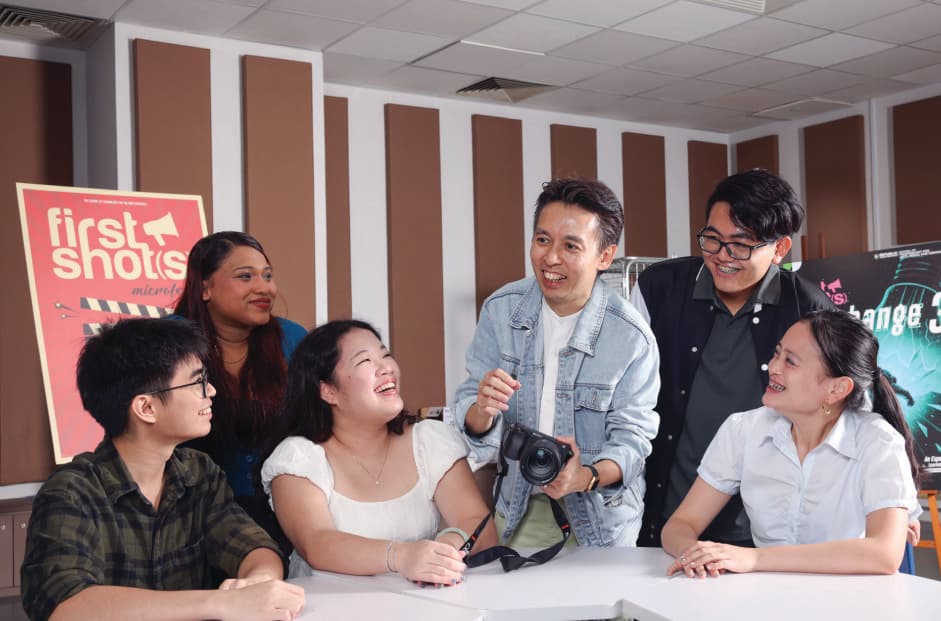
In his Visual Storytelling classes, 130 to 150 Year 1 students each year create short films about issues they genuinely care about. Popular topics that have emerged range from bullying and peer pressure, to parental expectations, caregiving, discrimination, learning difficulties, and mental health.
He asks them to dig deep into why the topics resonate with them.
"If it's bullying, what about bullying?" he says. "Don't just say bullying is bad. What is your story? What is your emotion?"
He then creates an environment of emotional safety to invite braver, more powerful messaging.
When a student's film is screened, judgement is suspended. The class is asked simply to watch, reflect, and consider what the story reveals.
Such films also become less predictable, and more human. A film that set out to touch on depression became a pensive journey of worry for the student’s mother. Another explored loneliness through quiet shots of a person eating noodles alone.
"When you go into what they care about, what they want to say, the film becomes a voice, not an assignment," he explains.
Since the Visual Storytelling module began, more than 800 student films have been produced.
"Stories are not just a tool for creative output," Mr Tzang says. "Stories are a tool for social change."
Giving students their first shot
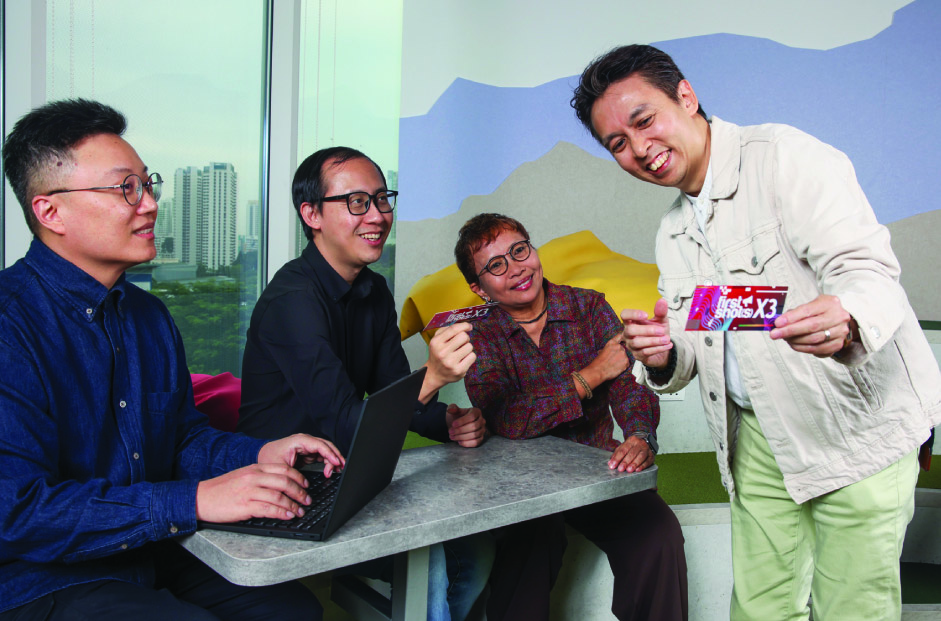
To give oxygen and exposure to his students’ works, Mr Tzang founded First Shot(s), a student-run film festival, in 2018.
Films are selected not for technical perfection, but for “spark” – raw creativity, honesty and originality. A shaky film with unstable shots but a powerful idea may still be screened alongside more polished productions.
“I wanted students to see the power of raw talent,” he says.
For Zelysha Elvira Ram, a 2021 graduate in Media Production & Design, that mattered. She first met Mr Tzang in Visual Storytelling and later became festival manager for First Shot(s). She says he was the first lecturer who made filmmaking feel like “an industry and a craft” she could see her future in.
He also encouraged her to take up an internship at the Prime Minister’s Office – an opportunity that she says helped her move beyond hands-on production into a more all-round producer in the corporate world today.
In 2023, he expanded the idea into First Shot(s) X-Change, an intercultural creative exchange involving students from Singapore, Thailand, Vietnam, China and the Philippines. Students across countries and disciplines – filmmaking, animation, graphic design and even AI – were grouped together to create short films within just 10 days.
The process was intentionally messy. Some students struggled with language barriers. Others navigated technological restrictions and conflicting creative styles. But through collaboration, they learnt to adapt, negotiate and see the world differently.
One group created an experimental animated film about frogs after a Singapore student who loved frogs clashed playfully with a Thai teammate who joked about cooking them. The final film, a humorous reflection on cultural arrogance and empathy, was selected for screening at the Singapore International Film Festival fringe showcase.
Protecting students from burnout
Over the years, Mr Tzang began noticing something troubling about some of his most talented students. “The students with the most fire were often the ones who burned out first,” he says.
Zelysha was one of them. She was juggling First Shot(s) and other creative and leadership commitments, and started each day tired and behind. He spoke to her about how he managed multiple roles, and helped her delegate and problem-solve to keep her going. But he knew he needed a solution he could scale for other creatives like her.
His questions around the culture of sacrifice and exhaustion that often surrounds creative industries led him to develop Zen-Mind Filmmaking, a research-based teaching and filmmaking framework shaped by ideas of minimalism, mindfulness and non-attachment. Developed during his Master’s degree programme, the framework presents parameters for filmmaking practices that seek to protect filmmakers from burn out.
Traditionally, filmmaking can feel intensely conditional, he explains – filmmakers waiting endlessly for funding, equipment or permission before they can create. Zen-Mind Filmmaking encourages students to see creativity differently: not as relentless self-sacrifice, but as a sustainable practice grounded in reflection, resilience in the face of obstacles, and ownership.
His findings and research were presented at the ‘On Not Knowing: How Artists Teach’ Education Conference in Glasgow, as well as at education conferences in Paris, Hong Kong and Tokyo.
Zelysha notes that following the sessions, she began to see filmmaking not just as production work, but as a series of conversations – between filmmaker and subject, teacher and learner, team members and audience.
Today, as a producer leading a team of her own, she still draws on that lesson. When colleagues are overwhelmed or projects get tense, she gathers the team to pause, air their feelings and work out how to move forward – not by attacking one another, but by asking what can be done better next.
For Mr Tzang, that is what he hopes students carry with them: not just the confidence to begin, but the self-awareness to keep going. “Go for it,” he says, “but protect your well-being so that you can go further.”
"Stories are not just a tool for creative output. Stories are a tool for social change."
Mr Tzang


.jpg&w=3840&q=75)