




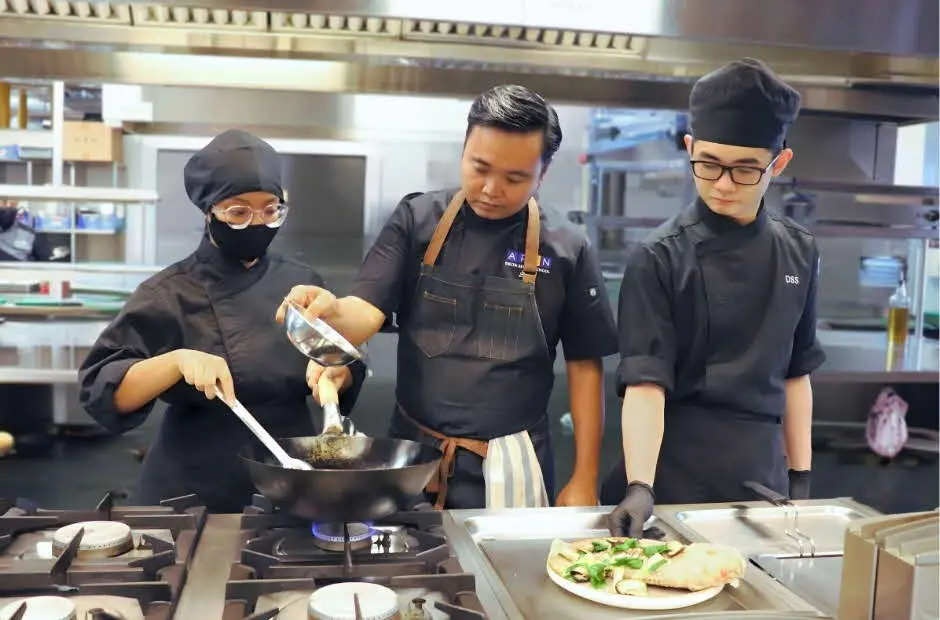
In special education, progress can be easy to miss if one is only looking for big milestones. It is, in fact, in the small moments, such as a student asking for a break instead of walking out of class, sharing what kind of future they hope for, or noticing that the fish tank water looks different from the day before, that growth shows.
When support is slowly lifted, confidence steps forward
Ms Kaminee Ramakrishnan was a psychology graduate training to become a counsellor when she first walked into Eden School. She had taken on the teaching role to broaden her experience before moving into psychology or counselling-related work, but once she stepped into the classroom, she realised teaching was what she wanted to do.
There, she worked with young students on the autism spectrum, many of whom were non-verbal and easily affected by changes or sensory overload. One boy, who rarely spoke, was struggling to regulate himself. Ms Ramakrishnan, overwhelmed herself, picked up a bubble toy nearby – less as an intervention than as something to do with her hands.
The boy stopped to watch the bubbles and eventually calmed down.
“I remember standing there thinking: they’re really not that different from us,” she says. “He didn’t need someone to control him. He needed support to regulate himself. And strangely enough, bubbles worked for both of us that day.”
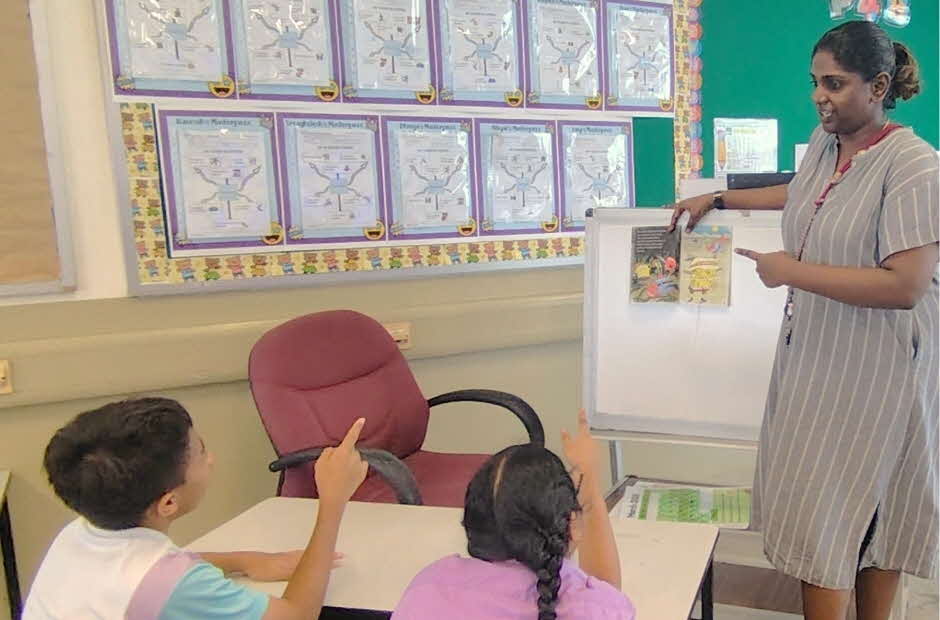
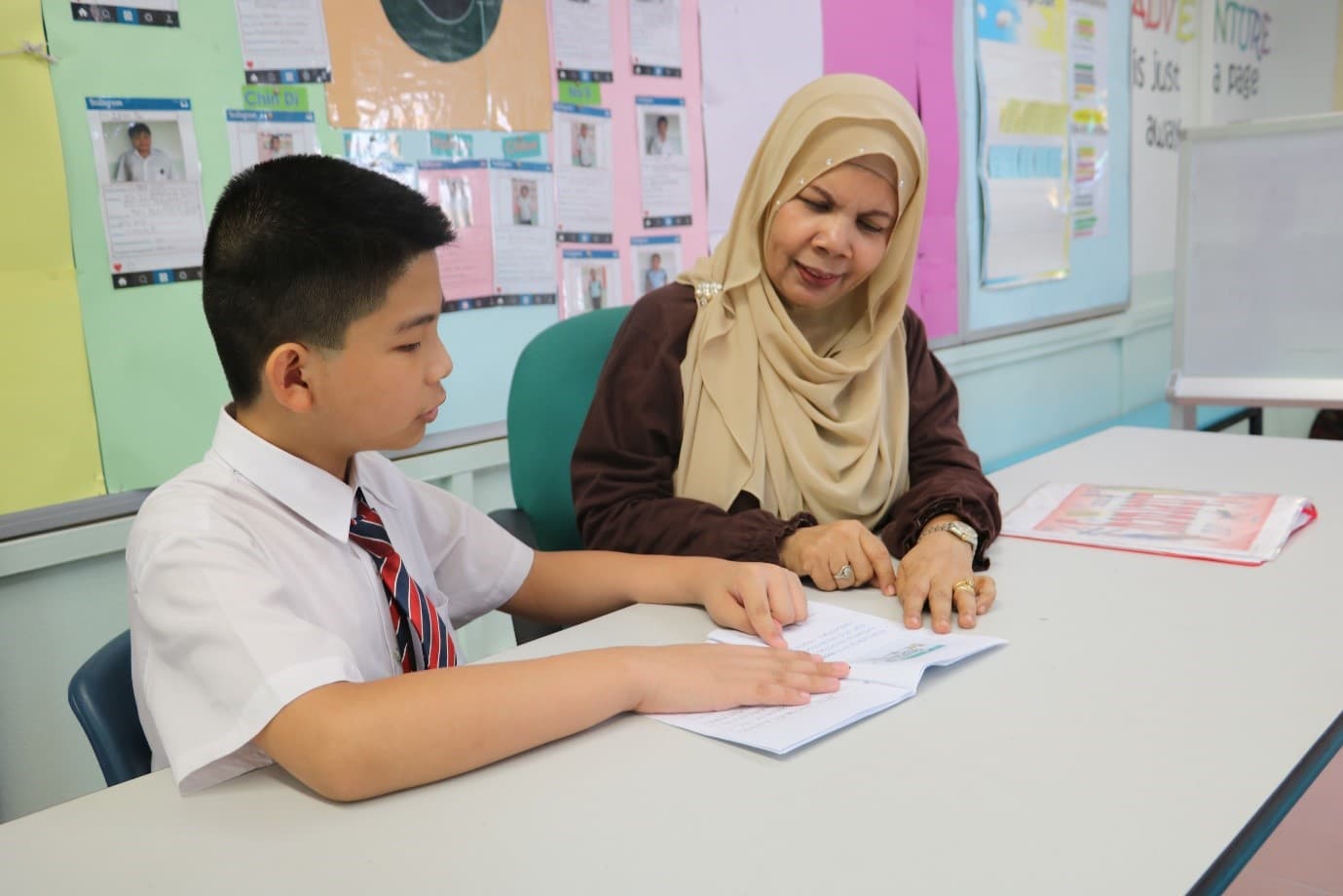
Ms Ramakrishnan uses visual aids and structured routines to help students learn with greater confidence and independence. Photo courtesy of Ms Ramakrishnan.
Today, Ms Ramakrishnan is a Senior Teacher at Grace Orchard School which serves students diagnosed with Mild Intellectual Disability and those with co-occurring Mild Autism Spectrum Disorders. When a 15-year-old student with autism entered her class, transitions were difficult; changes in routine could trigger distress, and he relied heavily on school staff through the day.
Rather than focusing only on stopping behaviours, Ms Ramakrishnan and the school team – including co-teachers, the occupational therapist, psychologist and social worker – asked what those behaviours were communicating. They considered whether he was overwhelmed, unsure of what was expected, or needed a safer way to ask for a break.
Together, they built predictability into his day through structured routines, visual schedules and personalised checklists, helping him better understand what to expect and what was expected of him.
It took close to a year before he could sit through a lesson without leaving, or ask for a break instead of walking out of class. There were setbacks. After school holidays, behaviours that had seemed to settle would resurface. One difficult week left the team wondering if they had pushed for his independence too quickly. Then one afternoon, he picked up his Maths worksheet and completed it without being prompted.
“It may seem like a small thing,” Ms Ramakrishnan says. “But for us, it meant he was beginning to internalise the routines again.”
The clearer shift came in the student’s second year. Ms Ramakrishnan watched him walk into class, take out his materials, and calmly ask if he could go for his scheduled walk. A few months later, he could participate in a larger group setting with minimal support.
“Once students begin believing, ‘I know what to do,’ you often see anxiety decrease as well,” she says.
Ms Ramakrishnan tells parents that stepping back is not the same as leaving a child to cope alone. It means teaching the child, gradually and safely, to trust his own abilities.
“Different does not mean less,” she says. “Independence is possible, growth is possible, and every child deserves the chance to be seen beyond their diagnosis.”
Ms Kaminee D/O Ramakrishnan, Grace Orchard School, is a recipient of the MOE-SG Enable Promising SPED Teacher Award (PSTA) 2025.
When planning starts early, the future feels less uncertain
When parents of graduating students at Cerebral Palsy Alliance Singapore School (West) visited Red Cross Home as a possible post-school Day Activity Centre option, Ms Michelle Chin wanted them to start asking questions: Would this place suit my child? How would travelling there be? What kind of day would my child have here? Are there other options we should explore?
For families of students with cerebral palsy and multiple disabilities, the final years of school can feel uncertain, as they consider what life after graduation could look like – from safety and daily routines to relationships and meaningful ways to spend the day.
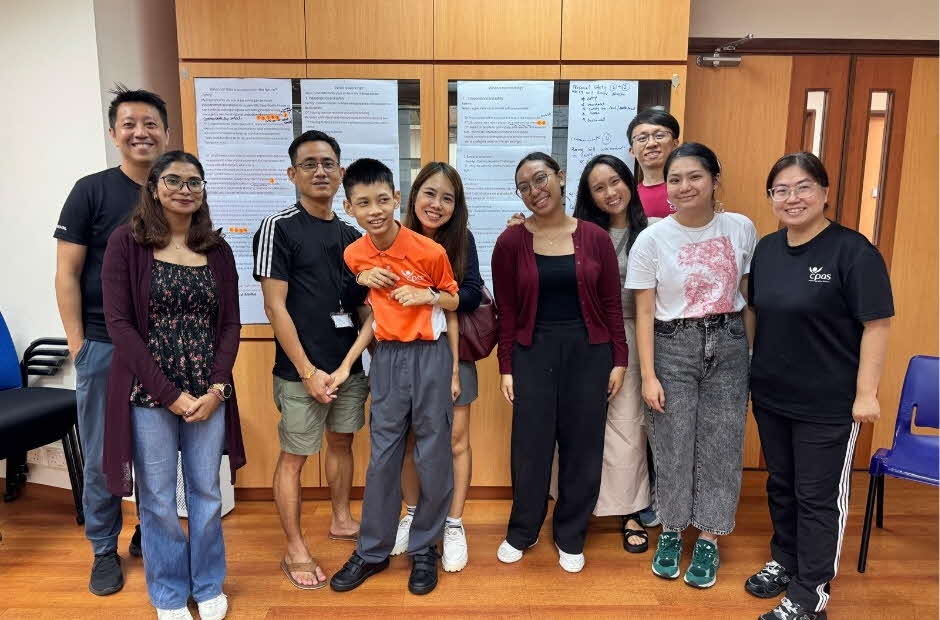
Parents and Allied Health professionals at a Family Envisioning Meeting, with
Ms Chin (far right). Photo courtesy of Ms Chin.
As Transition Planning Coordinator, Ms Chin begins walking alongside students and families long before graduation – typically when students enter their teenage years. Her work is about shaping the transition process around each student’s strengths, needs and aspirations.
“The starting point is simple but not always easy: know the person,” she says.
At the centre of her approach is the Family Envisioning Meeting, where the student, family and school team come together to discuss what a meaningful future could look like.
It does not begin with limitations. It begins with appreciation of the student’s strengths, interests, hopes, and what a good day might look like for them.
As far as possible, students are supported to share their own preferences too, through pictures, choice cards or guided responses.
“Sometimes, what they share surprises the adults in the room,” says Ms Chin. “One student may express that she wants to be an artist. Another may tell us that she needs more time to think before replying.”
For Ms Chin, these moments are why students – not just the adults around them – should be part of the conversation as far as possible.
From these conversations, goals become concrete. If a student wants to make friends, for instance, the first step may be learning the difference between a close friend and an acquaintance. If a student hopes to work with people, it may begin with a short work experience where they can practise serving, helping or interacting with others.
One student who was interested in the Food and Beverage industry began with a work experience placement. After graduation, he found a job at a fast food chain and even became Employee of the Month. He now returns to the school as a volunteer, helping with cooking enrichment activities.
This is what transition planning should make possible, according to Ms Chin: not one fixed outcome, but room for students to keep growing after they leave school.
She also helped start EnrichME!, an after-school programme that gives older students access to experiences many take for granted: bowling, cinema trips, cooking at a community centre, navigating public transport, and choosing how to spend their own time. Each outing takes planning, but it also gives students a chance to practise real-world skills in settings outside of school.
Her message to fellow educators is to start early, keep the student at the centre, and not treat a student’s pathway at 18 – when students leave CPASS (West) – as final. “The trajectory is very long,” she says. Students need time to grow. Families need to know that the journey does not end when school does.
Ms Michelle Chin, Cerebral Palsy Alliance Singapore School (West), is a recipient of the MOE-SG Enable Outstanding SPED Teacher Award (OSTA) 2025.
When vocational learning shows students their skills matter
At APSN Delta Senior School, where students with Mild Intellectual Disability receive vocational training, an aquaponics system began with a simple question: Can our students grow their own food in school?
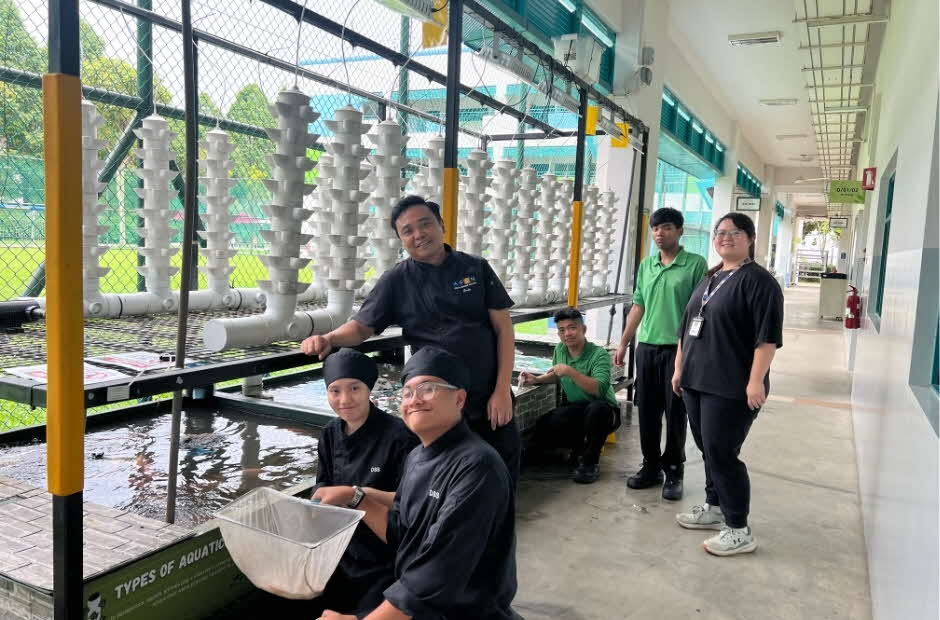
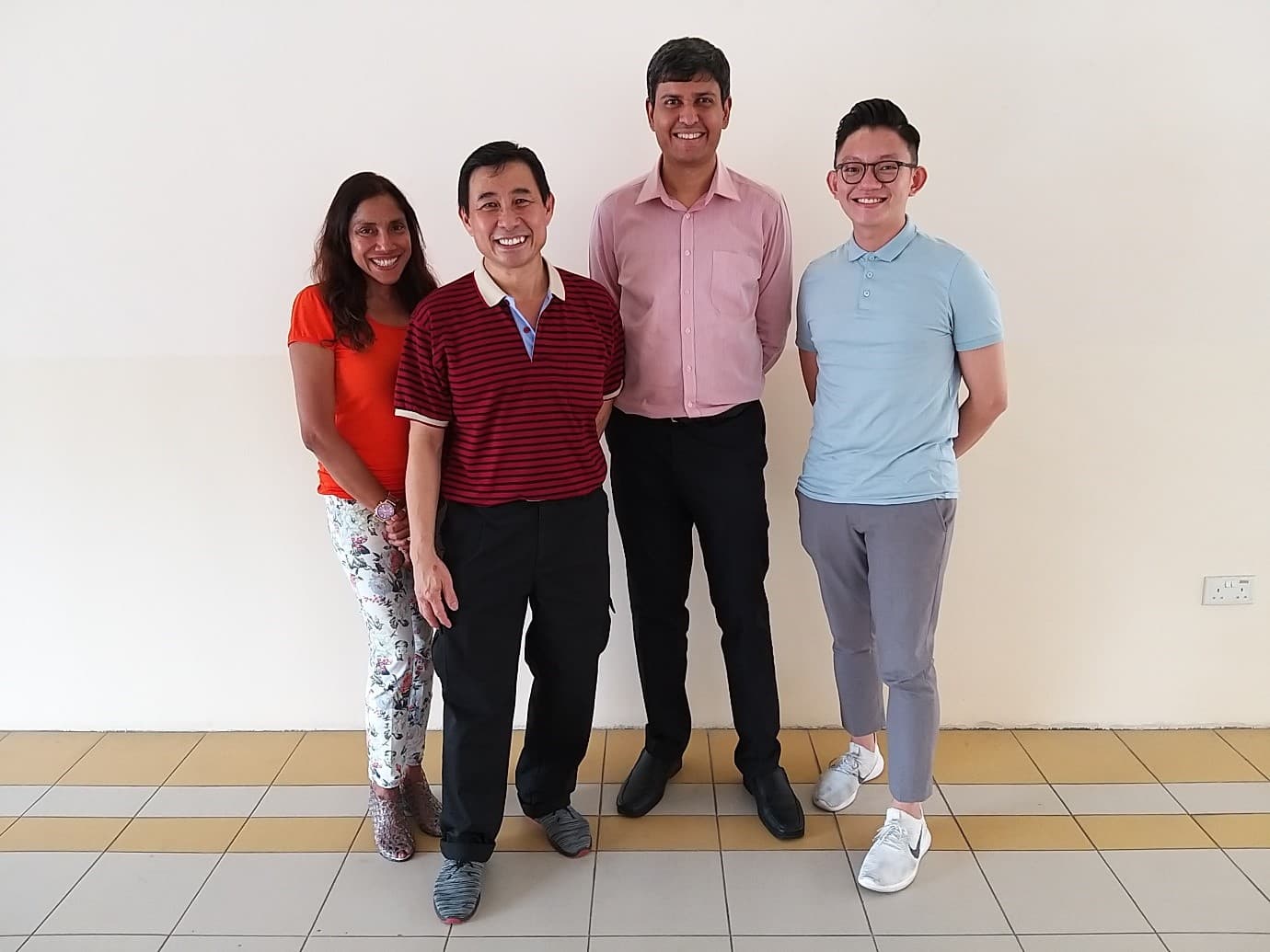
Mr Endy and Ms Neo with Horticulture students (in green) and Food and Beverage students (in black) at the aquaponics system. Photo courtesy of Ms Neo.
For Food and Beverage Trainer Mr Mohammad Endy and Horticulture Trainer Ms Neo Xu Qi, the idea connected sustainability with the vocational training their students were already doing. Horticulture students were familiar with hydroponics, while students in Food and Beverage were learning food preparation. Aquaponics allowed them to experience more of the food journey – caring for fish, growing vegetables, harvesting produce and preparing it for meals.
At first, the educators led the project. Then the students began asking questions of their own. One student asked, “Chef, if the fish help the plants, then what do the plants do for the fish?”
“The question stayed with me because it showed real curiosity,” says Mr Endy. “It showed that the students were beginning to understand how the fish, water and plants were connected – and that they had a part to play in caring for them.”
Another student became closely attentive to the fish tank. One morning, she told Mr Endy, “Chef, the water today a bit cloudy… not the same as yesterday.” It was a small observation, but it showed that she was noticing changes in the system, not just waiting for instructions. Over time, she also began guiding her classmates, making sure no one overfed the fish.
“When students experience the full journey – growing, caring, harvesting and cooking – it becomes much more meaningful,” says Ms Neo. “They start to understand why they are learning something, not just how to do it.”
Students now manage the full cycle: maintaining the system, caring for the fish, growing and harvesting vegetables, and preparing food. Some produce go home with students’ families. Some are shared with the elderly at SASCO @ Hong San.
“This helps them see that what they learn in school can be useful to others, from meals cooked at home to produce shared with the wider community,” says Mr Endy.
Mr Mohammad Endy and Ms Neo Xu Qi are Food & Beverage Trainer and Horticulture Trainer respectively at APSN Delta Senior School, and recipients of the MOE-SG Enable Innovation Award (IA) 2025.
.jpg&w=3840&q=75)