



One morning assembly at Dazhong Primary School, the air buzzed with excitement as students waited for their special guests to arrive.
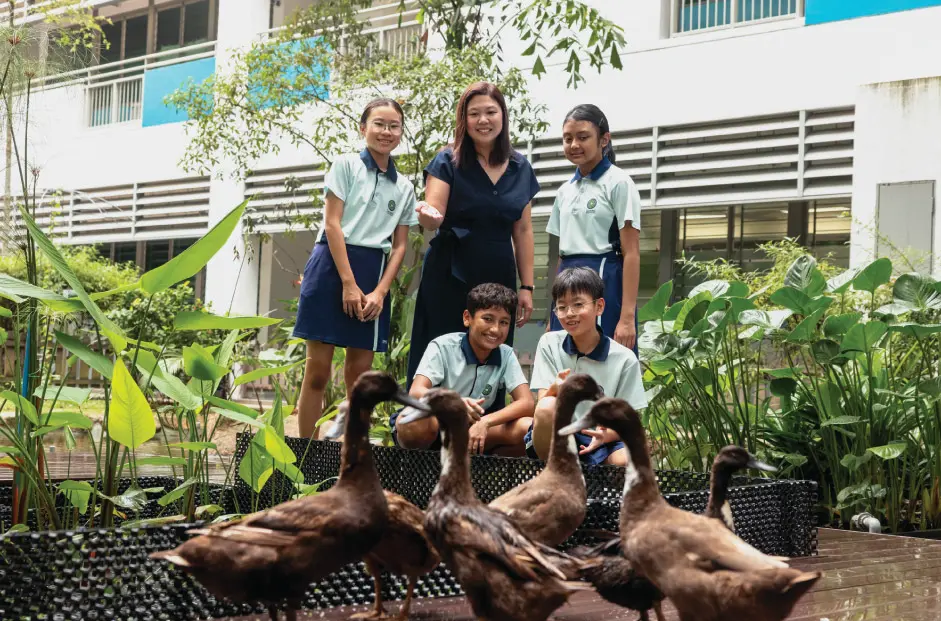
Teachers played along, dressed as animal keepers, to usher in none other than seven little ducks nicknamed the Dazhong Ducks, which were hatched in the school and call its eco garden home.
It is one of many ways the school brings science and sustainability to life through authentic experiences, says Mdm Ong Xuan Wan, who is the school’s Head of Department for Science; she also leads the Greenovator Applied Learning Programme (ALP). As for the morning “meet and greet” with the ducks that her department dreamed up of, "that moment has become a core memory for the children".
The ducks are an essential part of the school’s ALP, which all students go through. For that morning’s assembly programme, students watched a video about the life cycle of ducks: how the ducklings hatch in the incubator, grow, feed on "ugly" vegetables from the school's hydroponic system, lay eggs, and begin the cycle again.
This is the instinct at the heart of her practice: that sustainability becomes real only when students can touch it, name it, feed it, and feel responsible for it.
Pushing on from awareness to action
Mdm Ong came to sustainability education through a concern she has carried for years. Having observed many well-intentioned programmes, she noticed a pattern.
"A lot of people stop at awareness," she says. When it comes to green matters, "they know these environmental issues exist, but how many are actually taking action?"
To go further when conceptualising Dazhong Primary's current iteration of the ALP, she knew she had to nudge students over the hump from awareness into action and advocacy.
All students start with exposure to one of the school's most distinctive initiatives: its Interactive Virtual Gamified Eco-trail, featuring Pokemon-inspired sustainability mascots, called DZmons (DZ stands for Dazhong, of course!). Students complete quests related to issues such as recycling and food waste.
These are Mdm Ong’s ways to pique their curiosity about environmental issues and inculcate habits of observation and care that extend beyond the game.
At the middle primary levels, students are encouraged to act on that budding awareness, by taking on stewardship and hands-on roles and managing the school’s zero food-waste and hydroponics systems.
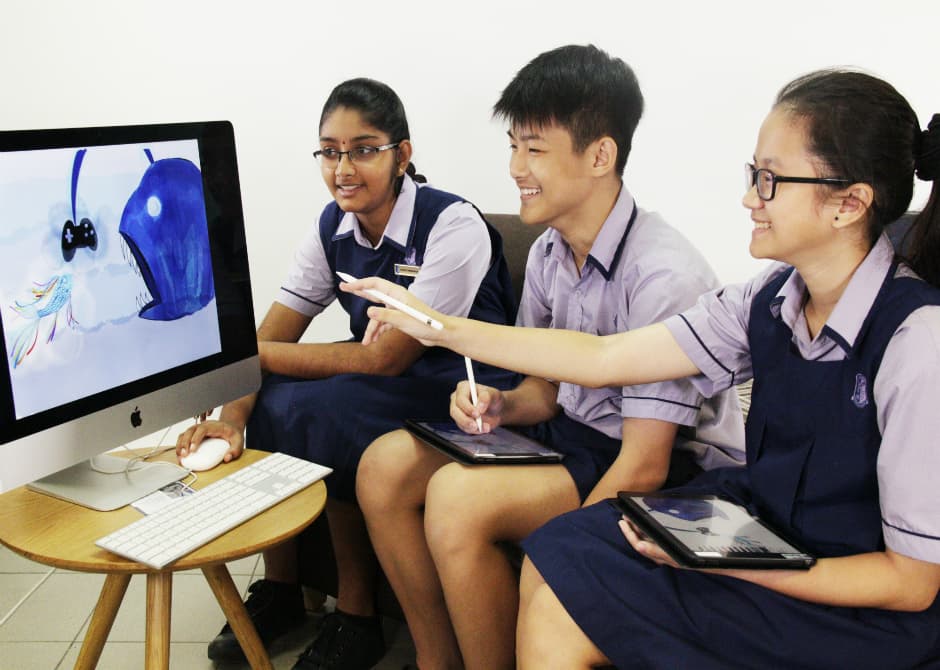
At the upper primary levels, students advance to problem-solving and advocacy roles, using coding and 3D printing to produce signs that remind students to turn off the switches before leaving the classroom, for example.
Schoolwide, Mdm Ong also runs the school's annual Green Challenge recycling competition, where classes with the heaviest collection each term wins a “Green Challenge Champions” banner that they hang loud and proud outside their classroom.
"The classes that didn't get [the banner] were motivated to bring more recyclables the next term so that they could win the banner," says Mdm Ong with glee.
For her, the banner simply gets students started until recycling shifts from an extrinsic goal into an instinctive, shared habit, showing students that small, consistent daily actions add up to meaningful environmental care.
Kindling involvement from the community
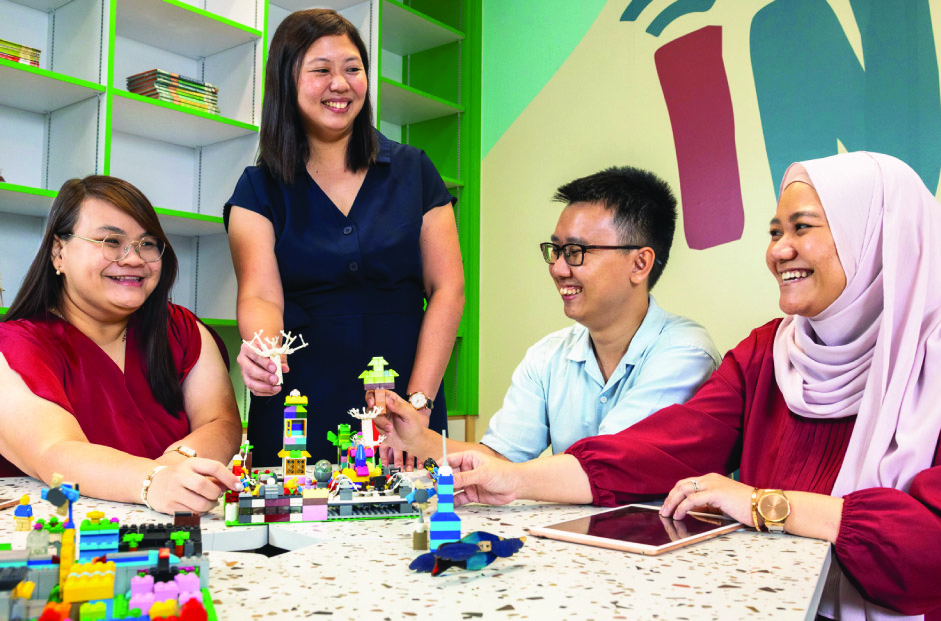
For Mdm Ong, active contribution towards the school's green culture does not end with the students alone.
Mdm Ong began quietly spotlighting "green advocates" among staff and cleaners — celebrating small acts like reusing a takeaway cup as a pen holder, or bringing containers from home for food — so that good habits could be spread by example.
And when the school’s supply of duck eggs and vegetables are shared with staff, parents and students, there is natural chatter over what dishes they made of them.
At home, students complete green-themed tasks with their families on the Greenovator activity card; activities range from litter-picking and conserving electricity.
For Mdm Ong, these moments of shared joy turn sustainability into a lifestyle that is, well, sustainable. "As much as we try to impact the children, we also hope that we impact their parents and family,” she says. “This future is for them to live in.”
Mdm Ong has come a long way from simply tending to the school's hydroponics garden when starting out as a young Science teacher.
"When I first joined teaching, I wanted students to contribute positively to the community in some meaningful way," she says. "I think sustainability became that journey for me too."
"As much as we try to impact the children, we also hope that we impact their parents and family. This future is for them to live in.”
Mdm Ong