



In one Science lesson, students are given this scenario: A woman is in the middle of making tea when her phone rings. To enjoy a warmer cup of tea after her call, should she add cold milk to the hot tea now or later?
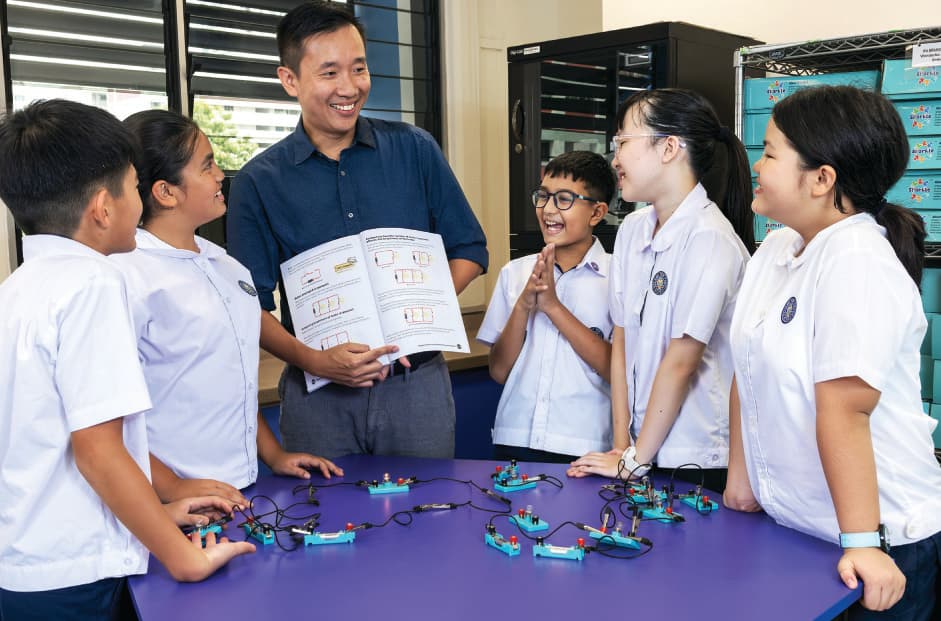
They break into groups and offer their hypotheses. As they propose what apparatus they need to conduct an experiment to prove their point, they are told what is and what is not available, leading to quick adjustments to their plans. Energetic discussions between groups are encouraged.
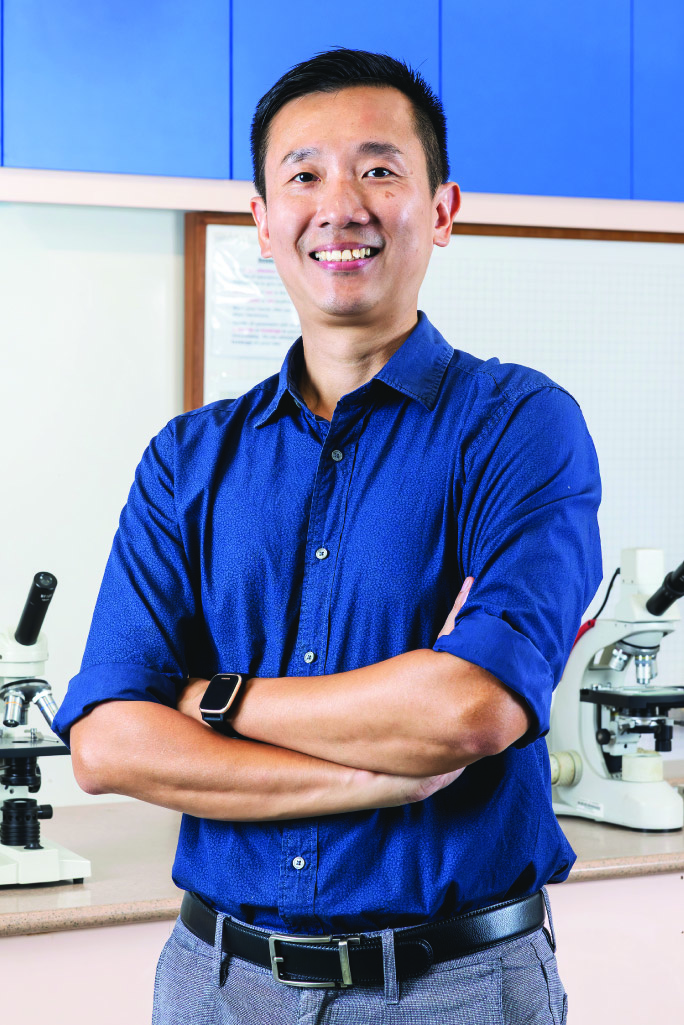
This is what Science with Mr Soo Gham Seng can look like.
The Head of Department (Science) at Kuo Chuan Presbyterian Primary School is rolling out a pilot programme for Primary 4 and 5 students this year.
He adapted inquiry-based Excellence 2000 (E2K) lessons to students of different levels of ability, and exposed those who are more ready for more challenging levels of lessons alongside classmates in mainstream classes.
In this mixed-ability environment, everyone may work on the same experiment but are given varying degrees of support: some students may receive more instructions while others are given fewer clues or more apparatus.
The point is not to make learning difficult for its own sake, but to pitch the struggle according to student ability, where everyone can reach for the finish line together.
Mr Soo calls this “productive struggle”, stemming in large part from observing patterns in his students.
Deepening learning through open inquiry
With open inquiry and experiential learning, says Mr Soo, students develop “the deepest kind of understanding” because they have worked through the concept for themselves, instead of only learning it from textbooks or instruction.
In one lesson on electricity, for instance, students used an online simulator to build circuits before Mr Soo formally taught the chapter – a way of letting them test, observe and make sense of the concept before receiving the explanation.
For Primary 5 student Sushil Shyam, such curiosity-led exploration is fun. Learning this way helps him remember concepts better – and has made him enjoy Science more – as Mr Soo encourages them to “try things out ourselves in class instead of waiting for answers”, he says.
For Mr Soo, it is also how he helps students move past the fear of a wrong answer, a missed mark or an unrealistic target.
“It’s okay to make mistakes,” is a refrain that his students have grown used to hearing.
He recalls an academically driven student who buckled under the pressure of his own expectations. Even a small mistake in a test or assignment could upset him deeply.
Recognising that fear of failure, Mr Soo shared with him his own detour as an undergraduate. He had started out in Chemical Engineering, only to withdraw from the course after a few months when he realised it was not for him. He later applied to be a relief teacher at his alma mater before applying for undergraduate studies at NIE. As he began preparing lessons and watching students’ minds open, he found his calling in teaching.
What had felt like failure at the time eventually led him to the classroom – and became a way for Mr Soo to show the student that a setback need not be the end of the road.
It was only later that the student’s mother told Mr Soo that his story had uplifted the boy and helped him restart his learning.
Creating a culture conducive for trying
Mr Soo’s difficult emotions from withdrawing from his university course left him wishing he had had more emotional support as a young person.
It is why he fosters an environment that embraces trial and error as a foundation for learning. It comes with rules of engagement: Unkindness and discourtesy are dealt with immediately. “It takes only a few careless remarks to destroy the culture,” he says.
And when experimental results do not align with theoretical concepts, Mr Soo models the next step: honesty. He asks what might have gone wrong, what could be adjusted, and if the wrong data could still reveal anything useful.
‘Struggling’ in acting for the environment too
Mr Soo and his colleagues in the Science department are also no strangers to productive struggle.
Their best days at work are when they witness students being eager and challenged to learn about the world they live in.
He leads the Greening Kuo Chuan programme, which brings together colleagues from departments such as English Language, Mother Tongue, CCE, Outdoor Education and Aesthetics, to provide platforms and initiate activities through which students can develop and demonstrate their “will to act" for the environment.
He says, “Instead of focusing only on giving our students the best, we can help them appreciate what they have and become the best versions of themselves – so they can, in turn, benefit society.”
"Instead of focusing only on giving our students the best, we can help them appreciate what they have and become the best versions of themselves — so they can, in turn, benefit society."
Mr Soo