



Got a job in design? Or found work at the airport? For most people, these are ordinary milestones. But for graduates of Special Education (SPED) schools, landing a role that genuinely fits who they are and what they can do, requires efforts far more deliberate.
In a bustling part of Changi Airport Terminal 3, Zachary John Tan carefully tends to the plants, his movements precise and purposeful. At 21, this Metta School graduate has become an integral part of the team at Changi Airport, and his story is a powerful reminder of what becomes possible when schools, employers and families work together with a shared purpose.
It was not always obvious that Zachary would end up here. But through years of careful observation, his teachers and parents spotted in him a natural affinity for plant care and systematic tasks. Back in school, he practised skills like trimming leaves and watering plants. These were not just random activities but the deliberate building blocks of a vocation. Through the collaborative development of his Individual Transition Plan, his unique strengths were identified and built upon, eventually paving the way for his placement at Changi Airport Group (CAG) as a Project Assistant.
Zachary's journey also reflects a broader shift in how SPED schools in Singapore are approaching vocational education. The new Vocational Education (VE) Teaching and Learning Syllabus for SPED schools, launched in 2023, draws a strong connection between classroom learning and real-world work, moving away from a one-size-fits-all approach and towards something far more personal. Employers are responding in kind, developing partnerships that play to the strengths and interests of their potential hires rather than asking students to fit a fixed mould.
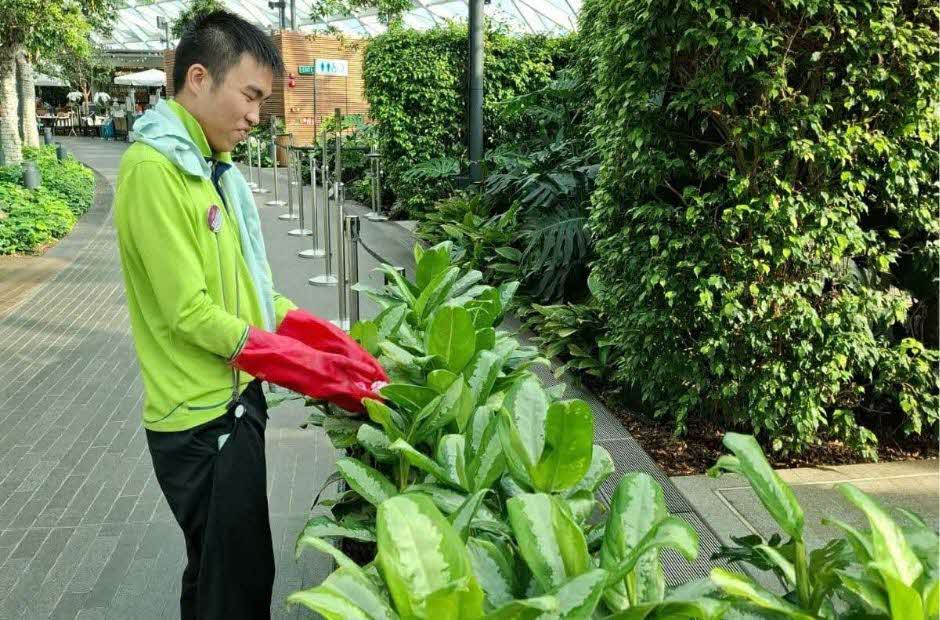 Zachary tending to the flora at Jewel Changi Airport.
Redefining what meaningful work looks like
The VE syllabus for SPED schools also broadens the definition of work. Meaningful contributions can take many forms, from volunteering and work attachments to community-based activities, home-based employment, and paid positions. It is about matching the student’s individual strengths and interests with suitable post-school pathways.
For MINDS alumnus Nurish Quehara Binte Abdul Malek, that pathway began with something simple, spending time with seniors. Her volunteer work continues to bring her joy, and has also revealed a quiet empathy, a gift for conversation, and a genuine desire to support others. These have become the foundation of her vocational pathway.
To build this, MINDS partnered Lions Befrienders and OCBC to develop a pathway tailored to Quehara’s interest and pace. Through volunteer engagements with seniors, she was gradually introduced to roles such as welcoming residents, assisting with activities, preparing materials and holding conversations. She received explicit instruction, guided practice and visual supports to build her confidence, while workplace routines were adapted to match her communication style. Over time, these real-world experiences have strengthened her interpersonal skills and work readiness in ways that a classroom alone could not.
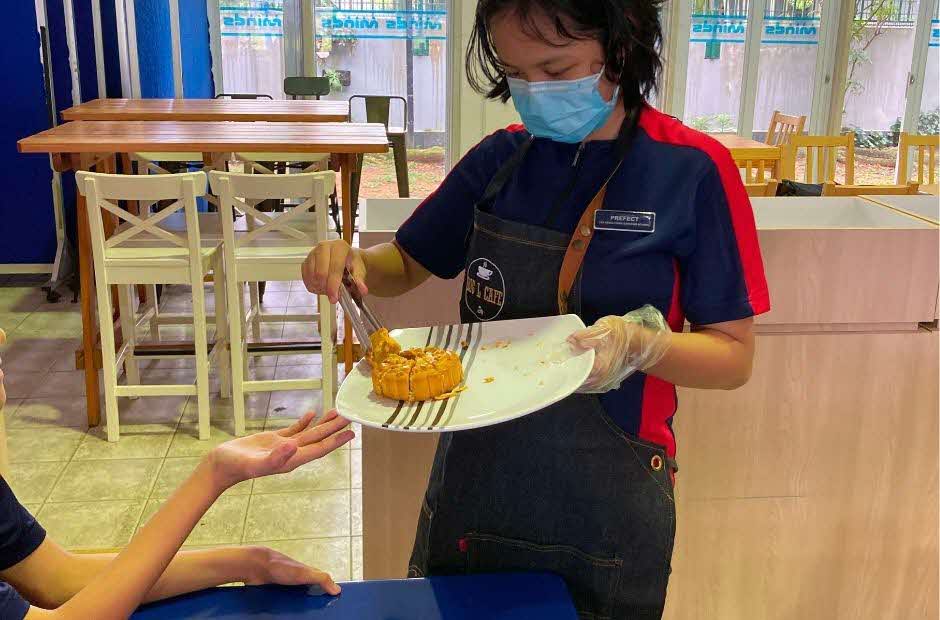 While at school, Quehara benefited from development in interpersonal and service skills that would later support her volunteering efforts.
Schools work closely with students and employers
Behind every successful match is a web of relationships between employers, schools, parents, and students that takes time and intention to build.
The VE syllabus emphasises that work experience should occur in "real-world, authentic contexts", requiring employers to understand both the potential and support needs of the students they work with. Importantly, the arrangement should benefit both sides.
For Zachary, hiring partner TEHC International implemented a graduated support system when he was deployed to CAG, starting with close supervision from a job coach, then stepping back as Zachary grew in confidence. CAG’s Head of the Changi Foundation, Ms Ivy Choo, shares that Zachary demonstrates real potential when given opportunities in his area of strength.
Schools play a central coordinating role throughout this process. Ms Eleanor Kuah from Metta School shares their approach, "We collaborate closely with employers by aligning job tasks with our vocational curriculum and learning outcomes. Before each vocational placement, we conduct site visits, review job scopes, and discuss students' learning needs."
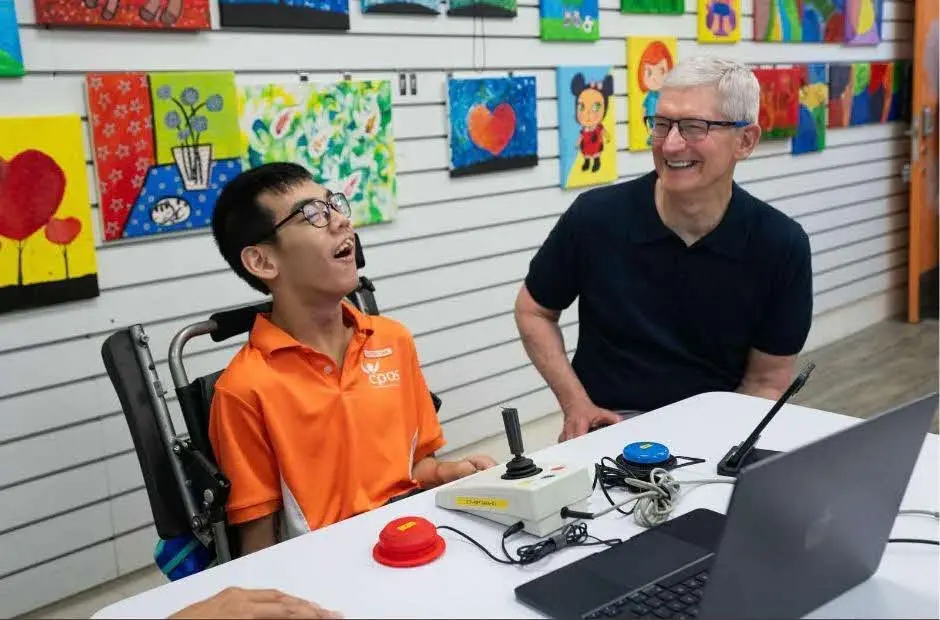
Such a customised approach was also taken at Cerebral Palsy Alliance Singapore School (CPASS) East, where the team developed alternative curriculum to support students like Aloysius Gan in pursuing entrepreneurship.
Aloysius, who uses assistive technology in this daily life, has a clear goal, to start his own graphic design business.
"We focus heavily on person-centred approaches such as leveraging their strengths, equipping them with assistive technology, and changing the entire classroom workflow to suit their preferences and needs," explains the teaching team. Aloysius also received specialised technology training, while his parents learned to support his accessibility setup and business operations at home, effectively transforming their living space into a professional graphic design studio. They also maintain regular communication with his CPASS teachers to keep abreast of new technologies that could further enhance his skills.
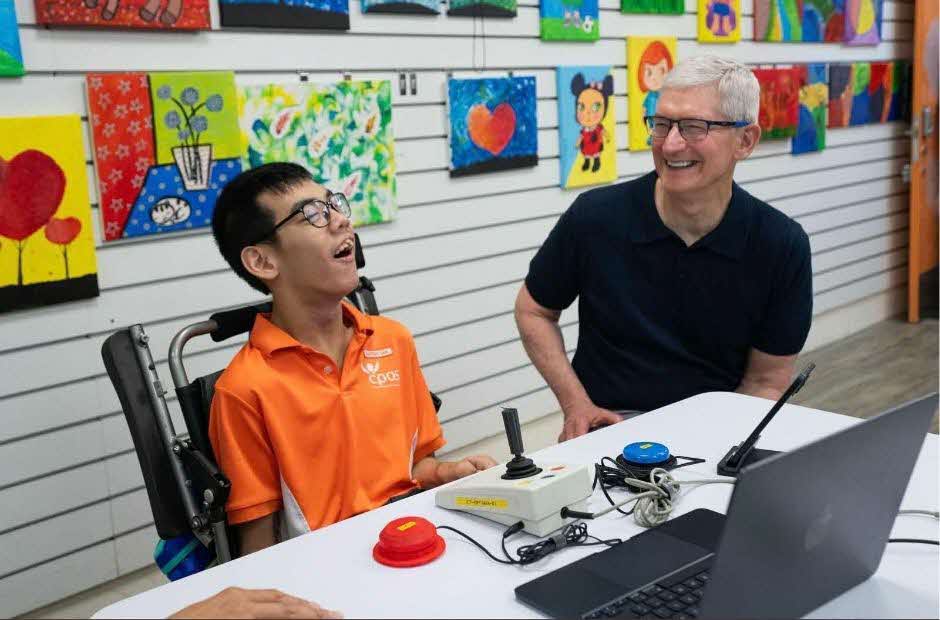 Aloysius hosting Mr Tim Cook, CEO of Apple, during his visit to CPASS in 2024.
For all these SPED school alumni, the most crucial partnership begins at home. As Zachary's mother, Mdm Joyce Wee, puts it, "Independence grows step by step. It's never an overnight achievement." Her approach of giving Zachary space to make decisions while staying connected with job coaches and supervisors captures the delicate balance that families navigate.
The VE syllabus recognises the importance of school-home partnership, recommending that families be involved in decisions about work experience so that vocational goals can align with family values and long-term plans.
Looking Forward: Scaling success
The impact of these partnerships extends well beyond the individuals involved. To Mdm Wee, Zachary's success as the first Metta graduate hired by CAG "sends a clear message that inclusion is not just a concept — it's possible".
When Quehara volunteers with elderly residents, she's not just developing social skills — she is contributing to intergenerational bonding and community cohesion.
Aloysius's home-based graphic design business challenges traditional notions of workplace accommodation. His recent work designing medals for the Toyota World Para Swimming Championship 2025 demonstrates how technology and family support can create entirely new models of meaningful employment.
Taken together, these stories offer a blueprint ne that other organisations can draw on as they consider how to engage with SPED graduates. The broader impact, perhaps, is this: that students come to see themselves as valued members of their community and the society.
What makes these partnerships work
Good partnerships are built on open communication. Employers, educators and families need to be clear about expectations, support needs, and collaborative opportunities. Just as importantly, these conversations should be ongoing.
Regular check-ins help everyone stay aligned as students grow and their needs evolve.
It also helps to ease students into the workplace gradually. Starting with the support of a job coach and stepping back over time as confidence grows gives students the opportunity to build genuine independence, rather than being overwhelmed or relying on support indefinitely.
Flexibility matters too. Every student communicates, learns, and works differently, so the most effective partners are those who adapt their approaches instead of expecting students to fit a fixed mould.
Most importantly, strong partnerships are anchored in students' strengths and interests, not their challenges. When students are given opportunities that align with what they enjoy and do well, they are far more likely to thrive.
Finally, meaningful partnerships take time to develop. Trust, understanding and confidence are built over time, and the employers and educators who see the best outcomes are often those who are committed for the long haul.