




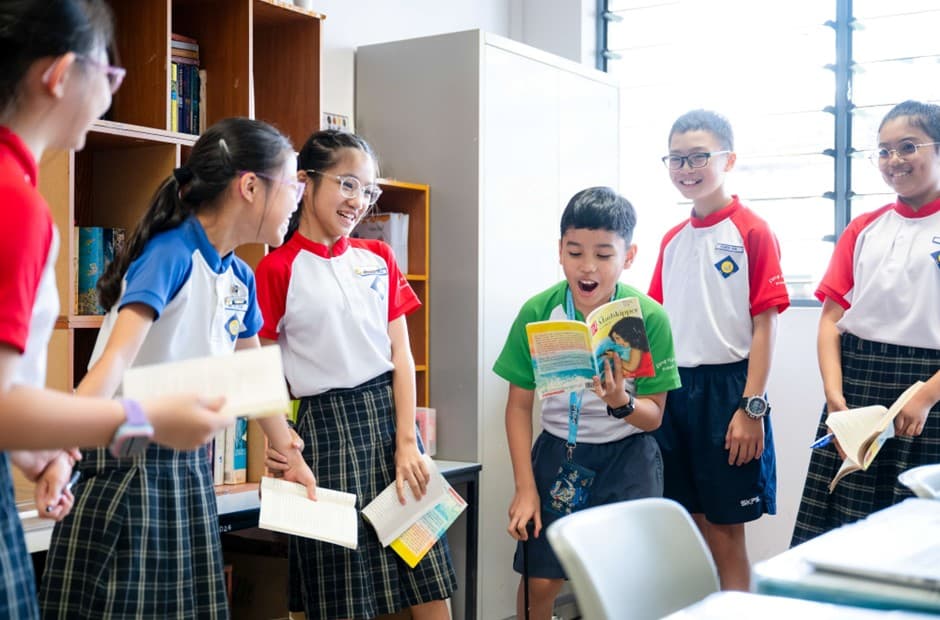
“I used to take a whole month to finish reading a Percy Jackson book, but now I can finish it in one and a half weeks,” says Jayden Wong, a Primary 6 student at Seng Kang Primary School.
For fellow Primary 6 student Syuhada Puteri Muhammad Iskandar, reading sometimes felt like a chore. Today, she says proudly that she reads every single day.
Both students credit this shift in their reading habits to the school’s Reading Circles programme.
“Reading Circles has allowed me to discover different books and genres, and I’ve realised that reading is not always boring,” Syuhada says.
Beyond reading more frequently, Jayden and Syuhada are also reading differently than before. Through Reading Circles, they have learnt to see from different characters’ perspectives, and draw connections between the stories they read to the world around them.
Fostering students’ love for the English language
In 2024, Prime Minister Lawrence Wong announced in his National Day Rally speech, that the Gifted Education Programme (GEP) would discontinue in its current form. Instead, students with strengths and talents in the academic domain would be stretched through a different approach.
Under the current GEP, students transfer to one of nine designated primary schools that host the programme in Primary 4. With the revised approach, these students would remain in their schools, which offer school-based provisions to develop them in English, Maths and Science – beyond the normal curriculum.
Students who are assessed to benefit from even further stretch are invited to attend centre-based advanced modules after school at designated schools nearby. The modules will start running from 2027 for Primary 4 students.
For students with strengths and talent in the English Language, three school-based programmes are offered by primary schools, supported by MOE’s Gifted Education Branch. These are the Reading Circles, Creative Writing programme, and Wits & Words debate programme.
At Seng Kang Primary, Reading Circles is an after-school programme for selected Primary 4 and 5 students, i.e., those who display strong interest in reading and demonstrate critical thinking and creative responses in class. It is conducted over eight sessions in the school year.
Getting creative with words
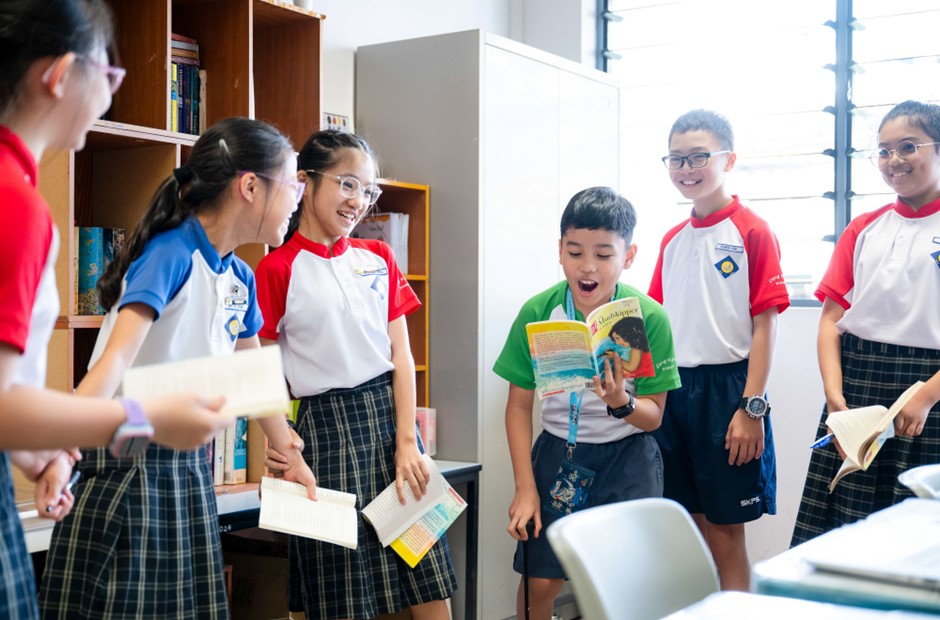
By exposing students to a wide range of fiction and non-fiction texts, Reading Circles aims to foster literary appreciation, stretch interpretative skills, and build confidence in discussing complex issues.
What sets it apart from regular English lessons is its depth and pace, which are calibrated to match students’ interests and aptitude. Students are encouraged to question ideas, consider multiple viewpoints, and engage in student-led discussions.
At home, Mdm Siti Noorlyla sees the impact of the programme on her daughter, Syuhada, firsthand.
“She is always very happy to share with us what they discussed in Reading Circles when she comes home after school. The guided discussions have really stretched her thinking, and she is more open to exploring new ideas now,” Mdm Siti says. “Previously, she read books mainly to understand the story. Now, she thinks more critically and expresses her views more confidently.”

There is also greater emphasis on creative writing and inquiry-based research as part of Reading Circles. Syuhada shares that the programme has given her opportunities to express herself in new forms, such as poetry and journal entries. “I like that I can get creative in writing. In normal English classes, we usually use helping words to write stories, but in Reading Circles, we’re free to use any words,” she says.
It’s not just about academics, but building social-emotional competencies
Jayden shares that before attending the Reading Circles, he “usually did not go that deep into a book”. Now, he spends more time unpacking a story’s plot, characters and underlying themes.
His mother, Mdm Marie Long, notes that the programme has helped him develop strong analytical skills, particularly in understanding situations and people. “He is able to assess people’s moods and emotions much better now than before, and has also learnt to pause and think before taking action.
She adds that Jayden has also become more expressive. “Previously, he would be quiet if he was in a bad mood. But he has picked up more vocabulary through the Reading Circles, and is now able to express his feelings and emotions more freely.”
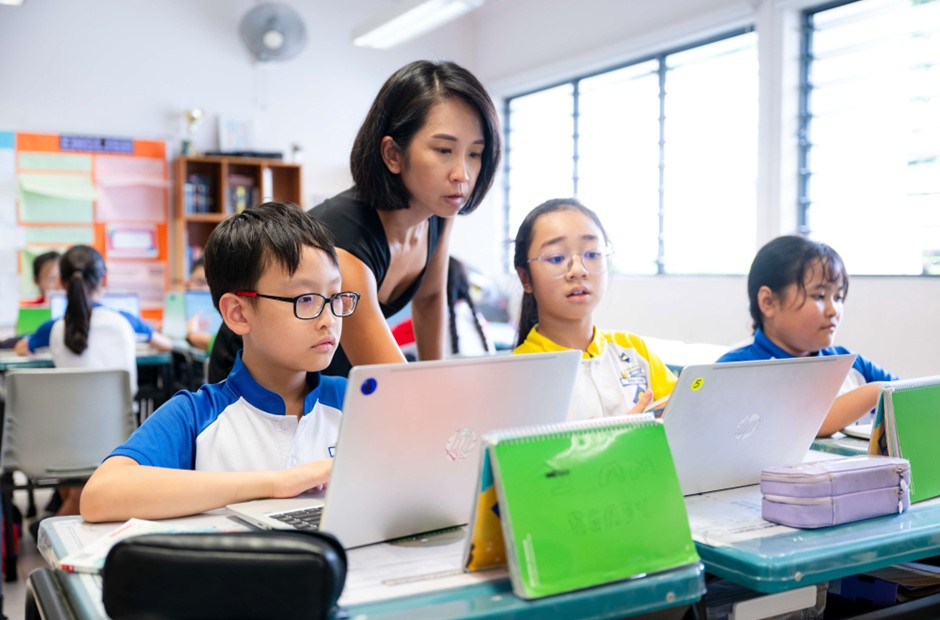
The impact of Reading Circles extends far beyond academics. Mrs Serene Tan, Senior Teacher (High Ability Learners) at Seng Kang Primary, has observed significant social and emotional growth among students in the programme.
She recalls a student who was initially very quiet in Primary 4, but later blossomed into an articulate leader by Primary 6. “It has been remarkable to see students grow not just academically, but also in their confidence to express themselves, ask questions and respectfully disagree with others,” she says.
Mrs Tan also shares about a boy who struggled with behavioural issues in the lower primary years. Although he was identified as “gifted” at the GEP screening in Primary 3, he chose to remain in Seng Kang Primary and attended its school-based programmes.
When Mrs Tan started teaching him in Primary 5, she observed that “he did well in class, but he wasn’t connected to anyone else or to the lesson materials.”
As he started attending Reading Circles with peers who had similar language strengths, and teachers who could engage him more through his stronger subject, he appeared more connected to his learning.
Over time, his behaviour improved and he started paying more attention in class. “When his classmates saw that he was able to add value in their group discussions, they included him more. And he reciprocated by behaving more positively towards them,” she says.
Programmes like Reading Circles provide students with opportunities to learn alongside like-minded peers who share similar learning profiles. “These are spaces where traits like curiosity are deeply valued, and students can feel heard and understood,” says Mrs Tan.
Reflecting on her daughter’s experience in Reading Circles, Mdm Siti is appreciative of the school’s support. “I’m very happy that the school recognises my child’s interest and gave her the opportunity to participate in a programme she enjoys so much. Syuhada’s interest in the English Language has deepened, and she is now more excited to go to school than before.”