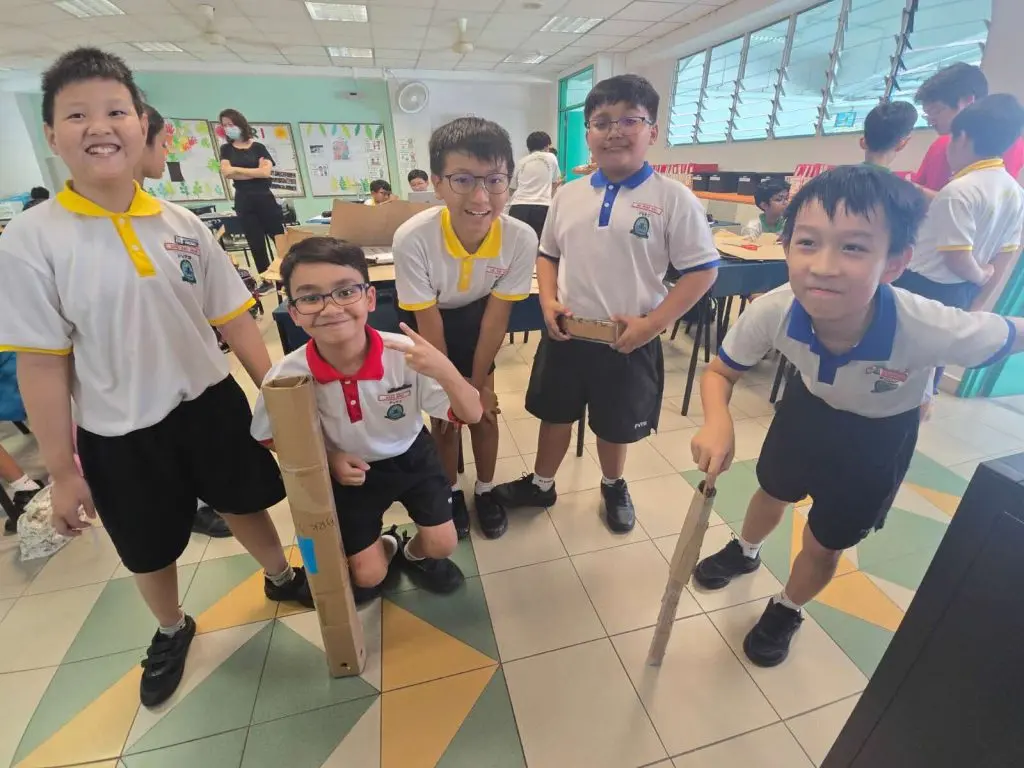





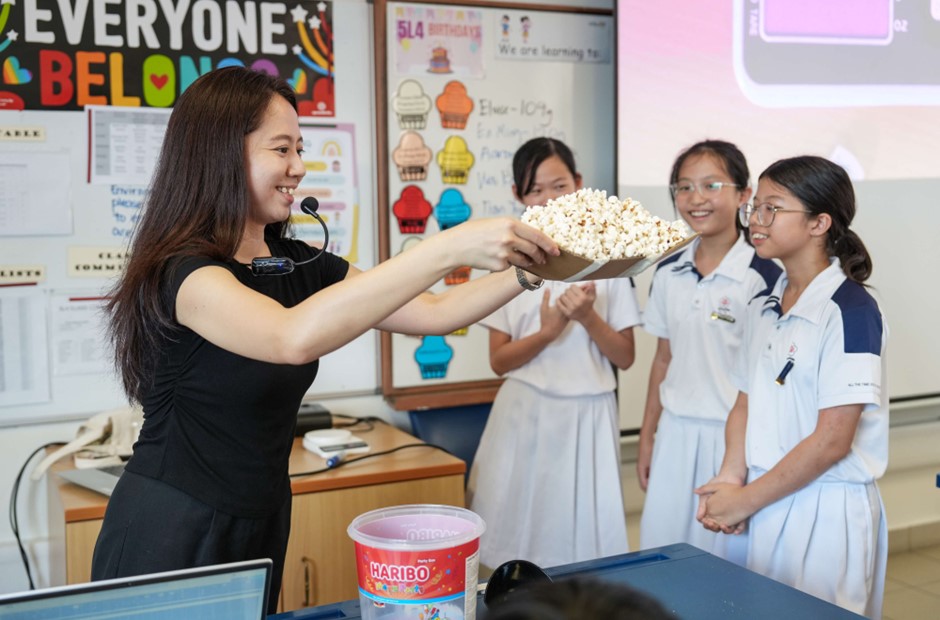
As part of the Mathematics Expert @ Work (MEW) programme at Pei Hwa Presbyterian Primary School, students get to build popcorn containers to learn about volume, and calculate optimal lift travel times to learn about rates and speed.
Mrs Sharon Wang, MEW teacher at Pei Hwa Presbyterian Primary, shares that such activities are designed to “stretch them beyond what is taught in the classroom”.
In 2024, Prime Minister Lawrence Wong announced in his National Day Rally speech, that the Gifted Education Programme (GEP) would discontinue in its current form. Instead, students with strengths and talents in the academic domain would be stretched through a different approach.
Under the current GEP, students transfer to one of nine designated primary schools that host the programme in Primary 4. With the revised approach, these students would remain in their schools, which are all equipped with school-based provisions to develop them in English, Maths and Science – beyond the normal curriculum.
Students who are assessed to benefit from even further stretch are invited to attend centre-based advanced modules after school at designated schools nearby. The modules will start running from 2027 for Primary 4 students.
For students with strengths and talent in Mathematics, primary schools can offer school-based provisions that are supported by MOE’s Gifted Education Branch and the Academy of Singapore Teachers. These are the MEW programme, Excellence 2000 (E2K) Mathematics Programme, and Primary Mathematics Project Competition.
At Pei Hwa Presbyterian Primary School, all three provisions are offered to Primary 4 and 5 students, who are selected based on their academic strengths in Mathematics and teacher recommendations.
Beyond structured steps and fast answers
MEW lessons are designed to make connections between abstract mathematical concepts and their practical applications. Additionally, students are trained to clearly articulate their reasoning and decision-making process.
“Unlike normal Mathematics lessons, where students solve equations and present calculations in a systematic manner, MEW involves a deeper conceptual understanding. Students have to explain the steps they take, and justify their reasoning,” says Mrs Wang.
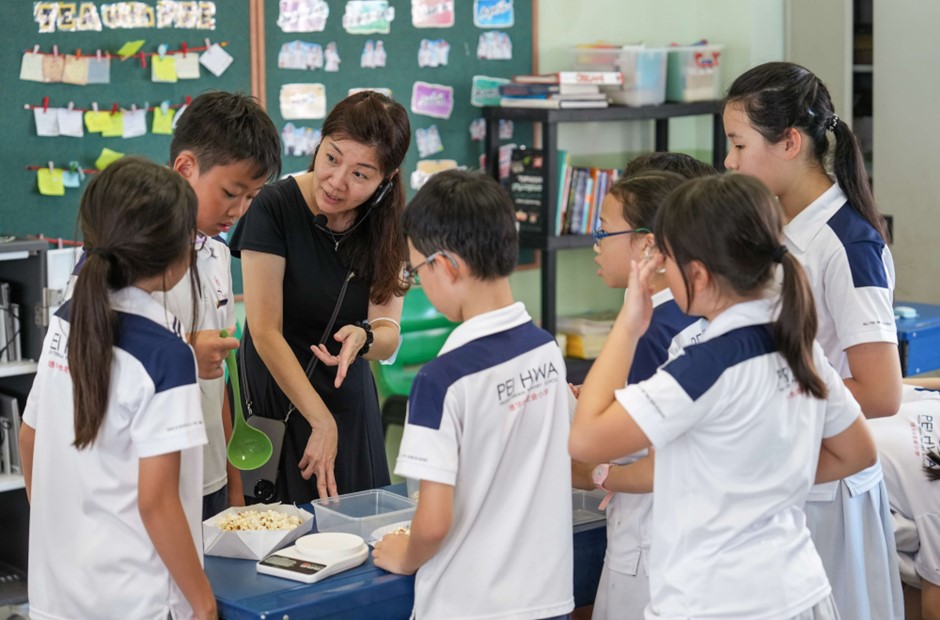
The result of this is that students are less answer-driven and more process-focused, she observes. When one method fails, they try another. When they encounter difficulty, they persevere. Sometimes, they think out of the box too.
“As humans, we always want to solve things in the quickest way. But we teach our students to explore different ways to solve problems. In life, we never have just one method to solve things,” she adds.
“It doesn’t matter which way you take, as long as you get to the answer. The attempt to try, and then bounce back when you fail, is what we want to see.”
From numbers to “aha!” moments
For Primary 6 student Charissa Chow, who has enjoyed solving Mathematics puzzles since she was a child, the MEW programme has been a fun way to learn Mathematics beyond textbooks.
“It’s different from normal classes because it’s more project-based and we get to be creative and build things. We also learn to apply Mathematics to real-world situations,” she says.
Although Charissa was selected for the Gifted Education Programme (GEP) at Primary 3, she chose to remain at Pei Hwa Presbyterian Primary because of the strong support she receives from her friends and teachers.
Charissa says she does not regret her decision to stay on in the school because she gets to carry out fun experiments with her friends through the Mathematics and Science school-based provisions.
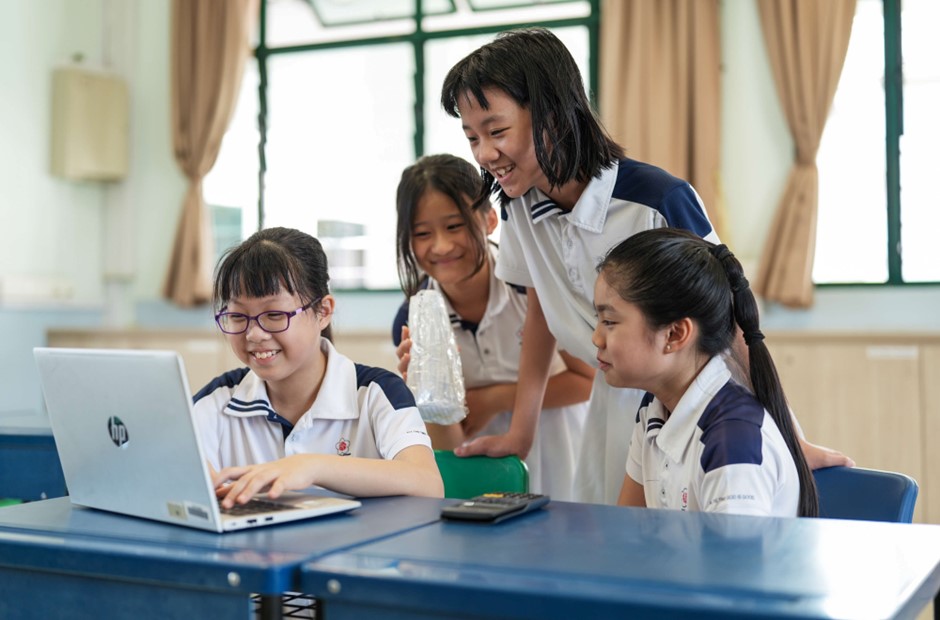
Her parents, Mr Aaron Chow and Mdm Basia Teh, add that the decision not to take up the GEP was a natural choice for Charissa because she was already in a good learning environment. Moreover, her school provided her with “ample opportunities to explore different facets of life and grow in areas beyond her studies”. Besides the school-based provisions she attends, she is also a student leader and is actively involved in community service projects.
“The school provides her with holistic development, and we wanted to give her the space to grow in identity and character. After all, we are getting her ready not just for exams, but for the world,” says Mdm Teh. “At school, she also has the opportunity to interact with people from different profiles and broaden her worldview.”
Mr Chow and Mdm Teh add that since Charissa began attending the additional provisions, she looks forward to school even more, and never wants to miss her lessons. She has also become more motivated, confident and comfortable presenting her ideas to others.
Mrs Cindy Tan, another MEW teacher at Pei Hwa Presbyterian Primary, sees students growing in confidence and eloquence after attending the provision.
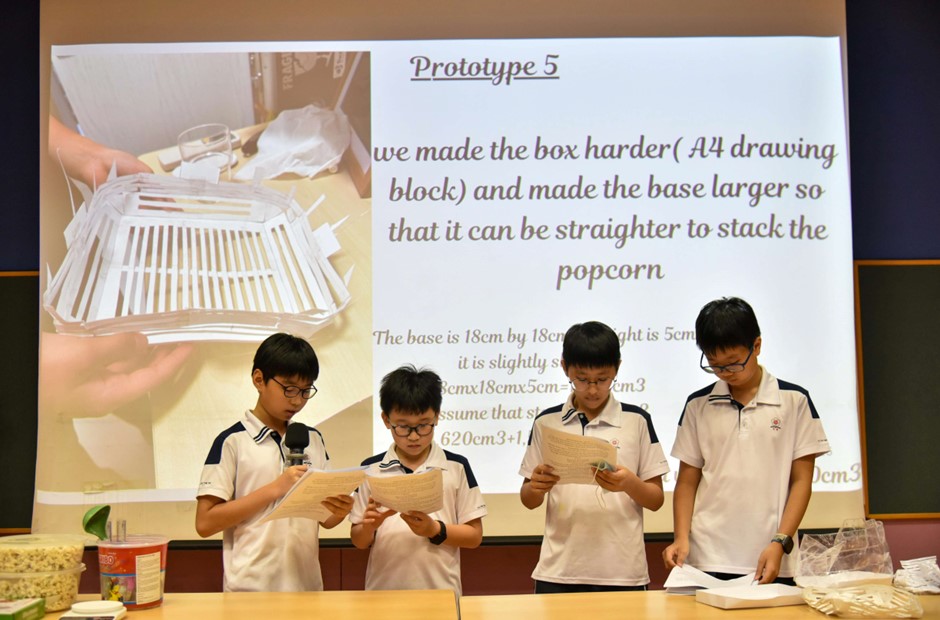
“When I ask these students to explain their reasoning to the class, they’re usually very ready to, and they’re systematic in explaining their steps,” she says.
The teachers also emphasise the importance of creating a safe environment for students to explore new ideas, even if they make mistakes. “What I find most rewarding is when I hear the ‘aha!’ moment from them when they finally figure out the solution,” says Mrs Wang.