




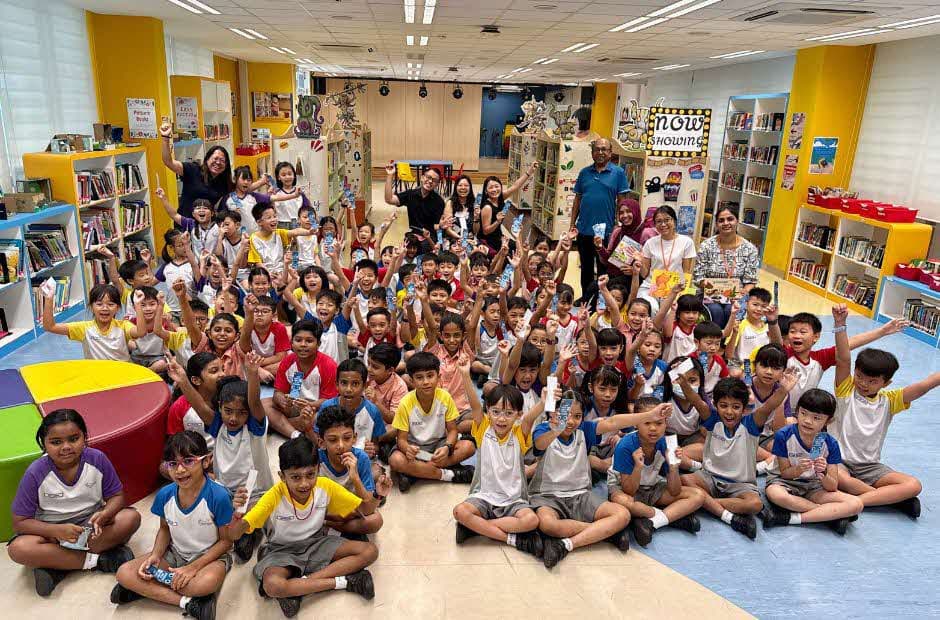
Horizon Primary School lets stories unfold to spark students’ curiosity
When the bell rings for weekly storytelling sessions at Horizon Primary School, “Story Seeds”, the library fills quickly with eager Primary 1 and 2 students. Parent volunteers settle into different corners, each holding picture books in English, Chinese, Malay or Tamil.
Students scan the covers and listen in, deciding which story appeals to them. A tale about a hungry caterpillar, perhaps. Or a fairytale retold in a different language.
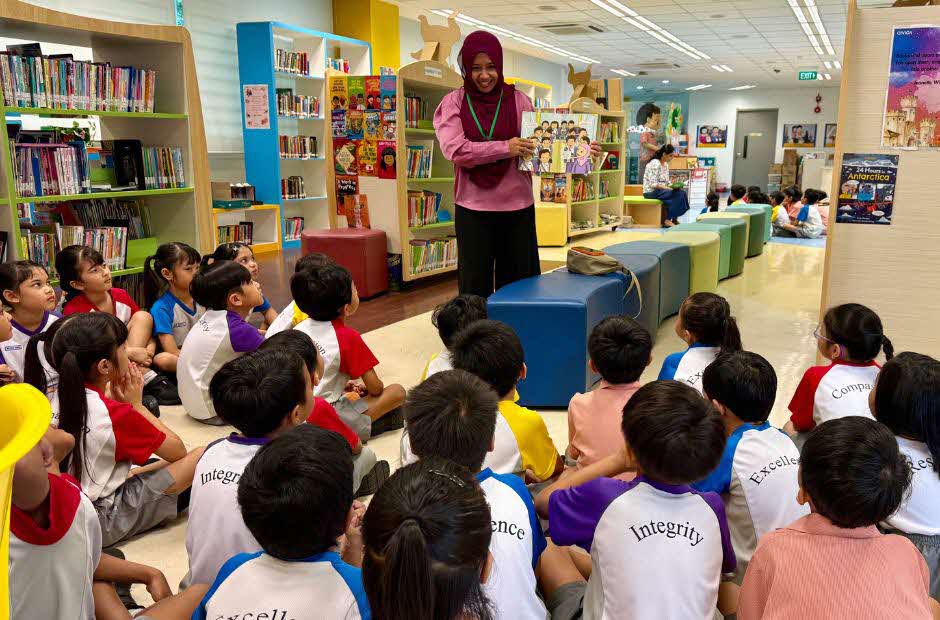
Parent volunteers help with the multilingual storytelling initiative, named “Story Seeds”.
Mdm Ng Pei Rong, Head of the Mother Tongue Languages (MTL) Department, has noticed something telling in the students’ choices. “They choose the stories they want to hear – which may not necessarily be told in the language they are familiar with. To me, that’s the success of the programme,” she says.
These moments reflect what the school has been trying to build: a relationship with languages that feels natural and sustainable. This is done by weaving MTL into students’ daily experiences and providing a nurturing environment where languages and cultures become a seamless part of school life.
“Language should come very naturally in our life,” says Mdm Ng. “We don’t want it to happen only during MTL lessons. We want students to feel that many languages – and the cultures behind them – belong in their everyday school experience.”
Horizon Primary also has the “Listen to a Story” initiative. Held once a month, everyone gathers to watch a video story in either Mandarin, Malay or Tamil, with subtitles in English. It was introduced after teachers observed that some students struggled to read their MTL stories and could not enjoy them.
“We want these students to connect with their Mother Tongue. But the second objective is to promote openness – that even though this is not my Mother Tongue, I also can accept it, and even look forward to it,” Mdm Ng explains.
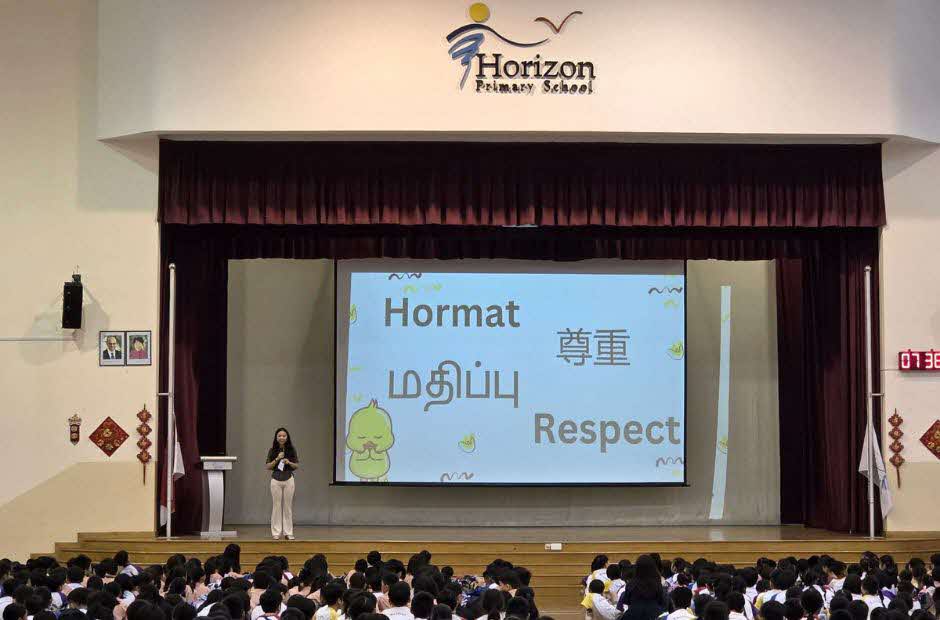
The video stories’ English subtitles ensure students can follow the story, even if it’s in a language they do not understand.
Shared spaces for everyone to learn
Beyond structured programmes, the school has created shared spaces for cultural exchange. The Cultural Kaleidoscope, for example, serves as a common area for various languages and cultural programmes.
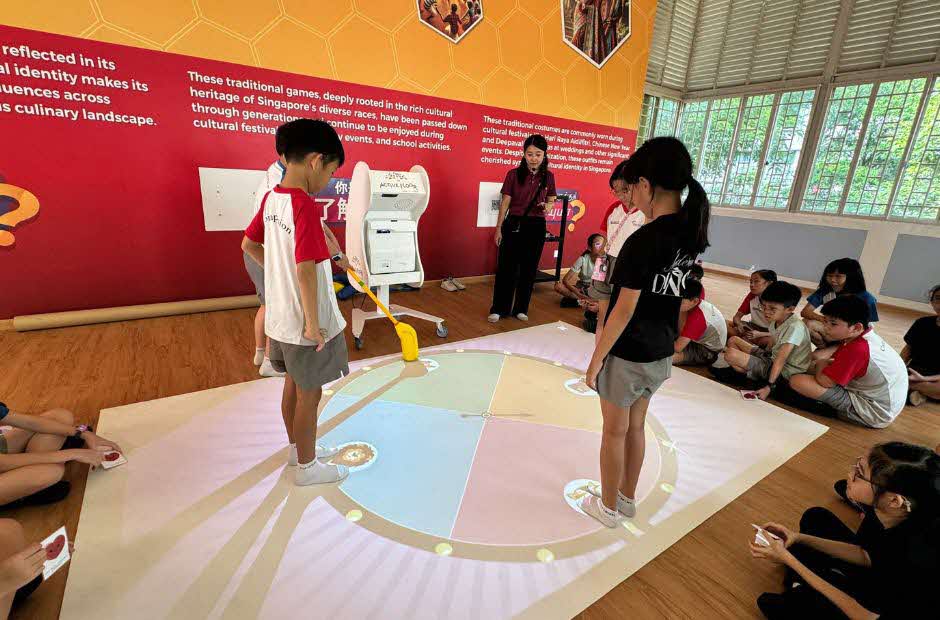
Cultural activities are held in this space that is aptly named The Cultural Kaleidoscope.
Students play an active role in promoting languages too. Mother Tongue Captains, selected across three MTL groups, help plan programmes for festive celebrations and cross-cultural events.
Primary 5 student Vinay Padmanathan says the role has opened his eyes to cultures and languages beyond his own. “As Mother Tongue Captains, we promote our culture and language, but also other cultures. When we research and plan activities, we learn more about different festivals, cultures and languages.”
Parent volunteer Mdm Yvonne Lee, 41, who has been reading Chinese stories to the students during Story Seeds sessions, welcomes the school’s efforts to promote MTL.
“Singapore is a multi-racial society and we have neighbours and friends from different races. Even knowing simple greetings or understanding the culture is important and makes a difference.” – Mdm Lee
The school has deepened parents’ involvement through a programme called “3Ps” – which stands for Play, Passion, Purpose – where parents are invited into classrooms to share about their passion, interests or occupations. More recently, the school has also encouraged parents to conduct these sharing in their MTL, providing students with authentic opportunities to experience languages in meaningful, real-life contexts.
Ms Vivian Goh, Assistant Year Head (Lower Primary), says, “Last year, these sessions were conducted only in English. This time, we want to challenge ourselves and get parents to come in during MTL sessions and speak in their own Mother Tongue Language.”
Parents role-model for students when they step out of their English-dominant comfort zones. “When students see their parents, or even their friends’ parents, speaking in their Mother Tongue languages, I think that will be very encouraging for the students,” Ms Goh adds.
Sengkang Green Primary School builds a culture- and language-rich environment
Step into Sengkang Green Primary School, and the first thing that stands out is the presence of multilingual signages around the school. They are outside the general office and along the corridors leading to the library and canteen.
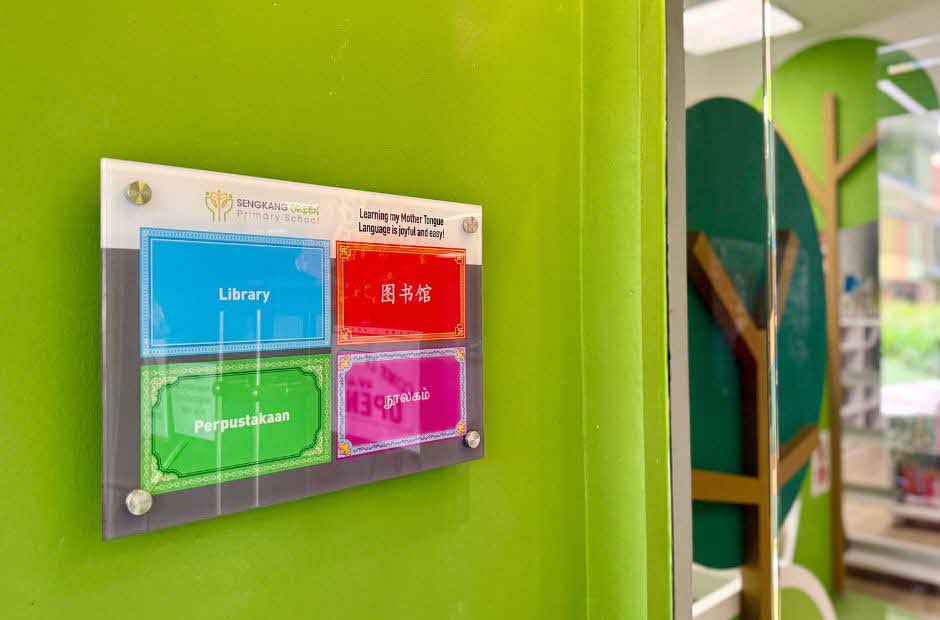
Signages in four languages – English, Chinese, Malay and Tamil – line the walls of Sengkang Green Primary School.
For students, these cues are daily reminders of the multilingual and multicultural environment they are part of. This emphasis extends into the school’s daily routine. During the national anthem, Malay lyrics appear onscreen with English translations, allowing non-Malay speakers to understand the words they are singing.
Mdm Tinie Tan, Head of MTL Department, says such efforts are deliberate. “The school places lot of emphasis on cultural education, so that students learn about different cultures and languages. The multilingual signages around the school reflect our commitment to bilingualism. We want our students to be proficient in both English and their Mother Tongue Language, recognising that the latter helps them develop a strong sense of identity while preparing them to thrive in a multicultural and interconnected world,” she says.
“With many families speaking predominantly English at home, there are fewer opportunities for some students to use and practise their Mother Tongue Language in their daily lives. We leverage on the school environment as the third teacher, so students can see, hear and use their Mother Tongue Language beyond the classroom,” adds Mdm Norashikin Abdul Hamid, Subject Head of Malay Language.
Beyond worksheets and spelling lists
Sengkang Green Primary also reinforces language learning through shared experiences.
On Thursdays, for example, students gather by their Mother Tongue Language to attend READ@SKG storytelling sessions conducted by both teachers and student storytellers. Students also recite the National Pledge in their respective Mother Tongue Languages, reinforcing their confidence in using the language and fostering a deeper appreciation of Singapore's multilingual and multicultural heritage.
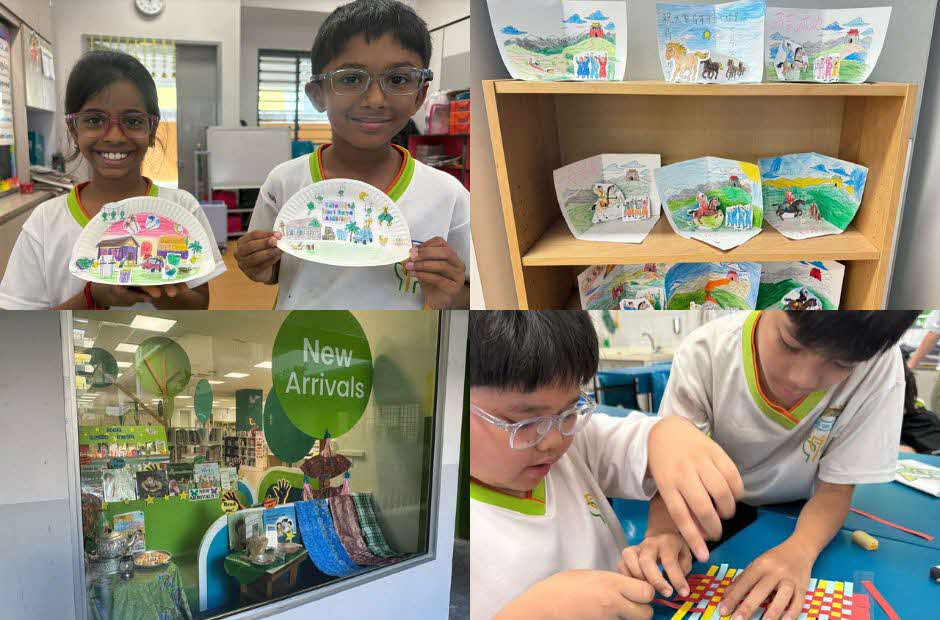
Students learn about other cultures through participating in different activities.
Festive celebrations are thoughtfully designed for students to learn more about the various cultures and languages. These are not just one-off “fun days” for the students, but part of a broader structured approach to language learning, says Ms Lo Yuan Yuan, Subject Head for Chinese Language. “When we plan our programmes and events, we ensure that learning is holistic,” she shares.
“We are learning language through culture and learning about culture through language as well.” – Ms Lo
Food-themed activities tied to festive celebrations have proven to be hit with students across ethnic backgrounds. They learn about the rich traditions of different cultures through foods such as 年糕 (nián gāo), a traditional Chinese delicacy symbolising growth and prosperity, bubur lambuk, a traditional porridge served during the fasting month, and முறுக்கு (murukku), a traditional Indian delicacy that symbolises cultural heritage and familial bonding.
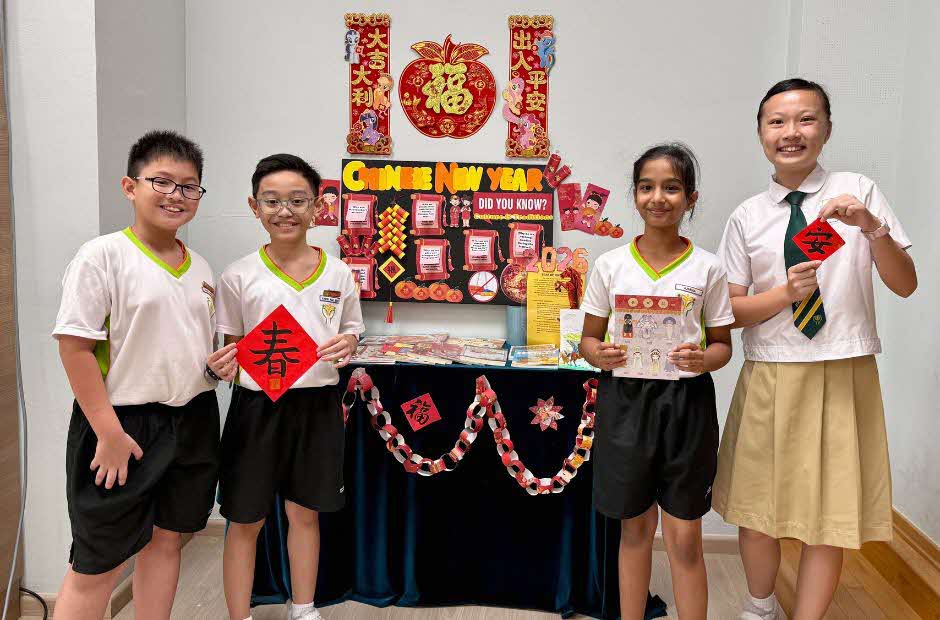
Students pose with the Chinese New Year booth set up in the library.
Some students also take on active roles during the various MTL cultural events, such as being bilingual hosts.
Primary 4 student Adam Norsalim is one of them. He is conversant in Malay Language and takes Chinese Language lessons in school, so he is able to switch comfortably between English and Mandarin when hosting.
Adam recalls a piece of advice from his Principal: “Knowing only one language is like having only one wing. When we learn two languages, we have two wings to help us fly. Learning our Mother Tongue Language is important because it helps us communicate with more people and understand our culture better. In the world we live in today, knowing two or more languages can help us go further.”
Teachers have also observed more fluid friendships, with students learning from one another.
Primary 5 student Radin Aqil Iman says the school’s multilingual initiatives have sparked his curiosity about other languages. From his friends, he has picked up simple phrases like “thank you” and “good morning” in Chinese and Tamil.
Natalie Chen, a P6 student, says these exchanges have helped her build friendships. “We teach one another how to say simple phrases in our Mother Tongue. Personally, I’m interested in learning many languages, and I like that the school gives us opportunities to learn and appreciate them.”
How MTL thrives in other schools
Mayflower Primary School
Students can recite the pledge Sign Language, on top of English, Mandarin, Malay and Tamil. This is just one way the school, which is a designated school for students with hearing loss, fosters inclusivity and respect.
Yu Neng Primary School
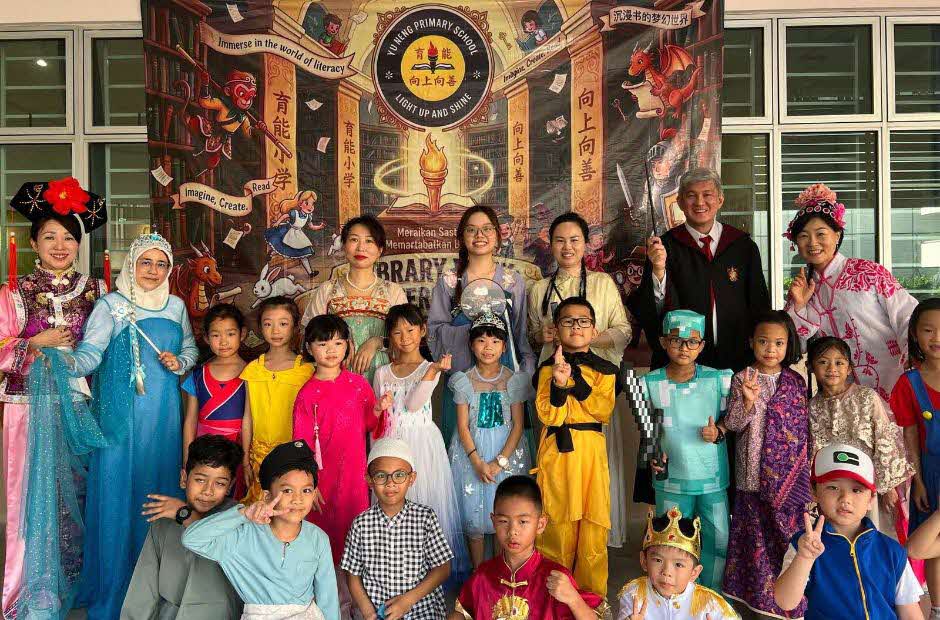
The biennial Library Week concludes with Characters Come Alive, where students turn into their favourite book characters.
During Yu Neng Primary School’s Library Week, students shared story outlines of books in their Mother Tongue Languages and English, and dressed up as characters from their favourite books. These activities fostered a love for reading and encouraged students to appreciate stories across languages and cultures while building their confidence.
This spirit of cross-cultural appreciation is further nurtured during Mother Tongue Language Fortnight, through engaging activities and assembly programmes that introduce students to the crafts, traditions and cultural practices of different ethnic communities.
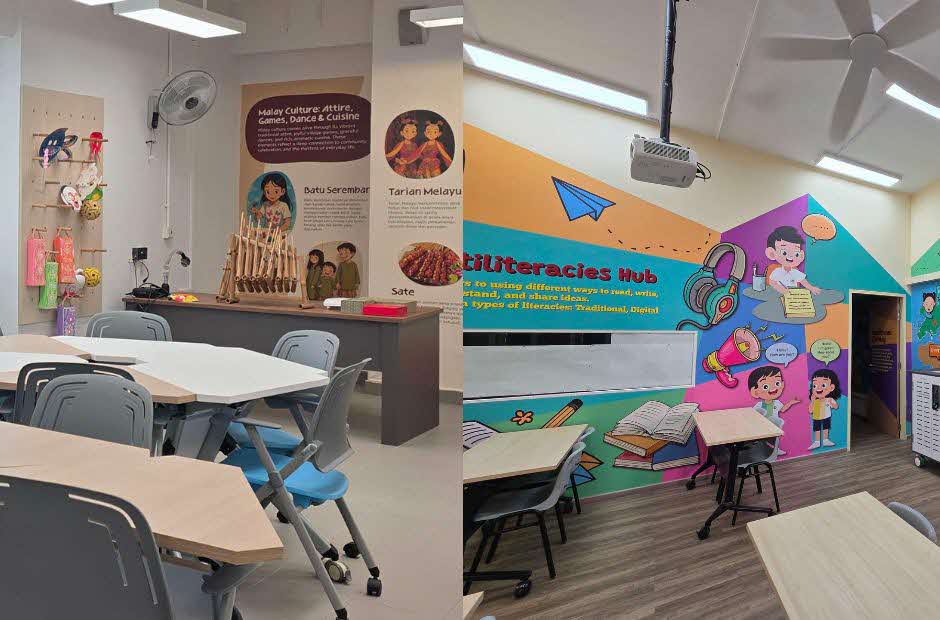
Spaces such as the Multilingual Hub (left) and Multiliteracies Hub (right), where students can learn about other cultures through exhibits and technology for more purposeful engagement.
Photos courtesy of: Horizon Primary School, Sengkang Green Primary School and Yu Neng Primary School


