



Anyone who has done group work can attest to this: when roles are assigned based on your teammates’ strengths and interests, the group is halfway to achieving its goals.
Now, imagine scaling it to the school level, where each subject department is tapped on to contribute their teachers’ expertise to Project Work (PW), an interdisciplinary subject. Then, pair PW groups and teachers with similar interests.
While this sounds like a scenario where dream teams are created, putting it into practice when you have 500 students and 40 teachers can turn it into a logistical nightmare. Yet, Mr Benzie Dio, Head of Department of English and PW at National Junior College (NJC), who came up with the idea, didn’t flinch at the mountainous task. Instead, he saw it as an opportunity to better drive home the 21st Century Competencies that PW aims to develop in students.
A change that came about due to the 2024 Project Work syllabus revision
The trigger to develop this whole-of-school approach to teaching PW came about when MOE refreshed the syllabus and made it a pass/fail subject in 2024.
“I looked at the objectives, the disposition and values that we want to see in our students with this revised syllabus,” says Mr Dio, who has been teaching for more than 30 years and saw the introduction of PW as a subject back in 2003.
From the learning outcomes of the revised syllabus, he picked up keywords and terms such as:
- Interdisciplinary
- Collaboration
- Focus on real-world issues; and
- Effective communication
There was also a lot of focus on Emerging 21st Century Competencies (E21CC) – namely critical, adaptive, and inventive thinking, and collaboration and communication skills. So, Mr Dio thought it will be a good opportunity to rethink the school’s approach to teaching PW, to get it to be the driver of these competencies.
Supportive leaders and colleagues make all the difference
Getting buy-in from the whole school for this radical change turned out to be a breeze. “My school leader just said, ‘Let’s go with whatever you redesign.’ And the teachers thought it made a lot of sense too.”
Typically, schools have a PW department, and the few teachers in this department handle all PW tasks. This whole-of-school approach suggestion from Mr Dio meant that he had to reach out to teachers from all departments and get them involved in PW too – depending on who’s the best person to teach a topic as part of the PW process.
“PW is not some strange entity that stands alone,” Mr Dio explains.
For example, students may have to do surveys as part of data collection. How do they make sense of the figures, the percentages? Teachers from the Maths department can teach them about data analysis and interpretation.
“Science teachers chip in to teach Design Thinking, Economics teachers shed light on behavioural economics, and the Aesthetics teachers come in to explain what constitutes good visual design, and so on,” Mr Dio adds.
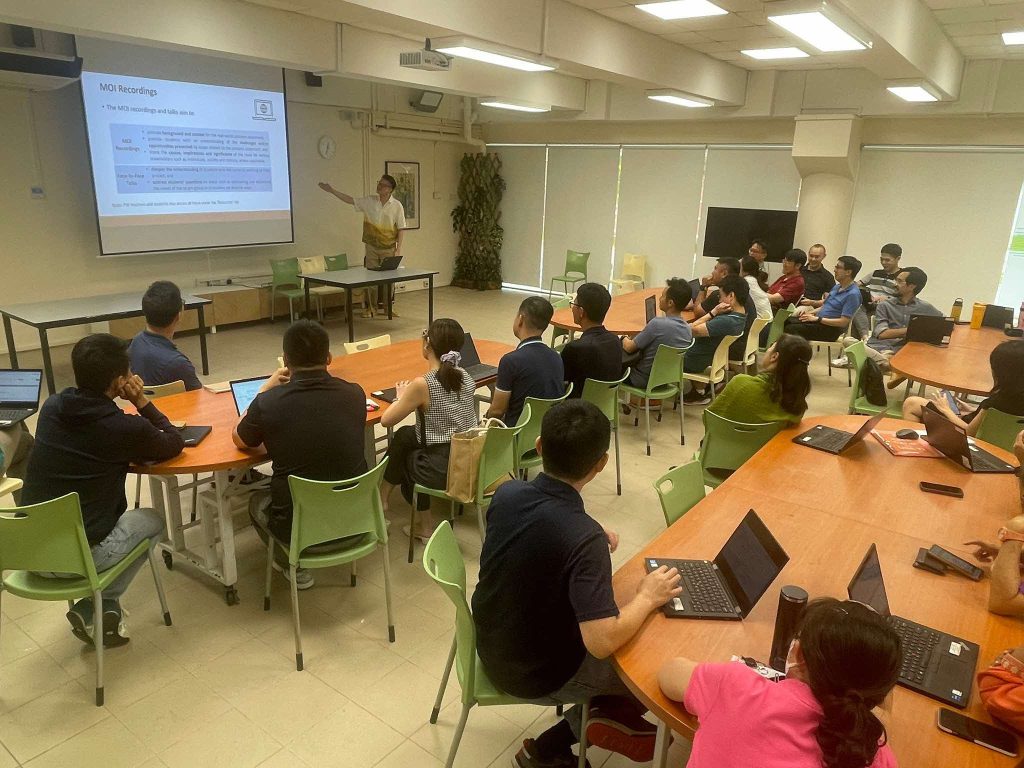
Mr Dio conducts weekly meetings with all the PW supervising tutors, which includes coverage of the lessons for the coming week, planning the work-in-progress scheme of work, departmental sharing of teaching strategies, and professional development of teaching.
Mrs Lucy Toh, Principal of NJC, says of the proposed change, “I was deeply humbled by the alignment among the Heads of Department, and it’s what made the new approach to PW possible. Every department is invested in the learning outcomes of PW, and many of our Heads are PW Mentors themselves.”
Timetabling became the biggest challenge. But with invested colleagues, it was resolved with a simple though not easily executable solution: making space for a common slot, so that everyone could meet. “It was a pretty groundbreaking option, to have the whole cohort to be free at a certain time to meet their supervising tutors,” adds Mr Dio.
The synergistic effect of this whole-of-school approach
With the revised PW syllabus, the pressure of getting a good grade was off the table for the students. They could now consider what kind of passion project they would like to take on, instead of going for something that they felt they could score better in.
“We have a list of 18 areas that students could choose from – from sustainability, technology and health, to arts, culture and fashion. Teachers would then guide the students in narrowing down their PW topic,” says Mr Dio.

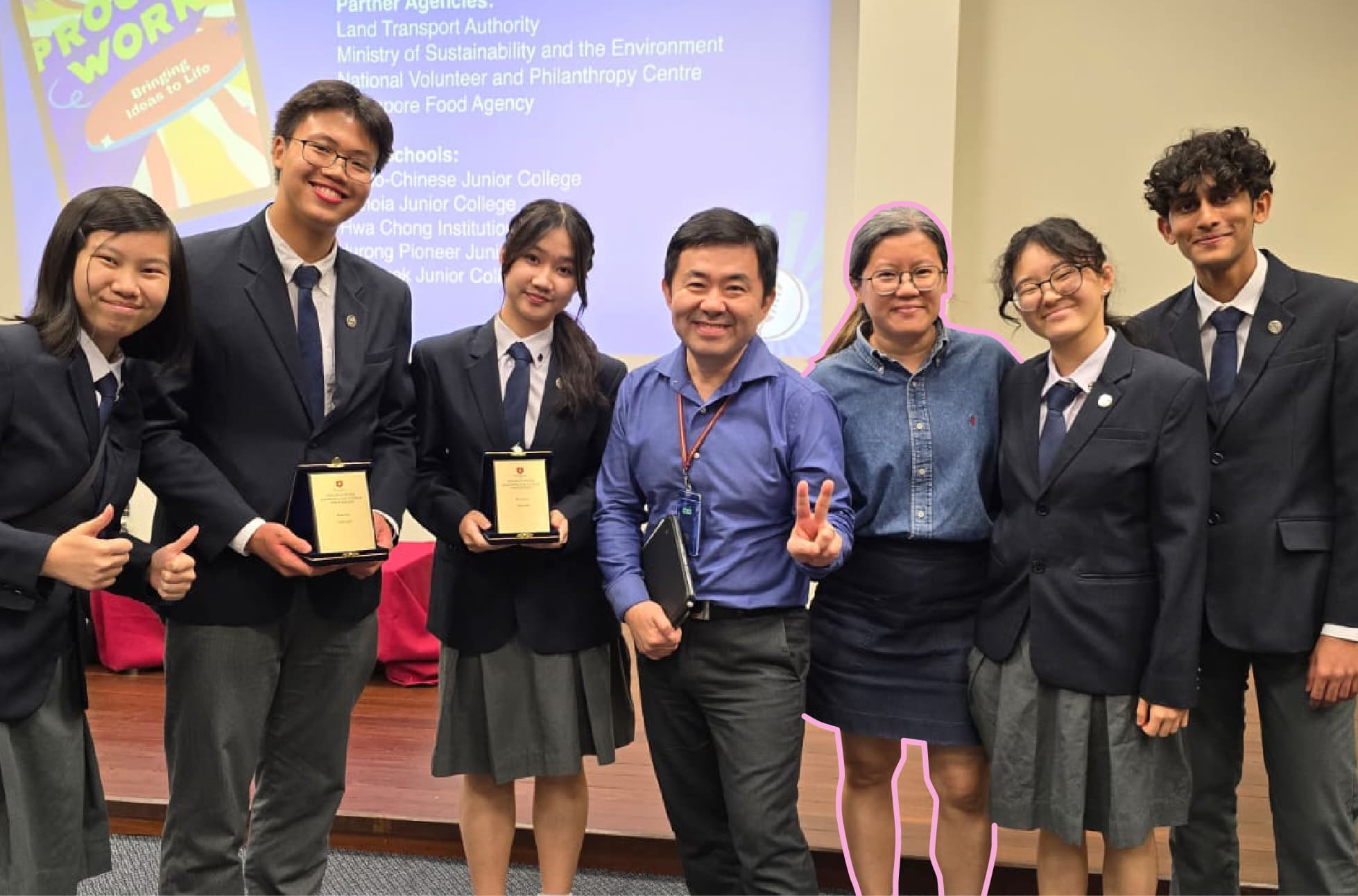
NJC students present their PW ideas to their peers at the inaugural National Project Work Festival.
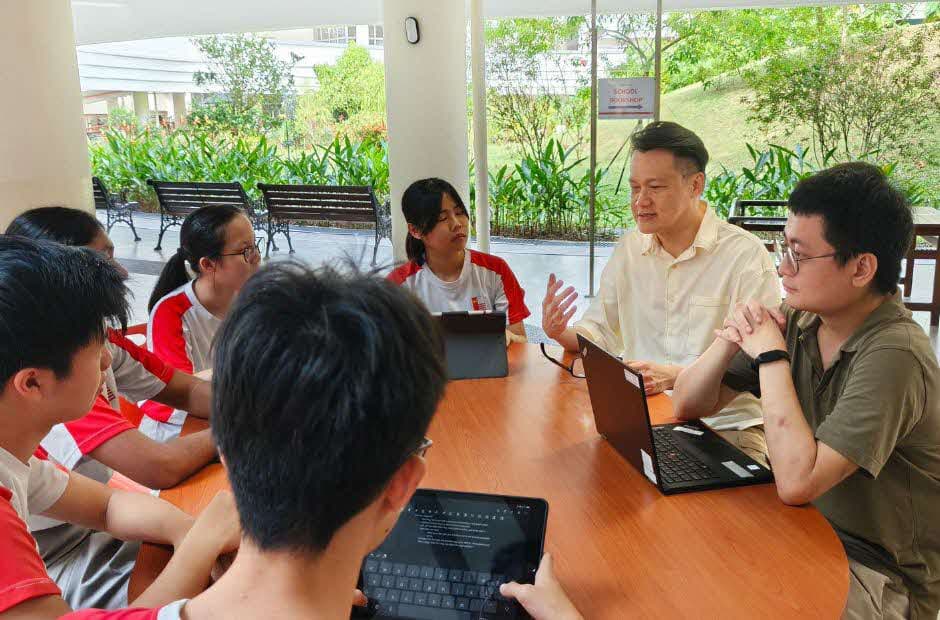
Instead of supervising 12 to 14 PW groups with projects in different areas, teachers now handle an average of two groups each, in their areas of interests.
“Teachers like that they are now handling a smaller group of students. Instead of having eight to 10 teachers supervising the groups under the old PW syllabus, we have over 40 teachers involved now. That’s more than a third of the teaching staff. While this means that each teacher takes on a bit more work, they don’t have to ‘sacrifice headcount’ to the PW department, so it balances out in the end,” says Mr Dio candidly.
There is also a ripple effect on the professional development of teachers that fosters a learning community as they have become so engaged in collaborative sharing.
Turning challenges into learning opportunities
It’s not all sunshine and roses, of course.
Students still face the challenge of working with teammates who have different approaches to tackling tasks, among other things. But these are real-world issues that they will eventually face, so it’s also a chance for them to practice negotiation and communication skills.
While initially and understandably anxious and worried about the changes in the syllabus, they have also given positive feedback to teachers about having more autonomy.
On the teachers’ end, Mr Dio says the obstacles are more administrative than anything else, such as challenges in finding discreet venues for discussions. But they overcame it by having a few venues where multiple groups can come together and present to each other to make it a shared learning experience.
For Mr Dio, the ability to keep approaching changes and challenges with a positive mindset is second nature to him because of his passion for teaching. “There’s still a joy when I go to class, and it’s hugely fulfilling when I see students learning. I get to teach teachers as well, and that passion carries over too.”
Photos courtesy of: Mr Benzie Dio