



Walk into Mdm Hafizah Binte Mahmud's classroom at Si Ling Primary School, and you will notice certain standard items under a clear plastic sheet on every desk. There will be the class timetable and a photo of a family member, a school buddy, or a drawing of their "happy place".
Mdm Hafizah started this practice after noticing that her young students kept asking what lesson was coming next. The timetable gives them predictability; the personal touches give them comfort. Together, they offer children something she believes every child needs before learning can begin: a sense of safety.
Through a process of discovery across the year, she also gets to understand if a student needs more, be it moral or material support. Some come to school without breakfast. Some come from difficult homes. Some had never been taught to hold a pencil.
"If they are not even prepared to come to school, how are they going to learn new things?" Mdm Hafizah asks rhetorically.
It is this question — not what to teach, but what this child needs first — that defines her craft.
As a Senior Teacher specialising in lower-primary learners, she has spent nearly two decades developing an instinct for reading beneath the surface of behaviour. When a student cries, shuts down, or avoids putting pen to paper, she does not see a problem to be corrected. She sees a sign that the child is struggling.
That is when she slows down, asks questions, and teaches even the basics — from how to hold a ruler to how to pack a school bag — without judgement.
Looking beyond the behaviour
Mdm Hafizah used to take learning at face value — read, revise, and apply during exams — until she was an undergraduate specialising in Marketing.
A lecturer helped her to see how the lessons could be applied so directly to life beyond the classroom. That was the first time she thought of harnessing the power of education to shape lives.
When she first started teaching at Si Ling Primary, she quickly realised that some of her youngest students came with unseen burdens.
"As teachers, we may quickly reprimand and ask why they didn’t bring their colour pencils to class, but you eventually learn not to assume why."
How does Mdm Hafizah go about uncovering her students’ needs? Through simple routines that she weaves into each school day.
Each morning begins with a group check-in. "My first step is to always ask the class ‘how are you all feeling today?’ I want everybody to be aware of their own feelings and be in tune with each other."
When a student cried at the school gate from missing her family, Mdm Hafizah tended to her, identifying the difficult feelings she was facing, then rallied the class to show their concern.
They chimed in with offers to sit with her at recess and play her favourite games at the playground. Through this effort, "I not only taught the girl to regulate her feelings, I also equipped the rest of the students on how to articulate feelings and how to comfort someone."
She then applies different strategies across the day depending on the students’ readiness, such as Circle Time for collaborative learning and Calm Corner for students who need more emotional regulation. Peer support moments are woven in so classmates get used to looking out for one another.
This “collective noticing” is at the heart of how she teaches care. Says Mdm Hafizah, "It takes a village to raise a child, and classmates are part of that village."
Framework for noticing and growth
Underpinning these routines is the Teacher Noticing Framework which Mdm Hafizah adapted for students. The framework guides students through three steps in relating to others — first by identifying what happened, then understanding why it happened and choosing what to do next.
With her guidance, students apply these steps for observing themselves, others, and the world around them, and to solve problems with kindness.
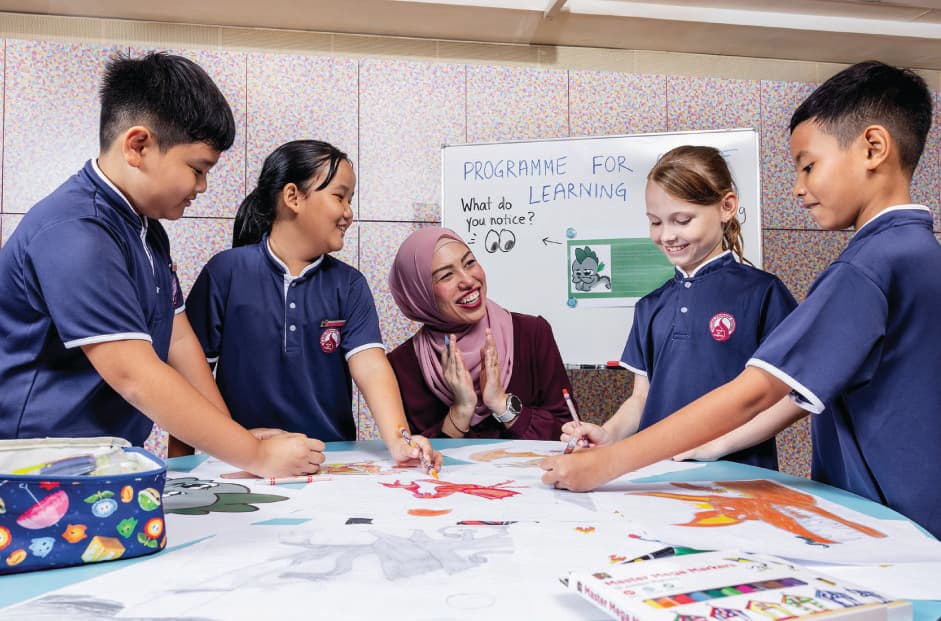
Mdm Hafizah also applies the framework when she teaches English and Programme for Active Learning (PAL), which offers non-academic enrichment for P1 and P2 students.
In one PAL lesson, she asked her students to draw a dragon from their imagination. Many drew fierce, fiery creatures. She then revealed a picture of a dragon from a book — it was lonely, crying, and hardly scary, but it was feared by villagers who assumed the worst of it.
The moment became a live lesson in applying the Noticing Framework, and a golden opportunity to think about thinking (known as metacognition) at the lower primary level: The students identified their biased thinking, understood how they had a limited view about dragons, and decided to read more widely to broaden their perspectives.
Positive words for little warriors
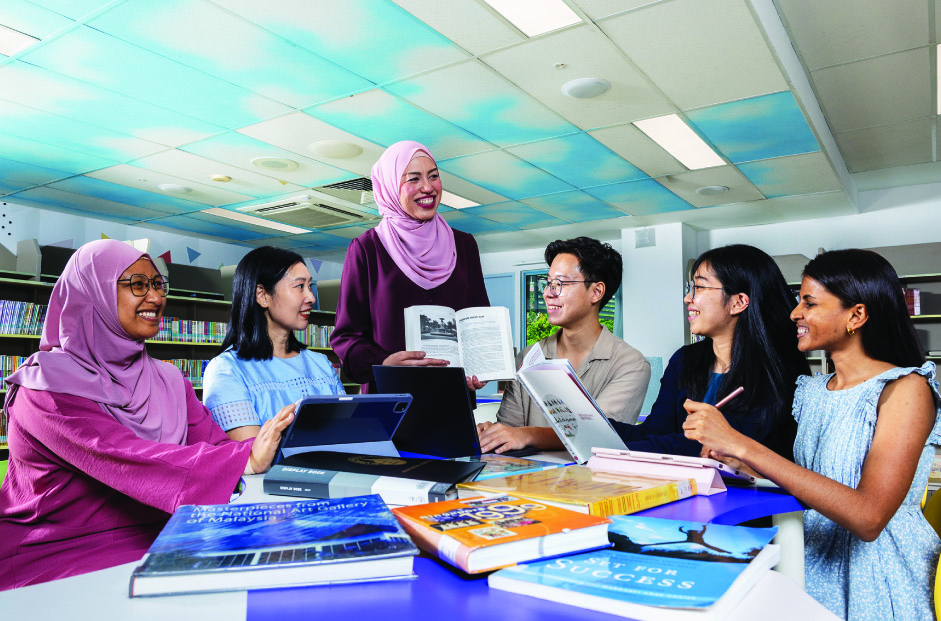
As part of Si Ling Primary’s Professional Development Committee, Mdm Hafizah shares the Noticing Framework with her colleagues across subjects, to show how even P1 and P2 students could show reflection on their learning and behaviour.
For Mdm Hafizah, teaching is about helping children understand themselves — how they think, how they feel, and what they can do when things get hard.
"Every child has a warrior within," she says. "Sometimes they are fighting fear, anxiety, or inner voices that say, 'I cannot do this’, or ‘I can’t win’. But we can help them identify their strengths and overcome those inner voices. We can fill them with positive voices, that tell them they can do it."
“As a teacher, I have learned not to assume, but to look at the family, the environment, and the invisible pressures shaping the child’s life.”
Mdm Hafizah