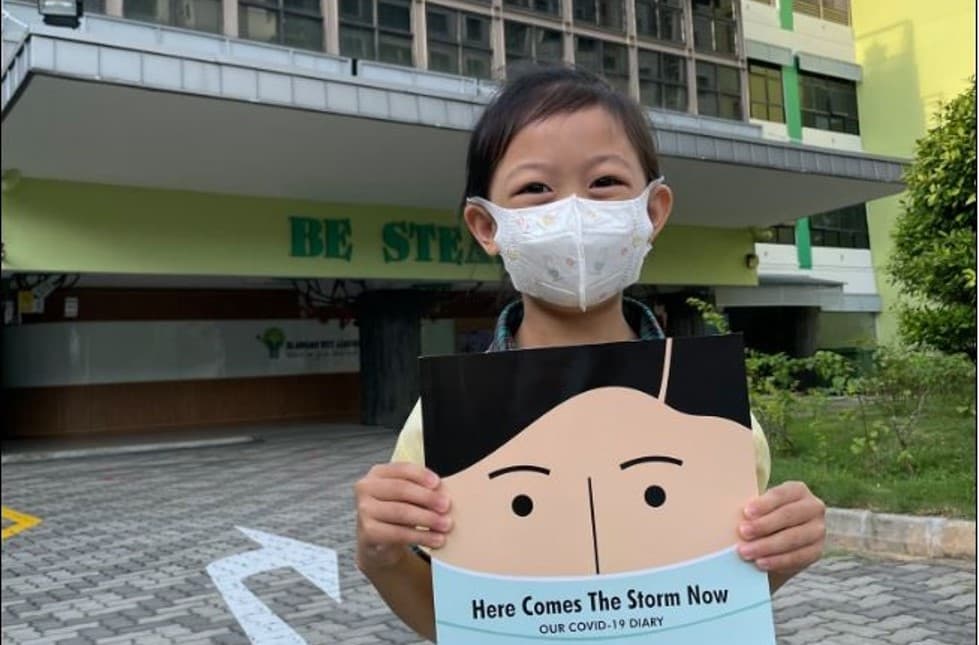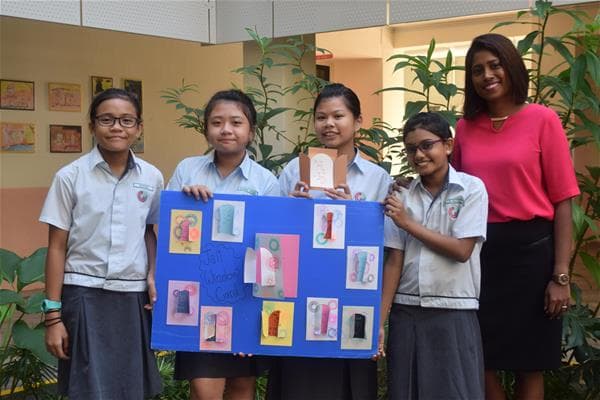




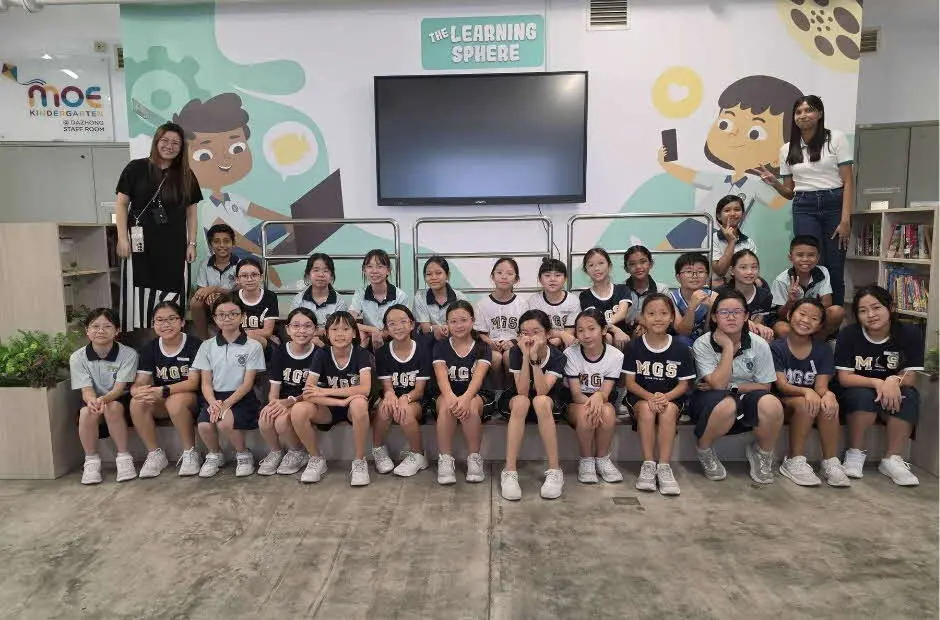
A mixed group of students from two schools record themselves presenting their Racial Harmony Day booth. One of them from Methodist Girls' School (MGS) stumbles on a Malay word she can't quite pronounce. A group mate from Dazhong Primary School helps her say it correctly.
“That moment reminded me that even though we come from different schools and backgrounds, we are all willing to help one another,” says Meredith Koh, a Primary 5 student at MGS. “We learnt from each other and worked together as a team.”
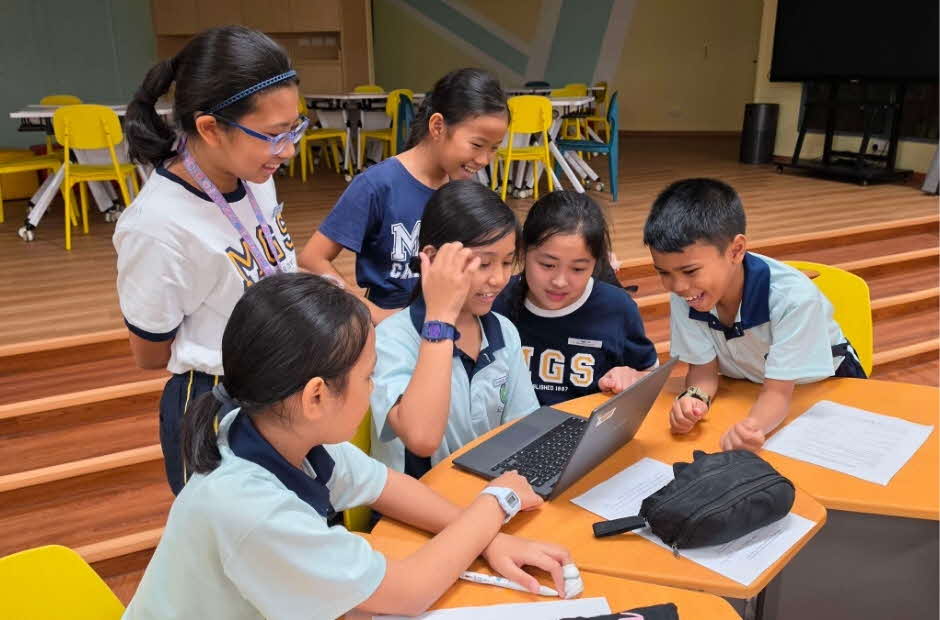
At their first session together, students discuss what racial harmony looks like in everyday school life, before choosing a cultural focus.
That's the kind of thing the Racial Harmony Project was designed for. It brings student leaders from MGS and Dazhong Primary together to plan Racial Harmony Day booths and activities.
"The project aims to help students build genuine relationships, and not just learn facts about different cultures," says Ms Muzfirah Aida, the teacher-in-charge at Dazhong Primary. "We wanted the interactions to go beyond simply completing a task together."
Three sessions, two schools, one table
The Racial Harmony Project began with a chat at a cluster event. School leaders from MGS and Dazhong Primary had landed on the same idea: get students working with peers they might not otherwise meet.
Cross-school projects are not new to either school. The two collaborated on a sustainability project with Princess Elizabeth Primary in 2025, and MGS, had also run an intergenerational learning project with two other primary schools the year before.
Student leaders from both schools were mixed into joint teams and, over three sessions, planned the booths and activities together. Each school then ran the booths on its own campus. A practical call that kept time out of class to a minimum.
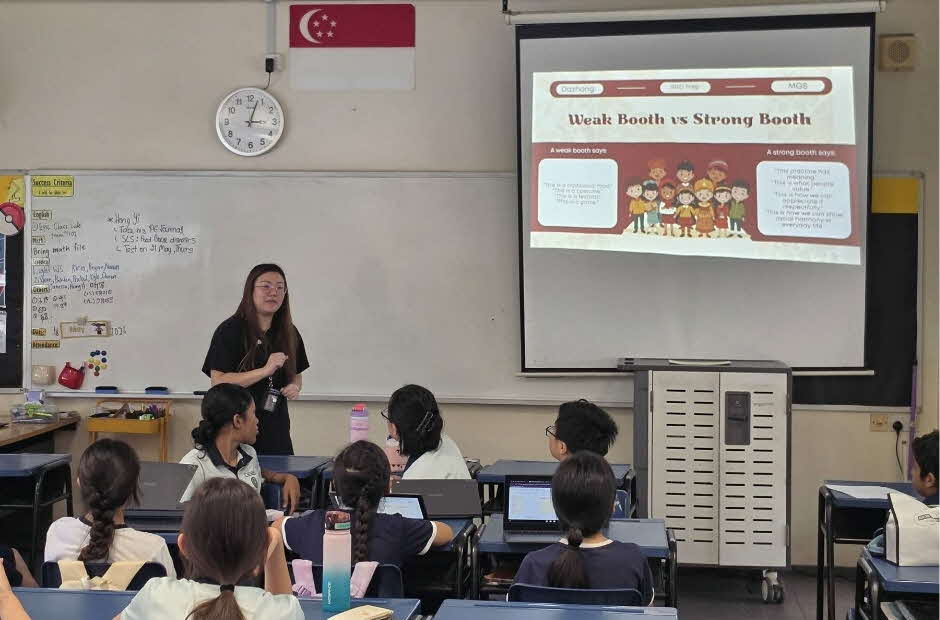
Mrs Toh challenges students to design their booths with visitors in mind during Session 2.
Introducing cultural elements like food, costumes, greetings and traditional games were the easy part. What the teachers were really after was harder to pin down.
"We wanted to move beyond a one-day celebration within their own school community," says Mrs Venetia Toh, the teacher-in-charge at MGS. Working with Dazhong Primary gave students "an opportunity to meet peers from a different school, build relationships, exchange ideas and learn with, not just about, others."
The awkward beginning nobody skips
At the start, students stuck close to people they already knew. That’s just what happens.
"I was quite shy to talk to students from MGS," says Vishan Nagarajan, a P5 student at Dazhong Primary. The first session’s icebreaker, a "Find Someone Who…" activity, encouraged students to find someone who celebrated a different festival or spoke another language at home. “After asking more questions about their interests and culture, I became more confident. Getting to know people from different backgrounds isn't as difficult as I first thought."
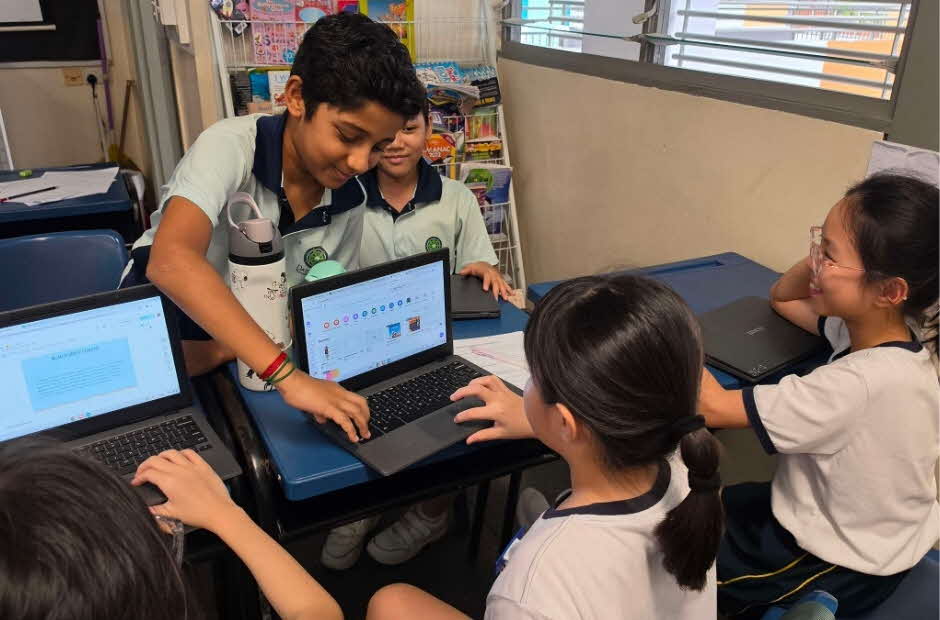
Once too shy to talk to the MGS students, Vishan is now right at home with his group.
That realisation grew into a lesson: working with another school "taught me not to judge people before getting to know them."
When the real learning happened
None of the mixing was left to chance. Ms Muzfirah Aida designed the groups deliberately, with a designated facilitator in each to make sure every member got the chance to contribute. When the face-to-face sessions ended, students kept exchanging ideas and feedback on Google Classroom and Padlet from their own campuses.
Over time, Ms Muzfirah Aida watched students become "more confident in sharing their ideas and more appreciative of the different perspectives that each member brought to the group."
The teachers keep circling back to one thing: the booths were the means, not the end. "The final booths are important," Mrs Toh says, "but the deeper learning happens during the planning process, when students start turning to one another for decisions instead of waiting for a teacher to step in."
Sometimes that meant them letting go of their first idea, combining suggestions, or adjusting an activity so it would work better. “It showed them that collaboration is not about pushing through your own idea. It is about building something stronger together,” she says.
Learning to hold a culture carefully
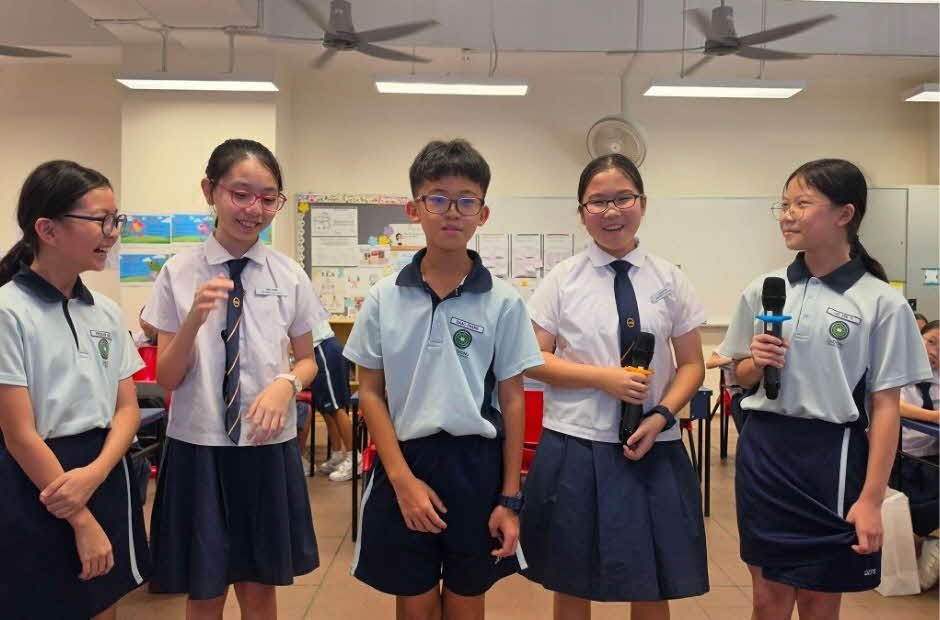
Dawn (second from left) and her group mates take turns on the mic as they complete their presentation recording at Session 3.
Auni Insyirah Binte Muhamad Ruzaini’s group chose Deepavali for its booth and learnt about the clay lamps lit during the festival to signify the triumph of light over darkness. "Learning the meaning behind the tradition helped me appreciate the festival more, and I know I can be more respectful when talking to my friends who celebrate it," says the P3 Dazhong student.
Vishan's group researched traditional clothing like the sari, baju kurung, and cheongsam. He made a point of learning to pronounce the names correctly before presenting. “Saying the names correctly shows respect for the culture,” he says.
“Before presenting another culture, it's important to understand it properly first,” says Dawn Lee, a P5 student at MGS. “When we understand why certain traditions matter, we can explain them respectfully instead of making assumptions.”
The teachers gave the students three rules to work by: don’t make jokes about culture, don’t exaggerate accents or behaviours, focus on respect and appreciation. But the students seem to have internalised something beyond the rules.
What racial harmony looks like on an ordinary school day
Auni sees it as a habit of attention. "Racial harmony isn't only about celebrating special occasions. It's about how we treat one another every day."
For Meredith, it's about being "respectful to everyone regardless of their race or culture" – noticing someone left out during group work, for instance, and inviting them in. "Small acts like this help everyone feel like they belong," she elaborates.
Vishan doesn't plan to wait for next year's Racial Harmony Day. "We should interact with friends from different races every day," he says. "The more we spend time together, the more we understand and appreciate one another's cultures."
That's what the teachers were hoping for. The familiar cultural elements are entry points, Mrs Toh says, "but they should lead students to ask deeper questions about meaning, identity, history and respect."
Or as Ms Muzfirah Aida puts it, the partnership itself models the society they hope their students will build – "one that is inclusive, connected and strengthened by the diversity of its people."
.jpg&w=3840&q=75)