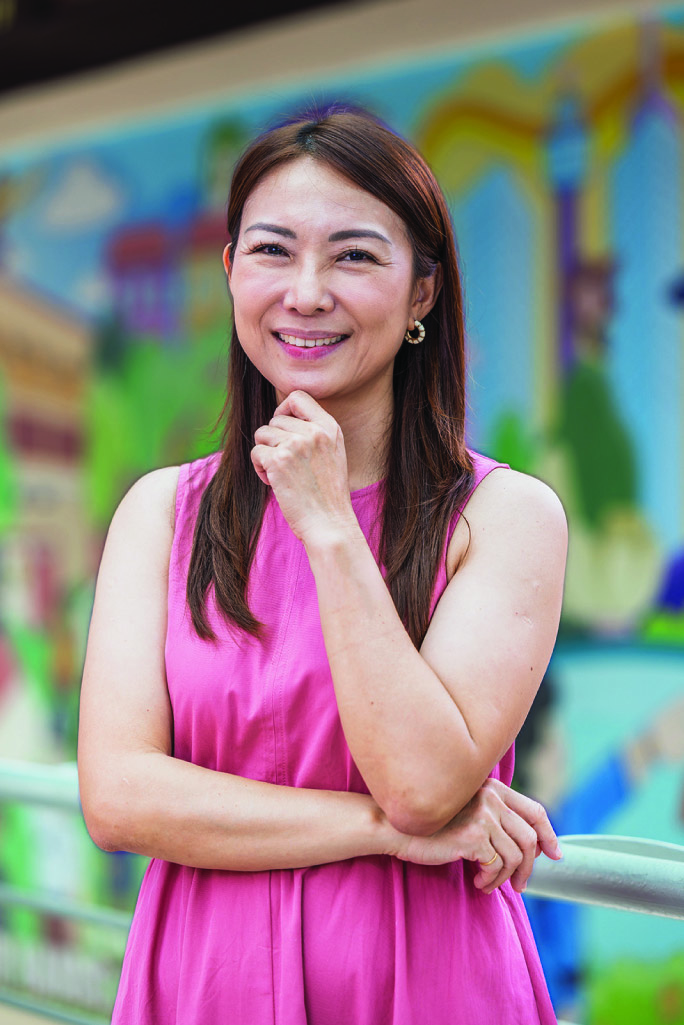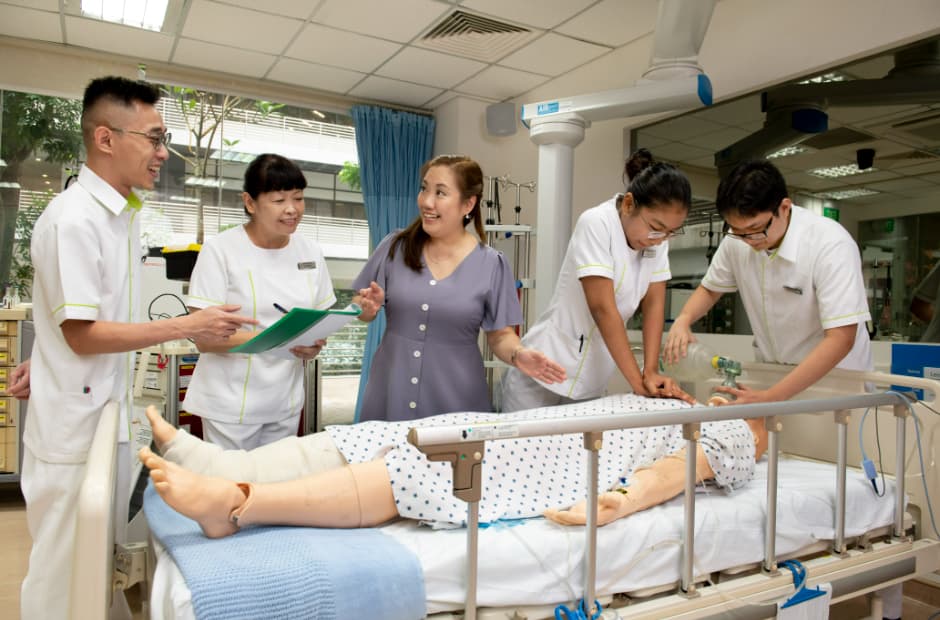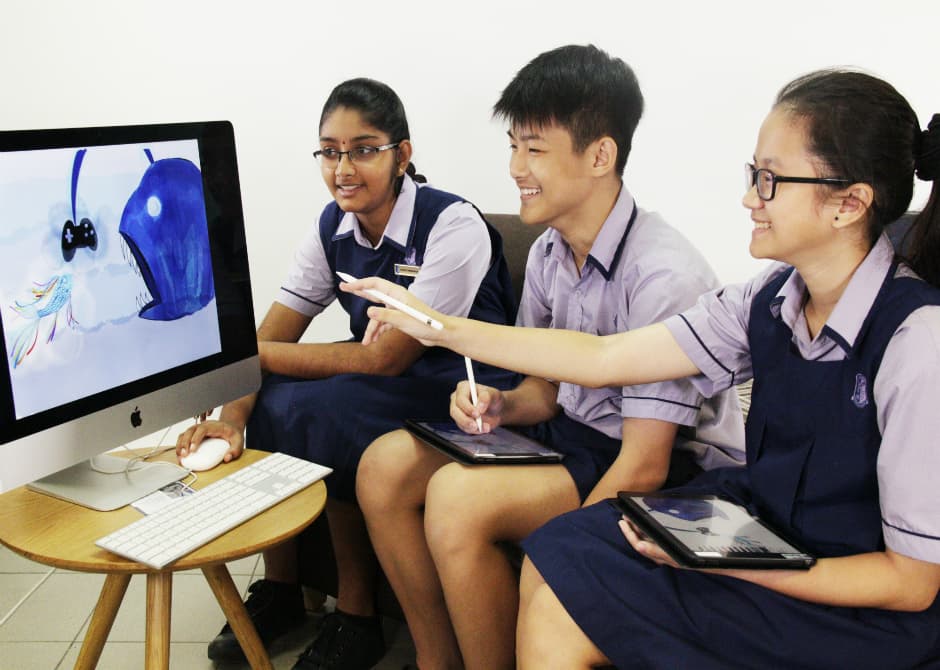




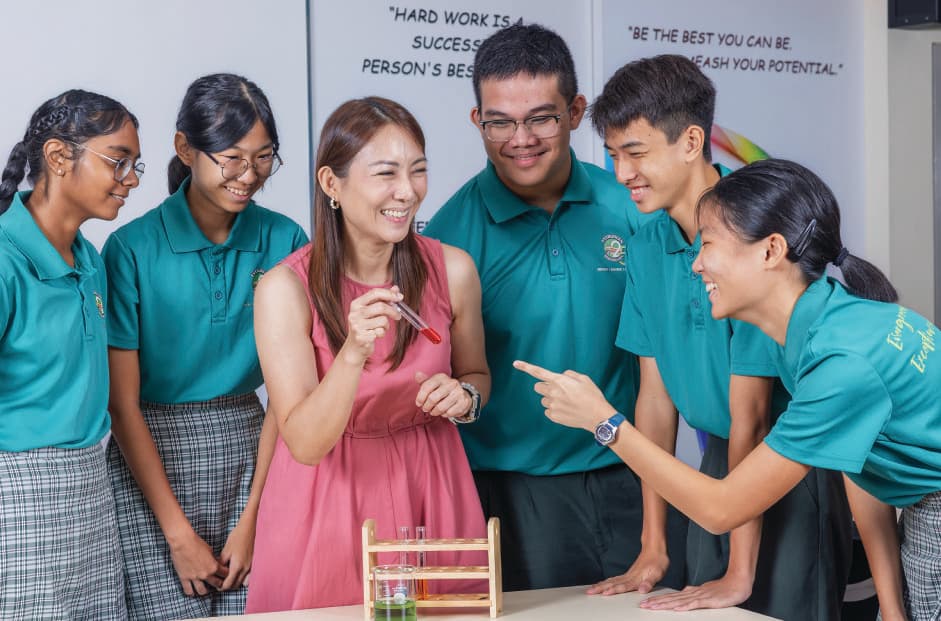
Pop into Mdm Teng Wei Syan’s Chemistry lessons and you may find students racing to unlock digital escape rooms using science. Or recording their experiments animatedly on video like content creators do.
For Mdm Teng, better known to her students as Ms Priscilia Teng, technology is an enabler – a way to make difficult concepts easier to understand, and even fun to learn.
“Chemistry can be very abstract,” says the Senior Teacher in Chemistry at Evergreen Secondary School. “A lot of things happen at the microscopic level. Technology allows students to visualise concepts and interact with them in ways that make Chemistry more tangible and engaging for learners.”
Her avid game-on mindset has shaped her teaching at Evergreen Secondary, whose culture is also a great fit for her, she says.
“The school allows me to grow,” she explains. “It gives me space to experiment, to try different ways of engaging students, and to learn alongside my colleagues.” That willingness to experiment would eventually become one of her defining strengths.
Spirit of experimentation
Like how a chemist might work, Ms Teng enjoys experimenting with ways to make learning more exciting, then makes adjustments to the methods to improve the results.
After exploring pedagogical approaches such as flipped learning (where lesson materials are made available online so students could learn concepts independently before coming to class), she expanded over time into gamification, AI-enhanced learning and interactive simulations.
She designed an interactive Chemistry website from scratch using AI-assisted coding tools. Organised by topic, the platform allows students to explore virtual labs, interactive simulations and multiplayer games that reinforce difficult concepts such as electrolysis and qualitative analysis.
In a game she designed, students compete in a virtual tug-of-war, engaging the students while applying their knowledge and skills. In another, rockets launch when students identify the right chemical reactions.
“It may look childish,” she laughs, “but the students love it.”
Yet behind the games lies deep pedagogy. Every activity is intentionally designed around scientific understanding.
“I don’t use EdTech for the sake of using it,” she says. “There must be a clear purpose in how it supports learning.”
Where joy is a key element in learning
One example is her Chemistry “escape room” practical lessons, where students move through experiments in stages, unlocking digital clues only when they demonstrate understanding. Built-in checkpoints help surface misconceptions immediately, while students record videos and photographs of their experiments to revisit later.
“They become the content creators,” Ms Teng explains. “They take ownership of their learning.”
Her lessons are also deeply rooted in real-world experiences. To teach exothermic reactions, she brings self-heating hotpots into class. Students observe the chemical reaction while preparing food together.
“Certain things students see every day, but they never connect them to what they learn in class,” she says. “Our role is to make those links visible."
As coordinator of Evergreen Secondary’s STEM Interdisciplinary Project Work (IPW) programme, Ms Teng also oversees projects that challenge Secondary 2 students to apply scientific concepts to real-world problems. To date, students have designed solar-powered solutions for energy shortages, built aluminium foil boats to explore buoyancy, and created prototypes from recycled materials.
Tailoring pathways on and off the track
Outside the classroom, Ms Teng took on an unexpected challenge when she became teacher-in-charge of the school’s Cross Country CCA in 2023.
Drawing on the principles of differentiated learning, she decided to introduce more personalised pathways for its members.
Students with different endurance profiles were encouraged to explore shorter track events or race walking.
One of them was a Secondary 3 student who found success in race walking with Ms Teng’s encouragement, winning a national medal this year.
For Ms Teng, the achievement mattered not because of the medal, but because it reflected growth. “A good teacher is somebody who knows the students,” she says. “Relationships must come first before learning can happen.”
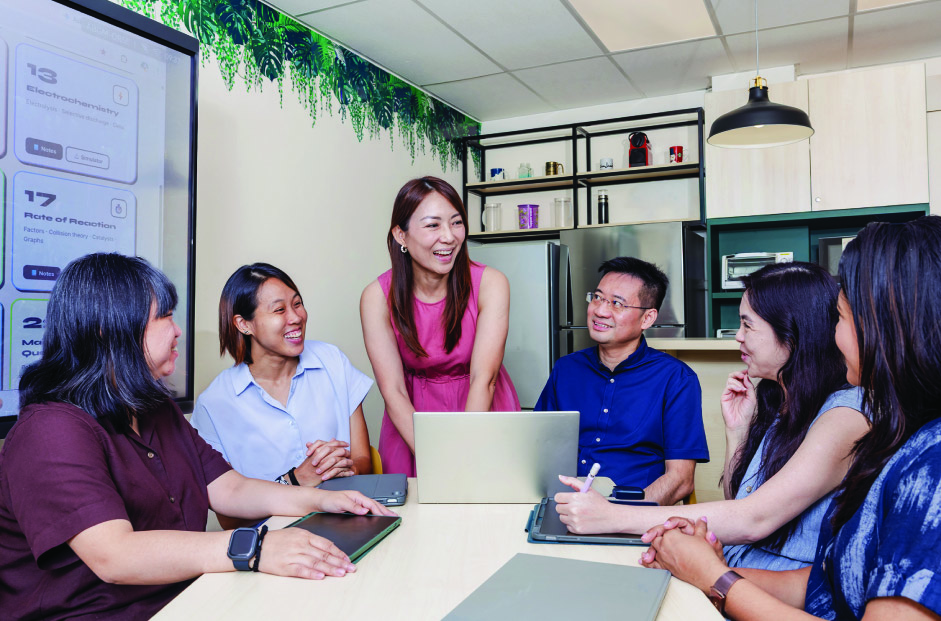
She mentors and collaborates with teachers, including those from the Chemistry ePedagogy Networked Learning Community, and experiments with new technologies and co-designs lessons with them. Her goal is not simply to share tools, but to build confidence and curiosity.
Ultimately, whether she is redesigning Chemistry practicals, creating AI-powered learning platforms, or cheering students on at race-walking competitions, Ms Teng sees teaching as the same essential act: to activate potential.
Her journey to the classroom began with this ambition. Growing up, Ms Teng’s mother, also a teacher, used to talk with such fulfilment about how far students could go with the right nudging and motivation. To follow in her footsteps, Ms Teng studied Food Science in polytechnic before pursuing Chemistry at university, then entered teaching immediately after graduation. She never looked back.
“I love learning. It keeps me alive,” she says. “When you see the new ideas you introduce in the classroom work, it’s deeply satisfying.”
“Certain things students see every day, but they never connect them to what they learn in class. Our role is to make those links visible."
Ms Teng