



Ms Germain Kang keeps a folder on her phone called “Encouragement”. It is filled with messages from students thanking her for changing their lives.
What is remarkable is not that she has it – it is that she needs it. Because teaching, she learned, is equal parts giving and taking, building up and being worn down, creating hope while fighting your own moments of doubt.
The folder gets its heaviest use on days like the one she is recalling now. It was the day she missed meeting a student who regularly skipped school – for months, he made good on their arrangement to meet each morning, grinning when she treated him to some candy. “All the work was undone,” Ms Kang recounts. “It was only one day that I missed, but he didn’t come back to school.”
Making sure everyone gets a fair shot
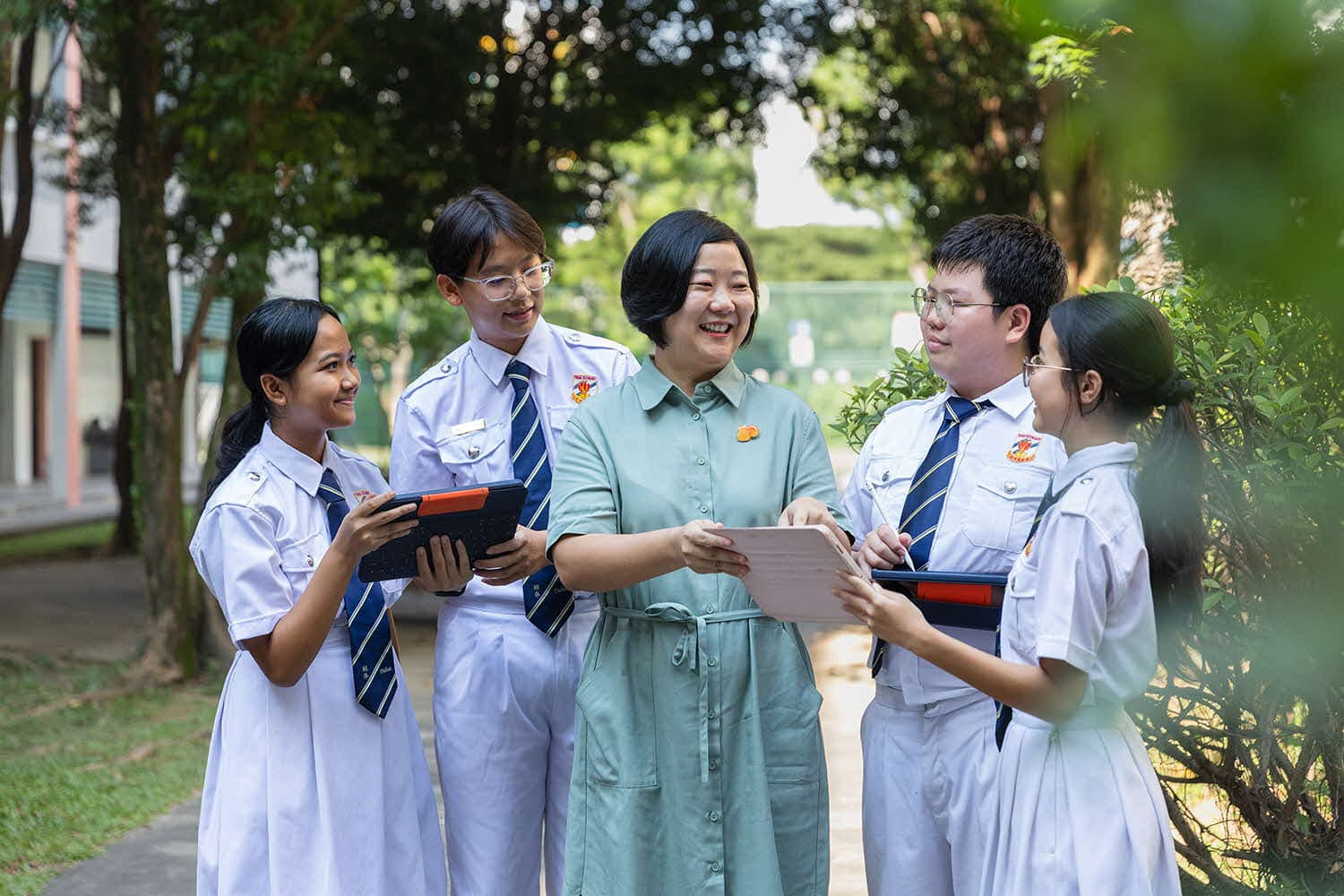
Ms Kang is the Year Head (Upper Secondary) and Chair of the Student Development Council and Student Wellbeing Committee at Fuhua Secondary School.
One reason she feels prepared for these roles is how she has personally experienced the peaks and troughs of school life, from failing exams to being crowned secondary school valedictorian. Key to her progress, she admits, was not wanting to disappoint her parents. But what sustained her progress was the growing confidence in herself.
Enter Project FRESH, a schoolwide start-of-year programme she created with her team to help students build social confidence. They play games and use resources like conversation cards as icebreakers – all for a chance to build friendships from day one.
When gamifying quizzes in her Science classes, she creates individual as well as team modes, so “everybody gets a chance to shine and also work together to raise the bar for the whole class to win”.
And when she gives affirmation, it is for results as well as for effort. After every weighted assessment, for instance, her announcement slides list not just top scorers but also those who made the most improvement.
This has echoes of her own trajectory. “I want them to know that where you begin does not define where you can go.”
Reconciliation circles get them talking
Apart from individual programmes, Ms Kang implemented the school’s wellbeing framework, which looks into multiple domains of student health.
“Wellbeing is not just one domain,” she explains. “The child has to be well physically and mentally, has to be engaged in activities, has to know their purpose in life, and has to have a sense of accomplishment.”

Her committee studies each year’s data to determine which domains need reviewing. This year, they added a new domain – building quality relationships. “We realised we were having reconciliation sessions almost every two days,” Ms Kang says. Students found themselves trapped in cycles of conflict, often misinterpreting social media posts as personal attacks.
Ms Kang introduced reconciliation circles for mediation, where she facilitated in-depth conversations until feuding students could find common ground. The success of this approach led her to train other teachers in mediation techniques through several platforms. Best Practice Sharing Time brings colleagues together to share good class practices, while Form Teacher Circle Time creates space for form teachers to brainstorm solutions to challenges that are unique to them. “I realised that many teachers felt like they were struggling alone,” Ms Kang says.
Educators are so used to focusing attention on their students, getting them to talk about themselves is a different matter. “At the initial sessions, there was awkward silence,” Ms Kang admits gamely. “So I spoke up.”
‘It’s a good life’
Powering a culture of care among teachers and students is rewarding work but also emotional work. Ms Kang takes care not to fault herself when things do not pan out.
“Teachers are only human,” she says. “I have 24 hours a day, and I have family to take care of too.” To recharge her emotional bank, she either reaches for that folder of encouraging messages or recites a line from a favourite song which has become her mantra: “It’s just a bad day, not a bad life.”
As for the student who stopped attending school, she decided to visit him at home one day to convince him to change his mind. When she approached him when he eventually returned to school, he was pulling sweets from his bag before she could even offer hers. Says Ms Kang, smiling, “That means he knows I would be looking for him.”
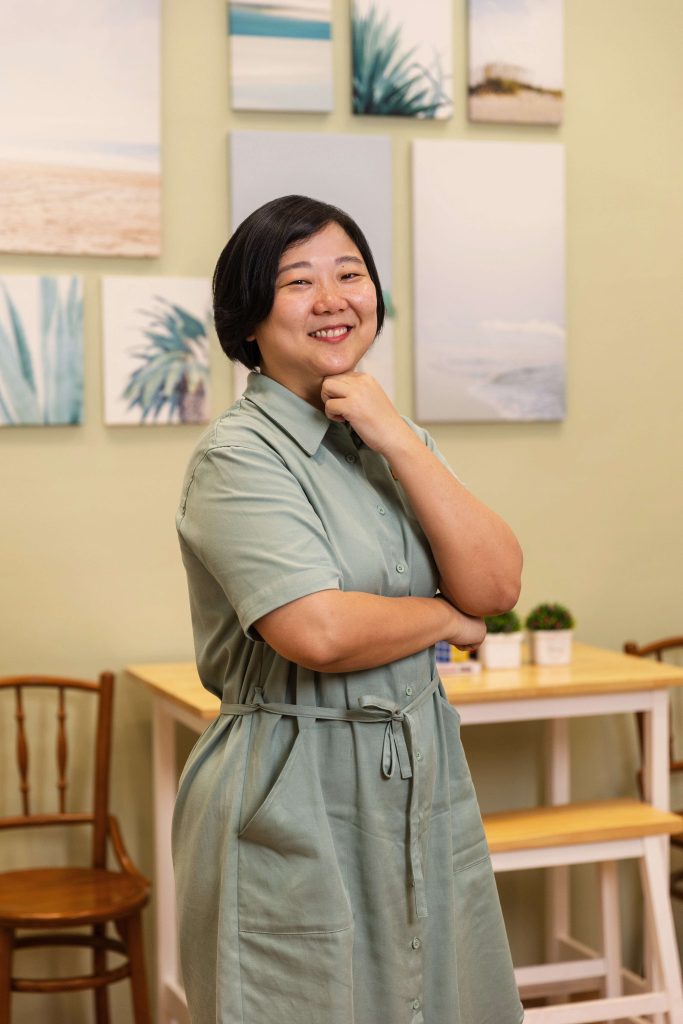
“I want them to know that where you begin doesn’t define where you can go.”
Ms Kang