





“Teacher, I spoke in Tamil. You haven’t given me points.” It’s a small request from a young student. Eager, proud, beaming. But Mdm Usha d/o Krishnasamy takes it seriously. “Mother Tongue learning is about having a positive experience,” she says. “It is about providing a safe space for them to practise and explore the language.”
After 23 years in the classroom, Mdm Usha, whose students call her Mrs Theva, remains energised by these moments. Not because they are dramatic or showy, but because they signal quiet change — the kind that takes root when students feel seen and supported.
Mdm Usha is the Lead Teacher for Learning Needs (Special Educational Needs or SEN) at North View Primary School. She teaches Tamil Language and Character and Citizenship Education (CCE), and uses inclusive practices to support learning and behavioural needs both within the classroom and other school activities. She also mentors teachers of students with SEN, by guiding them on their use of inclusive practices.
A mantra she adopted, “Essential for some, useful for all”, reflects how she approaches inclusion with intention and practicality. Structured routines and simple, clear instructions form the backbone of her classes. “When I say ‘Position 3’, students know exactly the sitting posture to assume – upright, arms folded on a table clear of clutter, to be ready to learn. These cues help all my students, not just those with SEN.”
She uses multimodal and multisensory techniques — songs, chunking, visual aids, text-to-speech software — to support reading and oral communication. In her Tamil lessons, she incorporates tech platforms like Nearpod and Kahoot to spark excitement, and creates her own instructional videos to make the experience more personal.
“When students hear my voice in the videos, they recognise it immediately and tell me so! That connection makes them pay attention.” She adds, “Rapport is very important. If a teacher does not connect with the students, the same tools will not have the same effect.”
These personalised touches, Mdm Usha believes, create a sense of safety and familiarity. She reassures her students that mistakes are part of learning. “You don’t have to be perfect,” she tells them calmly. “Just try.”
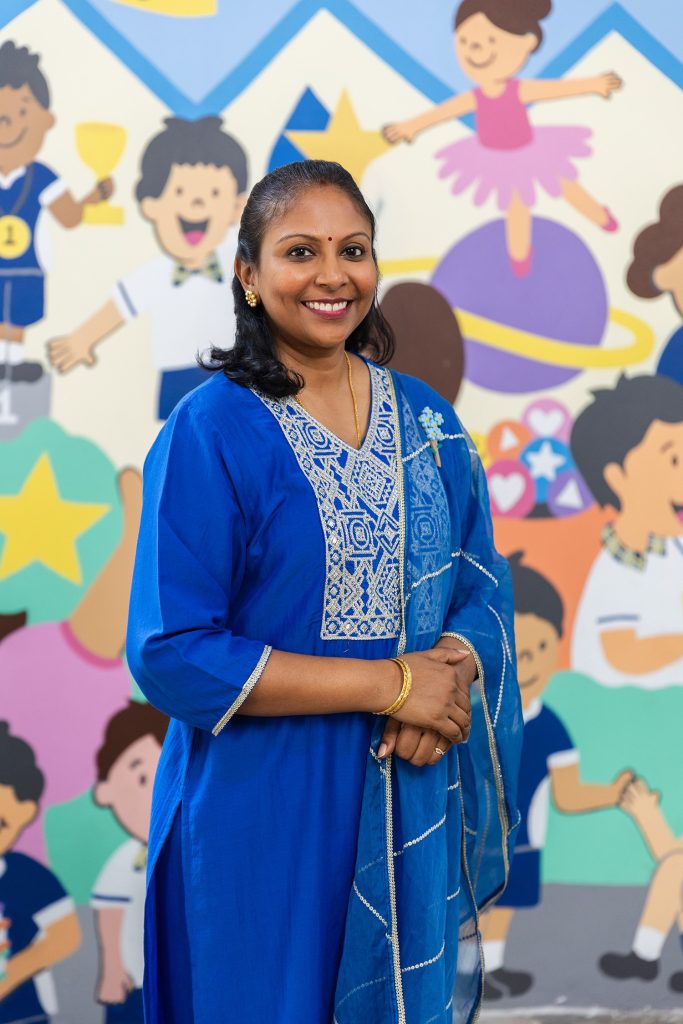
“When they hear my voice in the videos, they recognise it immediately. That connection makes them pay attention. Rapport is very important. If a teacher does not connect with the students, the same tools won’t have the same effect.”
Mdm Usha on why she narrates her own educational videos
‘Cleverer by one more language’
Mdm Usha had always wanted to be a Tamil teacher. This was especially after her own Tamil teacher in junior college, Mr VRP Manickam, told her categorically she would do well as one.
She was repeating her first year in junior college, and as a result, attended his Mother Tongue classes a second time around. That was how she noticed that he was teaching the same syllabus differently, based on his reading of the new class’ needs.
“Mr Manickam was practising inclusion even before it was a popular concept,” says Mdm Usha, who credits him and all her Tamil teachers for how much she adores her Mother Tongue. She also spreads her love for culture as an Indian classical dancer.
Years later, after she was awarded the Most Inspiring Tamil Teacher Award in 2023, she made it a point to contact Mr Manickam with the good news. “He opened my eyes to my potential, and to how differentiated instruction could be utilised effectively.” After teaching in a mainstream school, Mdm Usha applied to Crest Secondary School to focus on teaching Normal (Technical) students. Her natural affinity with learners of all profiles led to her appointment as a SEN Lead Teacher at North View Primary School.
Today, when students wonder why they need to learn a Mother Tongue Language, she knows they may be too young to understand that language can be a bridge to knowledge or to another culture. Instead, she poses a cheeky question they can’t seem to say no to: “Don’t you want to be cleverer by one more language?” She never gets questioned after that.
Helping SENsibles shine on their own terms
To Mdm Usha, her students with SEN do not have special needs, they have additional needs; they are also affectionately known as SENsibles.
To help SENsibles practise social skills, she started the Recess Outreach Programme, where SENsibles and their peers can make their way to the SEN room to join in game sessions and other interactive activities. It gives their peers a chance to learn how to work with and around their needs too. “Sometimes, all that everyone needs is a chance to try,” she says.
She also leads efforts to design “SENsible Stories”, a set of situation-based stories that not only help students with autism, but also helps others understand expectations and transitions more clearly.
One of the high points in her inclusive efforts took place on stage. As the teacher in charge of the International Dance CCA, she worked with the school’s SEN Officer to create visual routines and video guides for SENsible dancers. One of her proudest moments? Watching her student with Down Syndrome perform on stage during the school’s Prizegiving Ceremony in 2022. “She has rhythm!” declares Mdm Usha like a happy parent.
That moment wasn’t just a highlight, “it was a breakthrough”, she adds, beaming. That was the first of several dance performances the student had taken part in. “The visual tools we created for her are now used to support other students in different CCAs.”
Leading with empathy, learning with purpose
In mentoring, she supports both beginning and experienced teachers. Whether it is adapting lessons to certain requirements, learning how to hold discussions with concerned parents, or getting through a tough project, she provides a calm, understanding presence. “Sometimes they just need a mentor — someone to listen without judgement and to guide with gentle questions to help them figure things out,” she says.
That’s not to say she herself never has a bad day. She heaves a wistful sigh at the thought of the times she had to be firm with students disrupting a class or disobeying instructions.
Because she is approachable and keeps it real, teachers often stop her along the corridor for quick consultations. At the heart of it, she says, “I want more teachers to join the service, to take on leadership responsibilities, to build up our teaching force.”
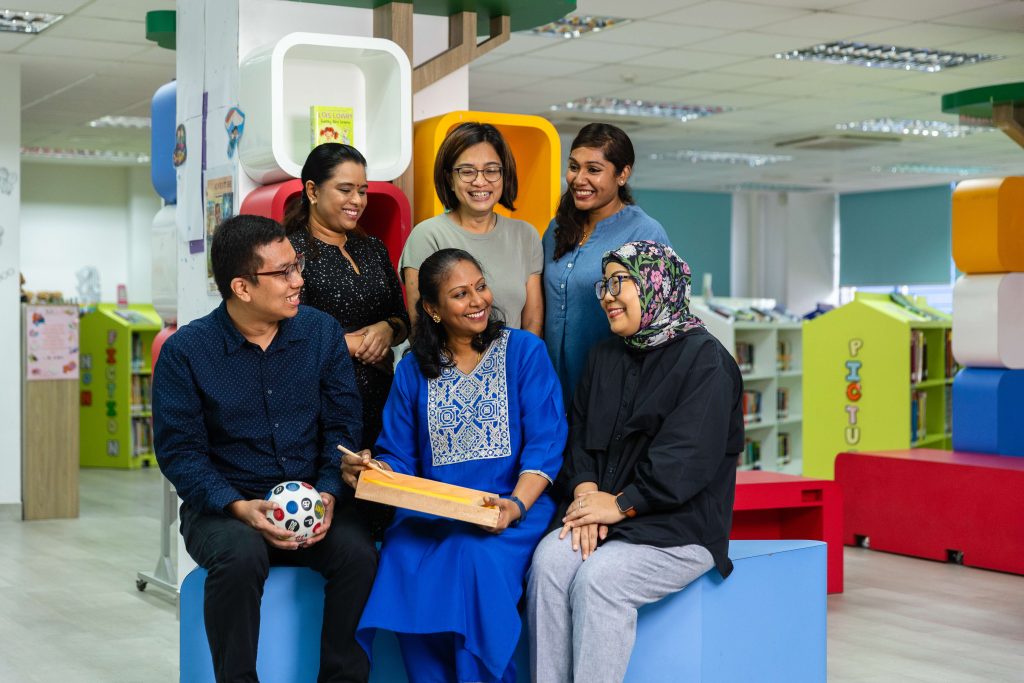
Mdm Usha has played a key role in shaping inclusive practices beyond her school. She has shared inclusive strategies with Tamil language teachers in the South Zone, and collaborated with the CCE department to organise a Values in Action (VIA) project on recycling that would benefit the Autism Resource Centre. Other professional development efforts include rallying staff in raising awareness about inclusivity through Purple Parade activities.
For all that she reads up on and implements, by way of EdTech or developments in SEN support, she emphasises the human connection. “It is never just about tools, it is how you use them to ensure everyone in your class feels included and involved.”
Empathy runs through everything she does. It helps her look past an outburst or a stammer to find out what a student might really be struggling with. To pause. To offer support. And to help them try again, without fear. “It’s the little wins,” she says. “That’s what keeps me going.”
.jpg&w=3840&q=75)