





A text message arrives, accompanied by a close-up of a spider. “This should be the green crab spider?” writes 15-year-old Alfonse Lee, who moments earlier had walked straight into a web at a park and immediately pulled out his phone to document the encounter.
Ms Debbie Wong’s face lights up as she remembers this: It’s not just the spider encounter that excites her – it’s what the encounter represents. Here’s a student who once walked through the world focused inward but now looks out and up, stopping to examine creatures most people would ignore, curious enough to reach out to his teacher to learn more.
An English Language and Literature teacher who is also the School Staff Developer, Ms Wong has spent the past two years weaving environmental consciousness into language learning. Her dedication has not gone unnoticed: She was nominated for the Inspiring Teacher of English Award in 2024 and received NParks’ Community in Nature, Teacher of the Year Award the same year.
From aircon to advocacy
The irony isn’t lost on Ms Wong that she was once everything her current self is not. “I was a creature of comfort,” she admits with a laugh. “Air-conditioning over outdoor adventures, every time.”
The shift came through heartbreak of the most personal kind. When both her daughters were diagnosed with dyslexia , “I was very crushed,” Ms Wong says. “I felt that they wouldn’t be able to appreciate the written word the way that I would as an English Language and Literature teacher. It was heartbreaking.”
Desperate for alternatives, she began taking them outdoors. The moment of clarity came after a walk at Changi Beach with her older daughter. Suddenly animated and confident, the little girl delivered a presentation about intertidal marine life to her Kindergarten 2 classmates. “She was brimming with joy,” Ms Wong recalls. “You could hear the pride and wonder in her voice.”
When Ms Wong shared this story with her Secondary 3 class, their immediate response was, “Ms Wong, we want to do that for our Values-in-Action project too!”
Where the environment meets the English Language
Her students’ enthusiasm set in motion what would become a part of the school’s Learning for Life Programme, “Every Vistarian a Connector, Creator and Contributor to Nature”.
Ms Wong designed an English Language cum Values-in-Action lesson package for her Secondary 3 class, comprising an intertidal walk and beach cleanup at Changi Beach. Students learnt about the marine ecosystem and Singapore’s Green Plan 2030, but the real education came when the tide pulled back like a curtain, revealing what lay beneath.
Hidden beneath the pristine surface was a shocking underwater graveyard: carpets, dentures, propellers, even undergarments littering the seafloor. “They never knew such trash existed,” Ms Wong says. The students later channelled their shock into passionate posts on how they can do their part to protect nature, for the school’s Instagram page. The students’ writing reflected a personal and authentic voice that came from within, as they witnessed how the trash would impact the beautiful marine life they had just got acquainted with.
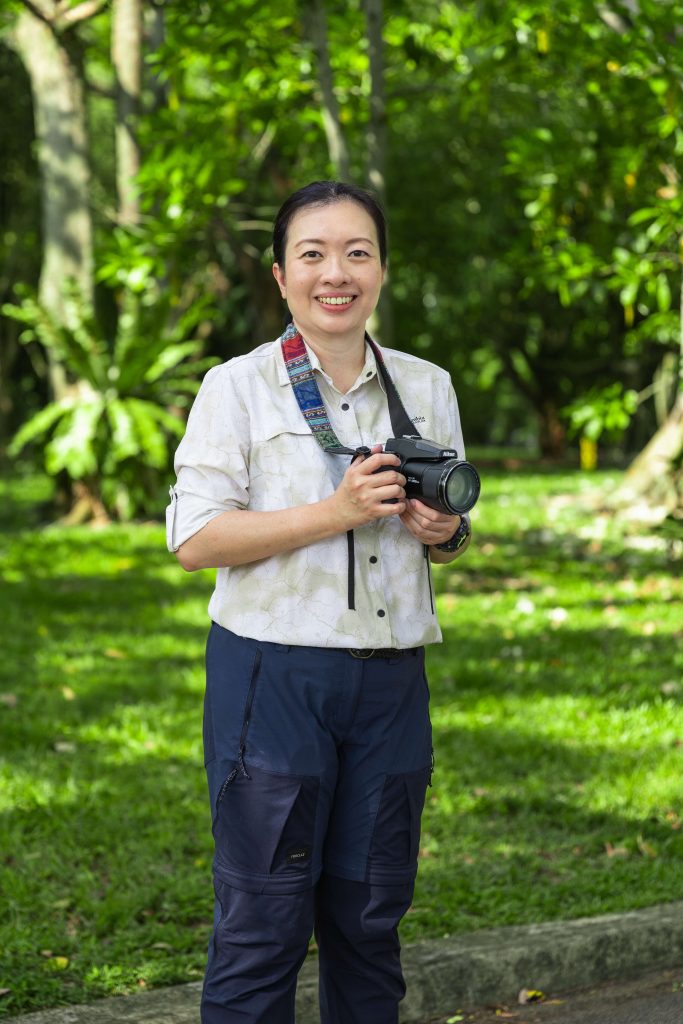
“We cannot expect students to advocate when they don’t have strong connections to what they’re protecting.”
Ms Wong on why she wants to nurture environmentally conscious citizens
In her Literature classes, local wildlife is explored through poetry. Her students read poems like The Astounding Secret Pangolin while learning about Singapore’s critically endangered species. A lesson on reading Alfred Lord Tennyson’s The Eagle was also an opportunity for students to learn about the resident raptors in Singapore.
For Alfonse, this integrated way of learning changed everything for him. Ms Wong taught him how to leverage technology to practise speaking skills. When he confided in Ms Wong about the challenges of transiting to Secondary 3, Ms Wong did not just offer sympathy, she taught him how he can boost “happy hormones” by going on nature walks. She also provided opportunities for Alfonse and his CCA mates to train to become nature and cultural heritage guides for Pulau Ubin.
“Now whenever I hear bird calls, I will look up into the trees to try to spot the bird,” Alfonse says.
Ms Wong’s method worked because it gave him a sense of purpose, helping him understand that just as nature needs time to heal, so do people.
“Sometimes you will never know whether what you’ve done has made an impact,” Ms Wong says. “But you just got to try. While we may not get to see some ‘trees’ grow, it doesn’t mean that the roots aren’t there. That’s what we do as teachers – we give hope.”
Developing other developers
Seeing these successes in her classroom, Ms Wong knew she had to share this method more widely.
A golden opportunity emerged when she, together with some colleagues, brought a Secondary 3 class to Sungei Buloh Wetlands Reserve.
The teachers watched in amazement as students bounced along the boardwalks, scanning for crocodiles, and asking questions about every bird call – fully absorbed in the experience.
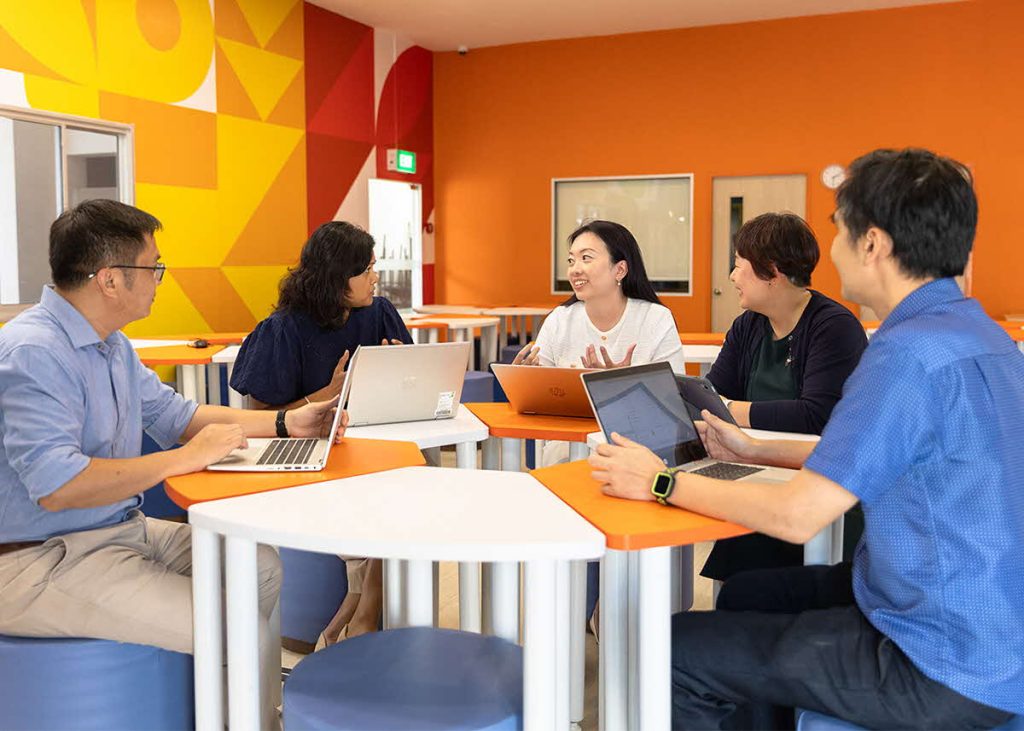
The teachers shared with wonderment that it was exciting to see the class so engaged in outdoor learning and keen to learn about wildlife.
Such moments are what propel Ms Wong to do what she does. Whether in nature or the classroom, she believes students engage most deeply when they are encouraged to explore, ask questions, and make sense of the world for themselves.
Once, when a student painted a culturally sensitive symbol during a virtual exchange with a school in another country, Ms Wong did not admonish the student. Instead, she saw it as a moment to educate.
The student was asked to research the symbol’s history and present his findings to the class. His conclusion was powerful: “Ignorance can be very scary and dangerous. If you don’t know, you may say things that will hurt people.”
“We don’t just want students to be tourists in other cultures,” Ms Wong explains. “We want them to be culturally responsive citizens who understand how their actions affect others.”
The mindset that learning often begins with discomfort or uncertainty shapes how she supports fellow teachers as well.
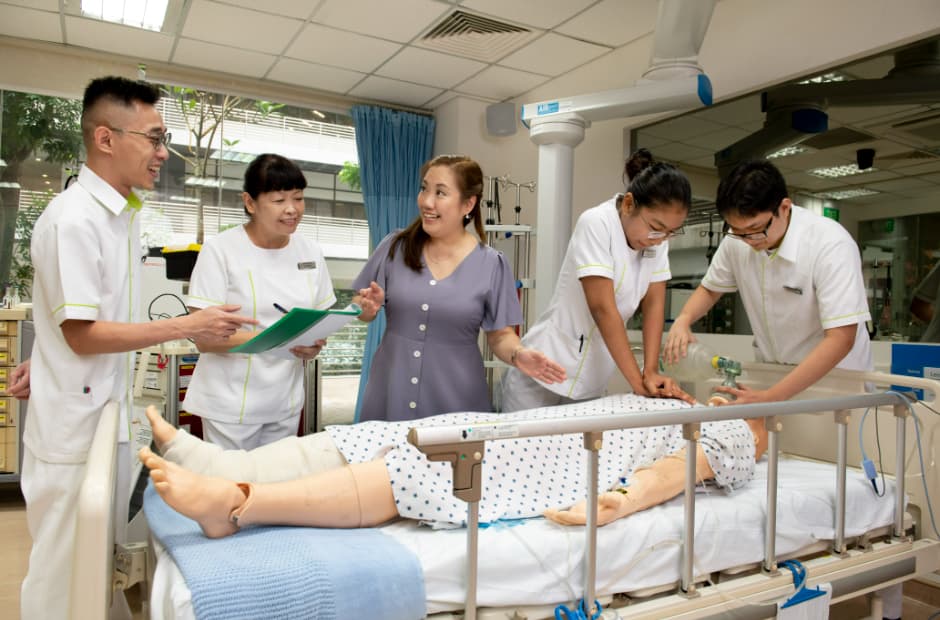
Beyond her classroom, Ms Wong conducts school-based workshops on designing and facilitating cultural exchange programmes. Through case studies and hands-on guidance, she helps colleagues navigate complex conversations and create meaningful student experiences.
In alignment with MOE’s EdTech Masterplan 2030, she welcomes her peers to her classrooms to observe her use of EdTech tools in her English Language lessons.
By showing that professional learning can be collaborative and low-pressure, she has encouraged others, from seasoned teacher leaders to newer staff, to adopt pedagogies that promote inquiry. What began as an individual effort has since grown into a wider culture of shared growth.
The conservation generation
All these efforts are part of Ms Wong’s greater vision of responsible, thoughtful citizenship. Her ultimate goal is clear: to nurture a generation of environmentally conscious citizens who will love and protect Singapore’s natural heritage. She hopes to set up a networked learning community for teachers interested in leveraging place-based education to design meaningful learning experiences in Singapore’s nature parks, reserves and its surrounding islands.

“We cannot expect students to advocate when they don’t have strong connections to what they are protecting,” she says. “The next generation will inherit our natural heritage. If they do not have passion for it, how will they protect it?”
Her classroom has no walls because her real curriculum is Singapore itself: intertidal zones and living kampungs, local parks and bird-filled trees. In these places, students do not just learn about their country; they fall in love with it.
Alfonse’s text message captured what Ms Wong has accomplished. He did not just learn to identify a green crab spider; he learned to see wonder in unexpected places, to reach out when curious, and to believe his observations matter.
.jpg&w=3840&q=75)