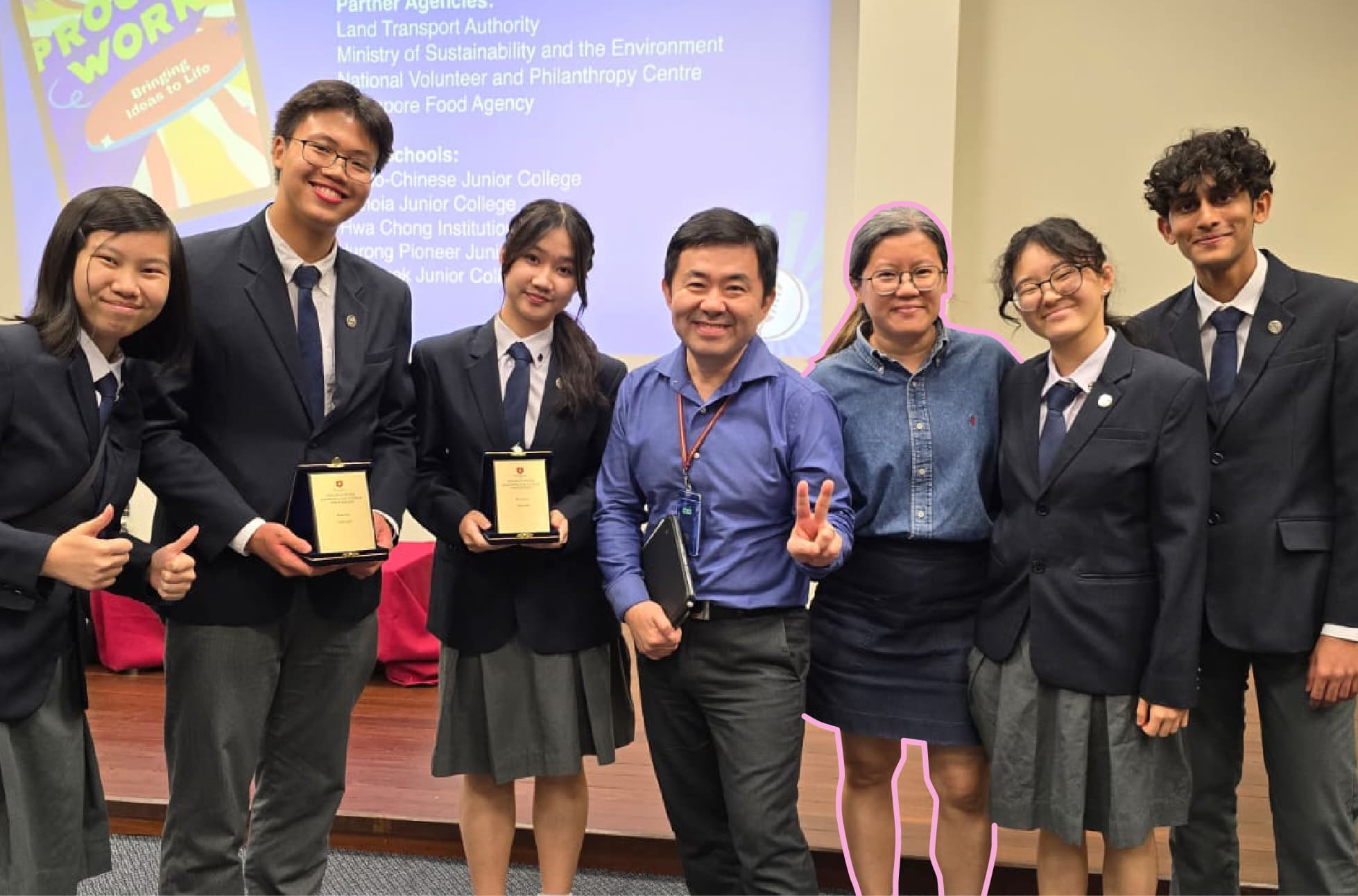




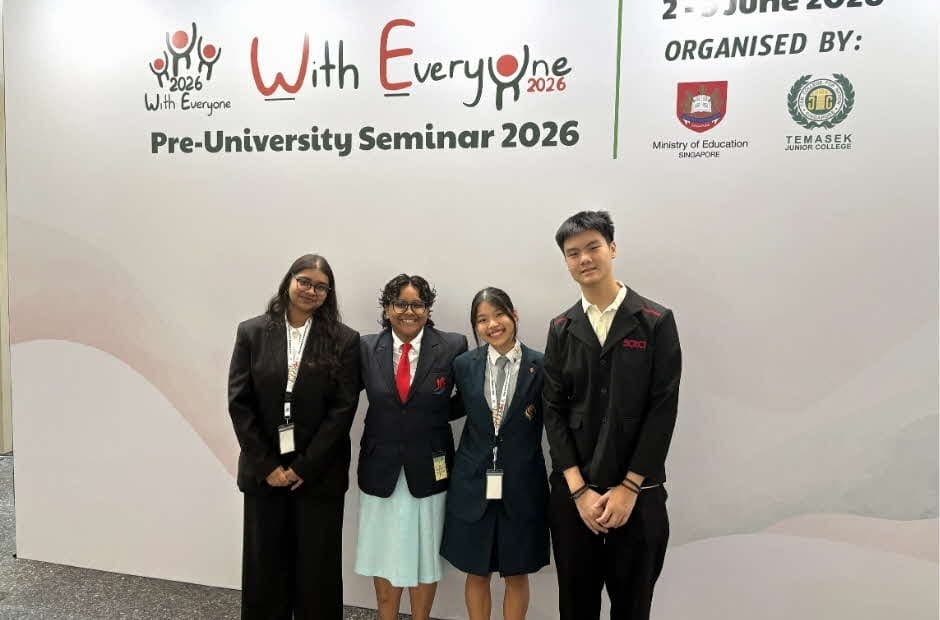
Around 550 students from 30 junior colleges, polytechnics and other pre-university institutions gathered at this year's Pre-University Seminar, where they pitched proposals at a closing exhibition toured by Education Minister Desmond Lee. Their ideas took aim at vanishing hawker trades, disconnected HDB neighbours, students from JC, poly and ITE who rarely mix, and loneliness that spans generations. Behind each proposal was a personal story: an early-morning trip to the fishery port, a chat with a neighbour in the lift, and friendships with students from different backgrounds.
He's been to Jurong Fishery Port at 3am. Now, he wants to save the hawker trade
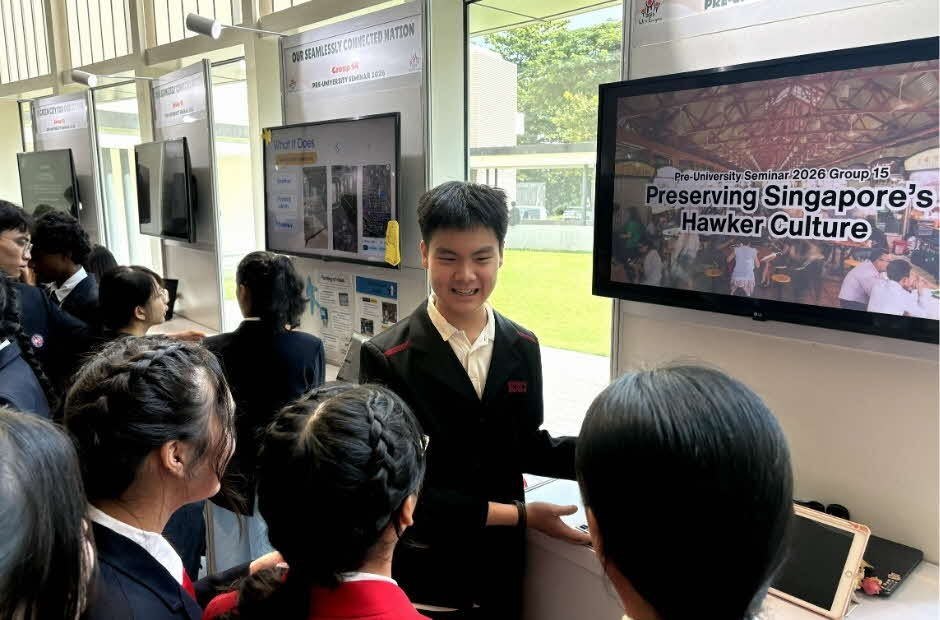
Dave Gan (middle), a Year 5 student from the School of the Arts.
Dave Gan has followed his father on supply runs to hawker clients. He has been to Jurong Fishery Port at 3am. He has packed fried carrot cake at a stall that went viral over a single social media reel. "I was really amazed at how much skill is required just to make one bowl of bak chor mee or a plate of fried carrot cake,” he says.
So when it comes to talking about hawker heritage, Dave thinks of the hawker who wakes before dawn, learns every step of the trade, and builds a business with no formal education. He also knows most young people don't see that picture. His group's proposal, Hawker Hub, tries to change that in three steps, depending on how ready you are to step into the trade.
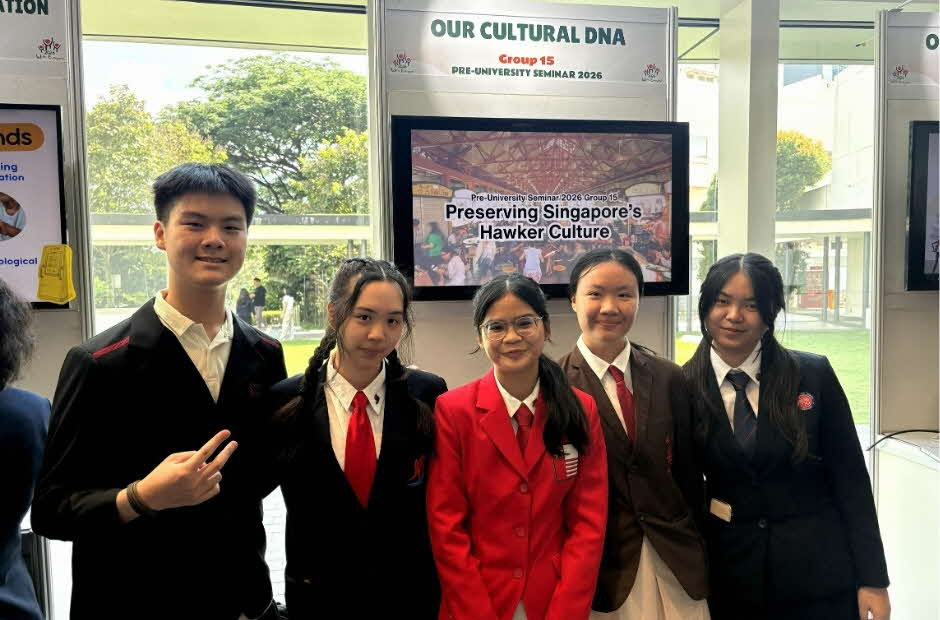
Dave with his groupmates showcasing their project to bring more young people into the hawker trade.
Not sure yet? A Dish Dictionary walks you through the story and craft behind local dishes. Getting serious? A forum connects you with veteran hawkers who are ready to pass on what they know. Ready to try? An eight-week Hawker Tryout Programme trains you, puts you behind a real pop-up stall, and gives you feedback before you commit to anything. “The point is to make hawker work feel possible, and to make sure the skills don't disappear with the generation that built them,” says Dave.
These students proposed an app to tackle loneliness
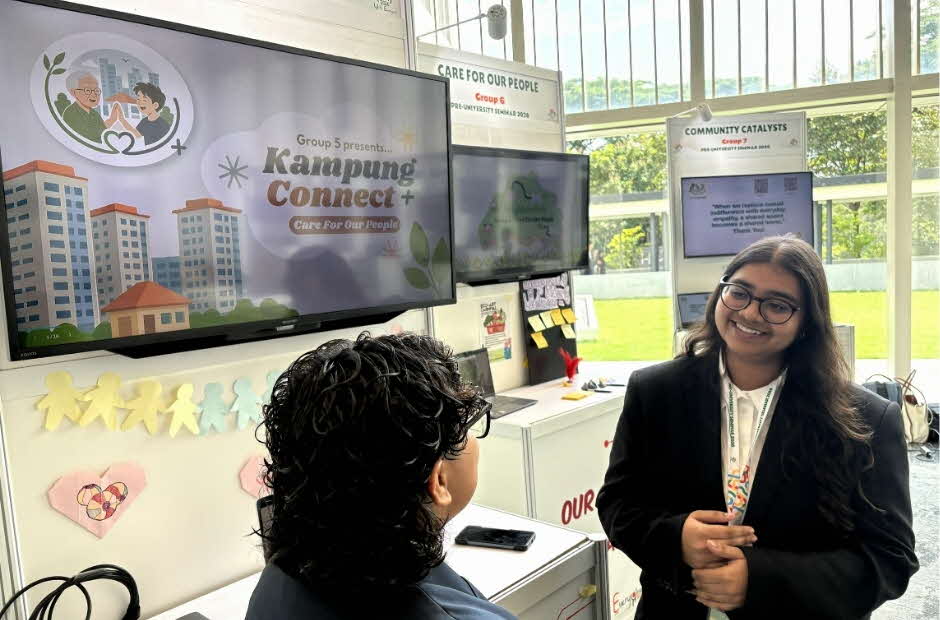
Arul Sri Vigneshwari, Singapore Polytechnic, Year 2.
When Sri visited Foundry, a non-profit social impact hub, as part of the seminar's learning journey, she found that both seniors and youths were lonely, and for similar reasons. "Both groups felt lonely because of rapid digitalisation," she shares. Youths craved real friendships but were stuck behind screens. Seniors, meanwhile, withdrew quietly – not wanting to become a burden to their loved ones.
Sri and her group responded with Kampung Connect, an app that pairs seniors and youths based on shared interests – so an elderly mahjong enthusiast might teach a youth to play, while the youth teaches them to navigate a smartphone. “The approach is deliberately strength-based. Everyone contributes, no one is reduced to just their needs,” says Sri.
For Sri, the issue is personal. Her grandparents live in India, and she admits she never quite built a close bond with them. So now, she makes a point of greeting the elderly neighbours in her block – smiling in the lift, asking how their day went. “Finding that one common ground can be the starting point to a genuine relationship," she says.
How do you get strangers in BTO flats to look out for each other?
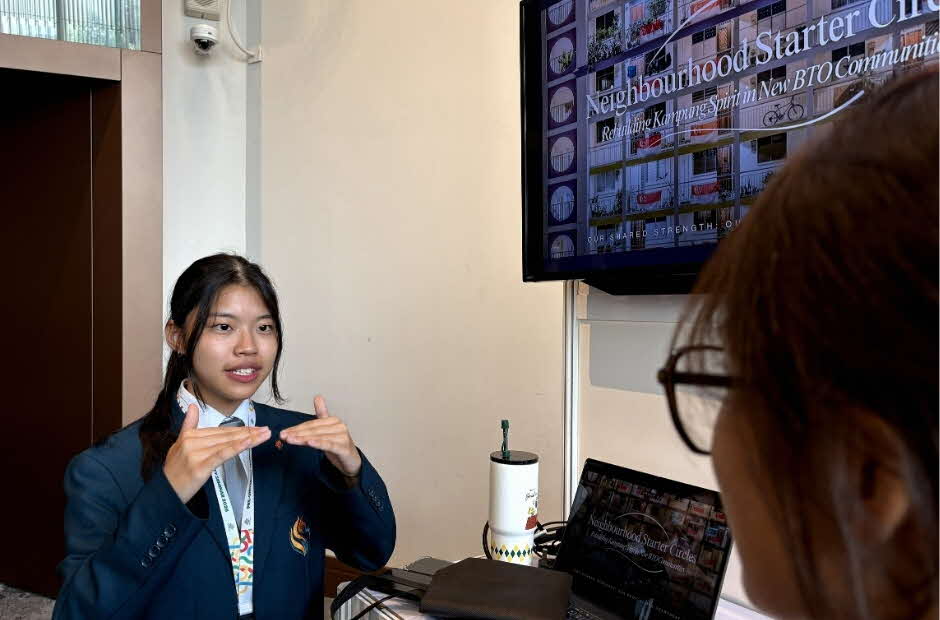
Tan Lee Shyen, Anderson Serangoon Junior College, JC2.
Through research, Lee Shyen and her group noticed a pattern. When residents first collect the keys to their BTO flats, Telegram channels buzz with excitement and plans. Then, slowly, the messages stop. "It's not that they don't want strong connections," she says. "There just isn't the push to."
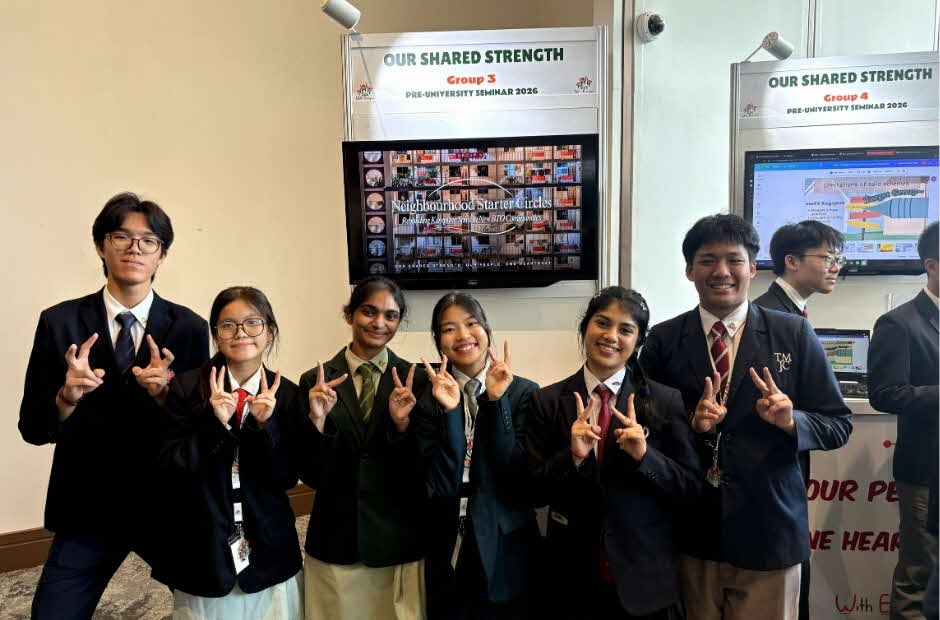
"The kampung spirit is decreasing." Her group's response, the Neighbourhood Starter Circles, to rebuild neighbourly trust in new HDB estates.
That insight became their project proposal – the Neighbourhood Starter Circles – a programme with tiered activities matched to commitment level. Casual sports games and low-key tea chats, community gardening and recipe swaps capped off with a six-monthly celebration.
Residents connect via WhatsApp or Telegram, and a volunteer Bridge Committee of residents keeps things going."Communities that trust each other uplift each other. In times of crisis, you know someone has your back," says Lee Shyen.
She grew up in the East, where neighbours exchanged food and festival greetings regularly. "Your neighbours are the people who are closest to you in proximity," she says. "In times of need, they are the ones most able to help."
How often do JC, Poly, and ITE students actually mix?
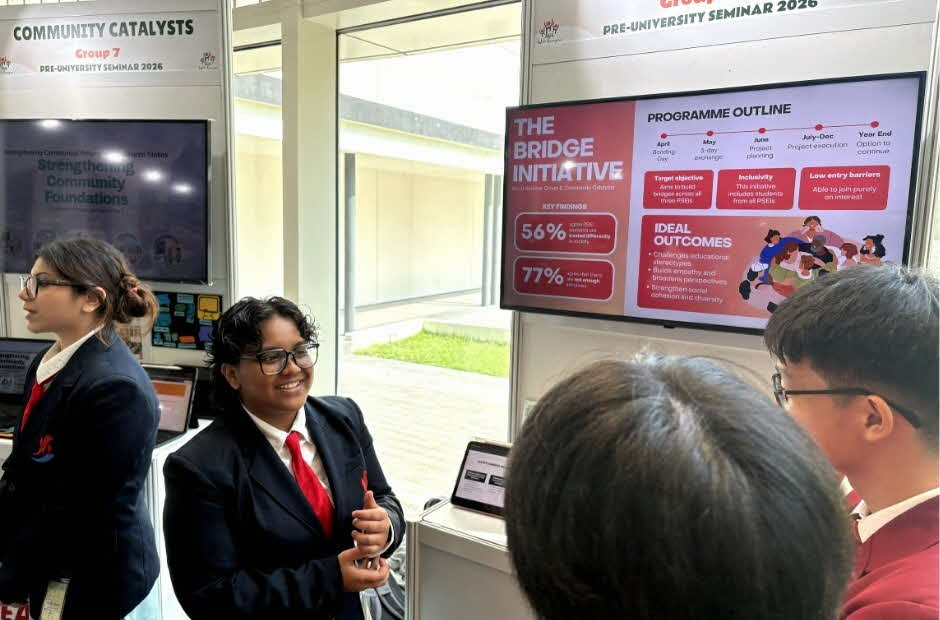
Maya Nazura Binte Zurainy, Millennia Institute, Year 2.
When Maya’s group, the Community Catalysts, surveyed students across all three types of institutions, they found the appetite for connection was already there.
A polytechnic student said, “It’s not every day you get to work with people from different backgrounds.” A JC student said meeting peers from other institutions would be “a really good chance to make new friends”. An ITE student said she wanted to open up to people with different experiences to her. Students want to connect but don't know how.
That's why Maya's group proposed The Bridge Initiative. Students grouped by shared interests spend a day at each other’s schools, then build and execute a community project together. “It's important to be accepting of one another and to be comfortable in each other's presence,” says Maya.
What 3 months of prep taught two teachers about 'WE'
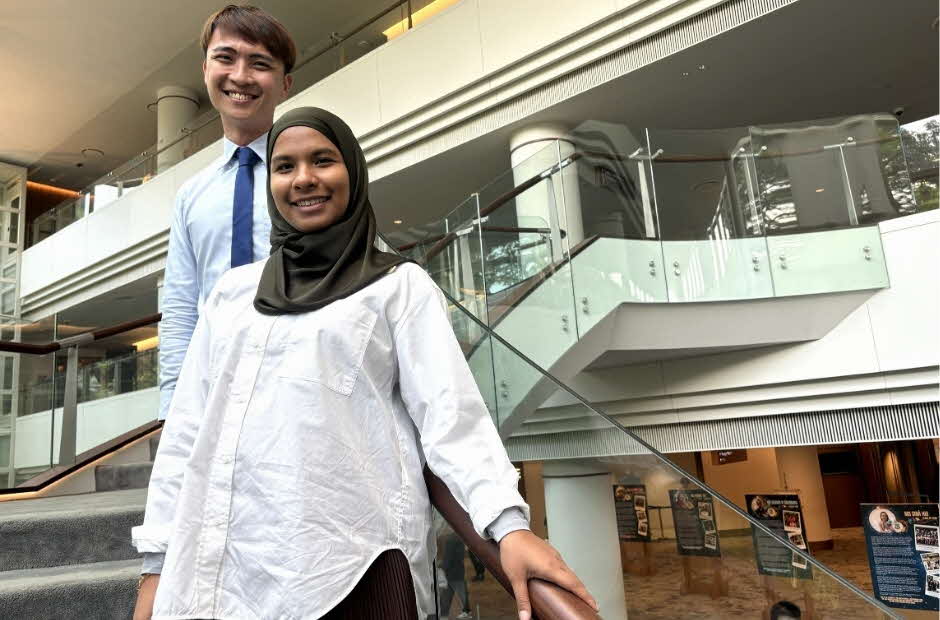
Teacher-facilitators Mr Trevor Tay and Ms Maryam Mokhtar from Temasek Junior College.
For three months leading up to the four-day seminar, teacher-facilitators Ms Maryam and Mr Tay from Temasek Junior College guided 25 students from different schools. The hardest part? Getting diverse strangers to agree. The most rewarding? Watching them become friends.
Both teachers say the experience showed them that building an inclusive nation starts with getting people to listen to one another. “The interpersonal aspect of the Pre-University Seminar actually surpasses the final product,” says Mr Tay. “The projects are just the beginning. The bonds they've built along the will carry them even further.”
Ms Maryam adds, “The students are very forthcoming, proactive and enthusiastic. Watching them navigate disagreements, build consensus, and look out for one another reminds us what these skills look like in action.”