




Drying clothes, cooking, commuting – we do not think much of these everyday actions, but our students are reimagining them through eco-friendly design. This initiative is in support of Go Green SG 2025, an annual nationwide sustainability movement organised by the Ministry of Sustainability and the Environment. We speak to four schools whose students are turning curiosity into climate action, one project at a time!
Building toy cars with rechargeable sun-powered batteries
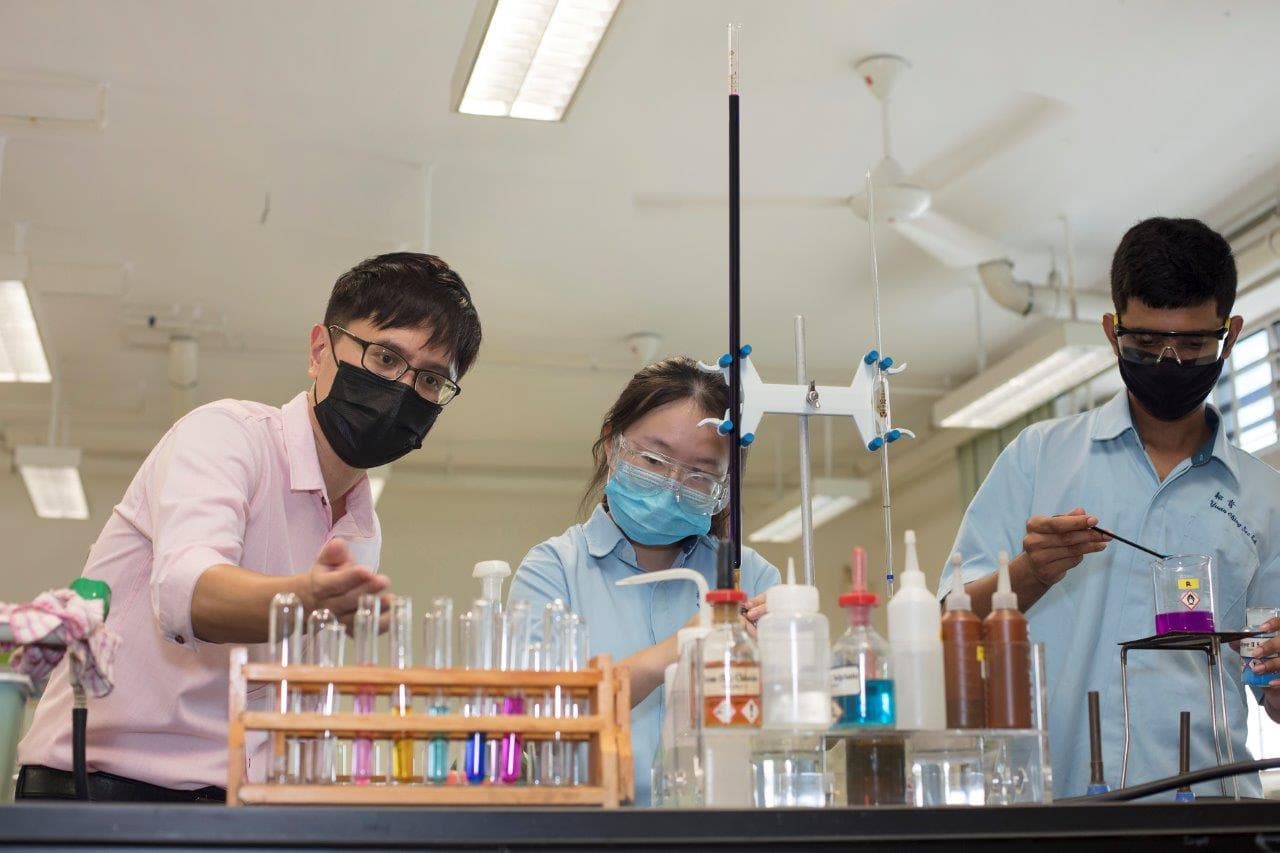
Over 16 weeks, Secondary 1 students at Compassvale Secondary School explored sustainable design by creating rechargeable battery-operated toy cars during their Design & Technology lessons.
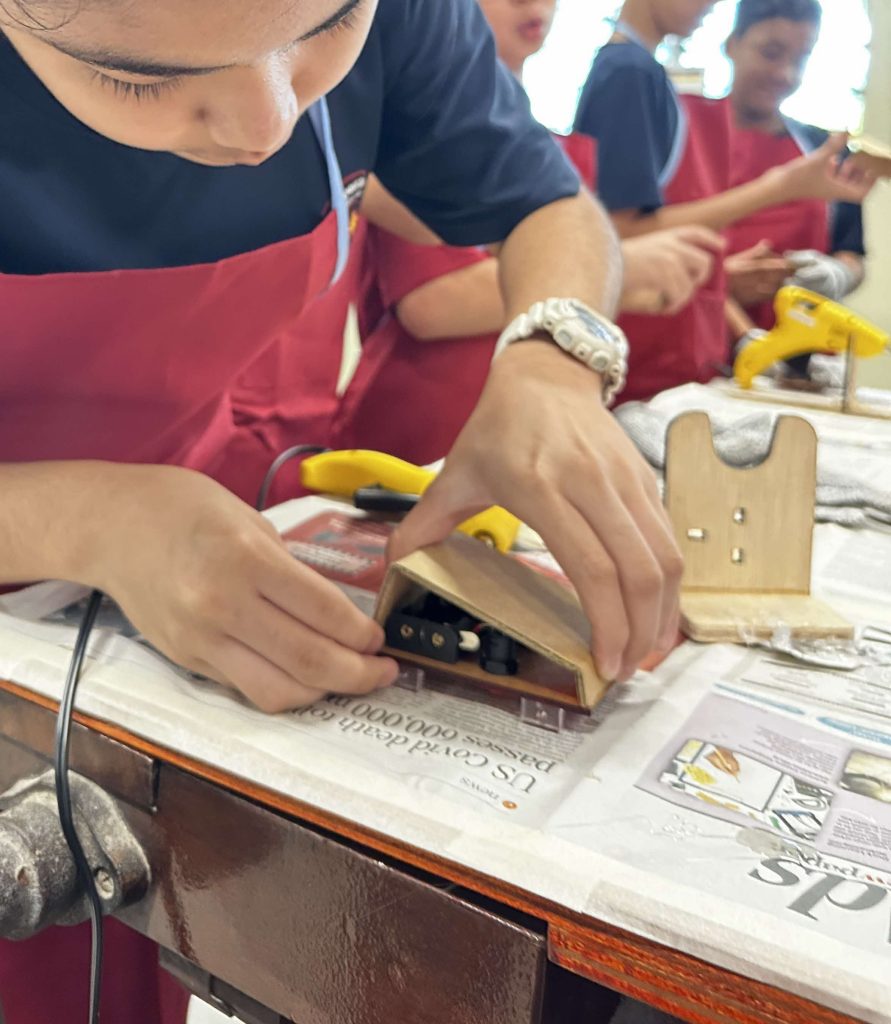
As part of the project, the students built two items: a toy car, and a solar-powered battery charger to power the car. Along the way, they engaged in design thinking, artefact fabrication, and the construction of electrical circuits.
Mr Aydrian Yap, Head of Department (Craft & Technology), shared that this project helped students understand how electrical components work together, and how renewable energy can be stored and harnessed to power vehicles.
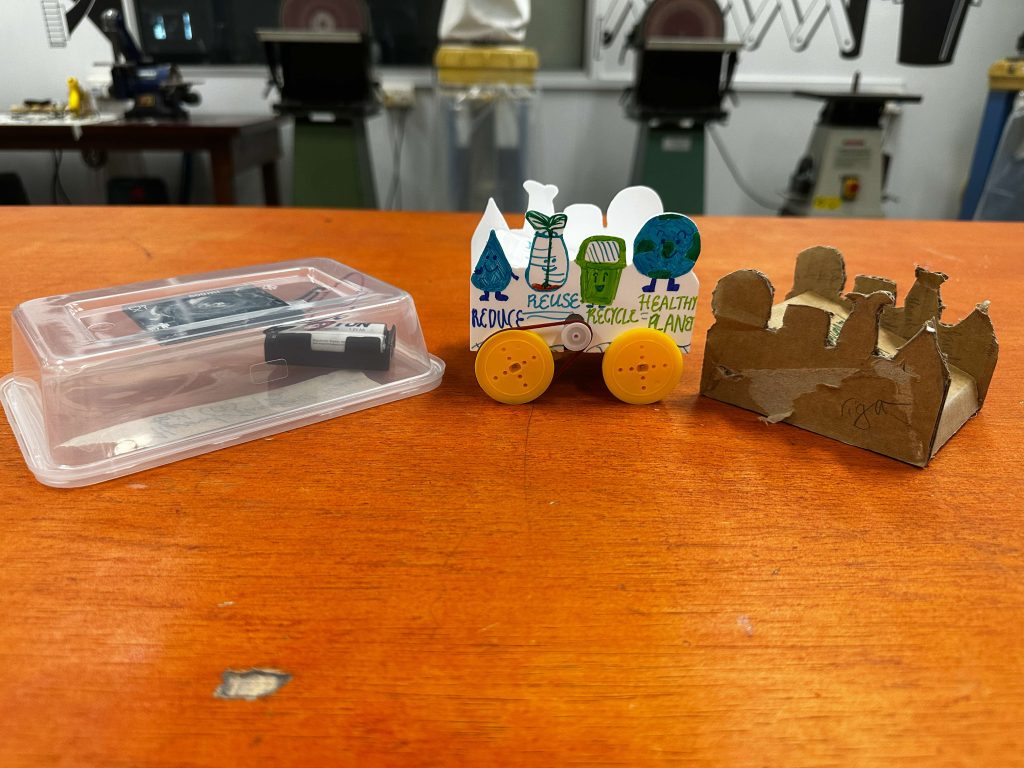
The students were also allowed to bring their solar charger home to recharge household batteries. This was to encourage their families to shift away from using disposable batteries, a small but positive change in daily habit that goes a long way towards greener living.
Envisioning a green city
Students from Xishan Primary School presented their vision of a sustainable urban environment to members of the public at “Our Green Day”, a community outreach event organised by Yishun Secondary School.
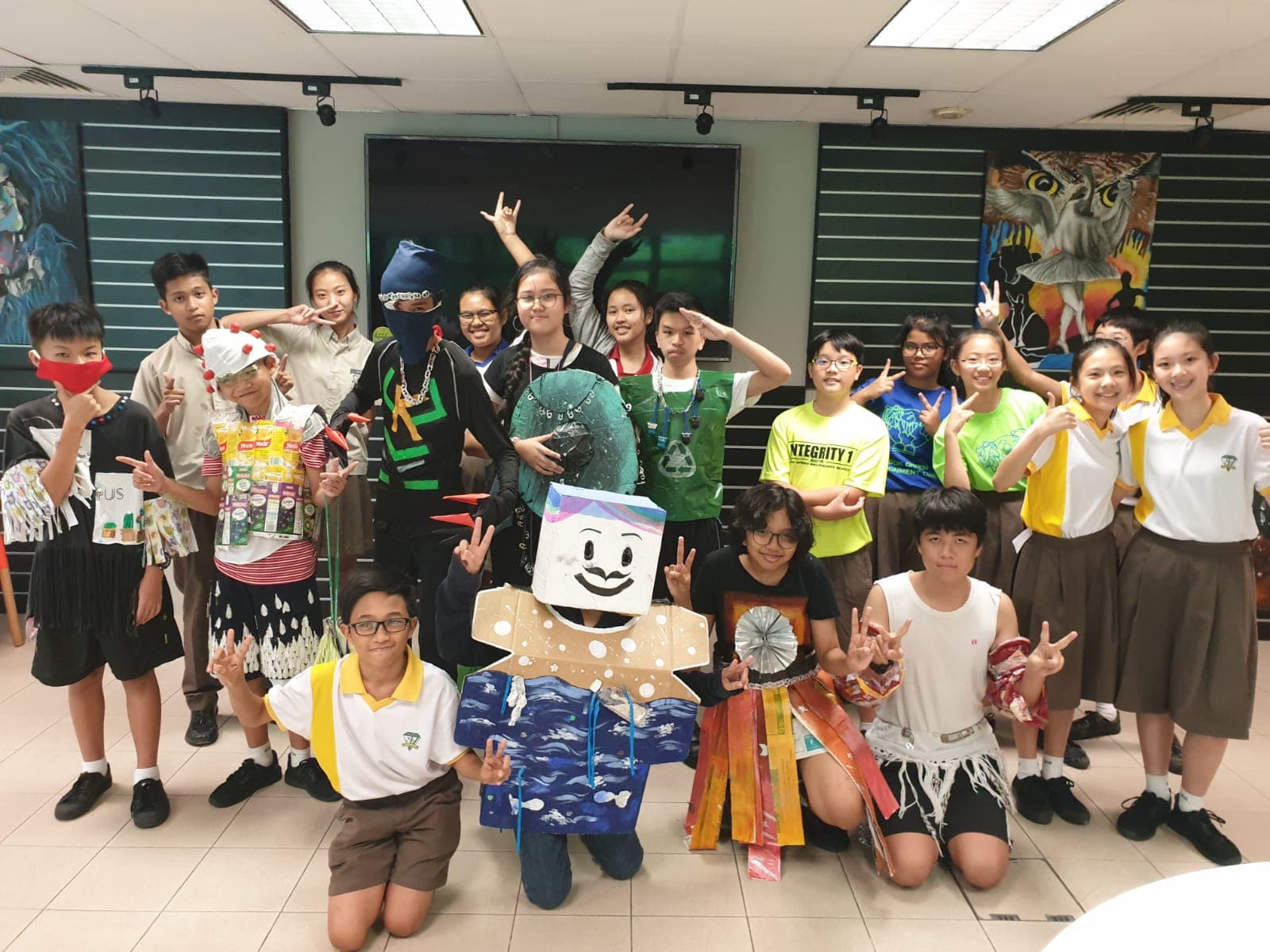
As part of their showcase, they built and exhibited a Green City prototype using upcycled materials such as beverage packaging. The prototype featured eco-friendly infrastructure – think solar panels, rooftop gardens, rainwater harvesting systems, motion-sensor lighting, as well as pedestrian and cycling paths – highlighting innovative solutions that support Singapore’s green transition.
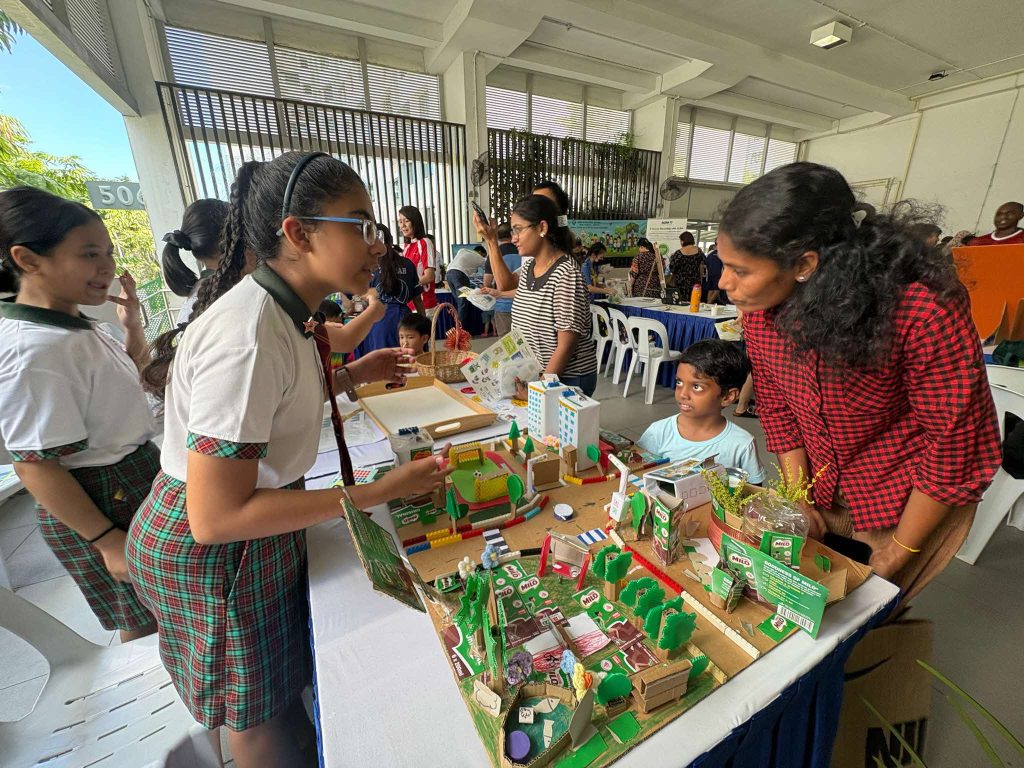
The students also built solar-powered cars for display at the event and designed electricity conservation decals to be distributed to the community members, to encourage responsible energy use at home.
Ms Seow Qi En, Subject Head (Special Projects and Environmental Education), shared that it was heartening to see her students grow into confident sustainability advocates, ready to drive positive change and inspire greener choices in their homes and the wider community.
Designing smart and sustainable solutions for everyday living
As part of their JOULES (Junior OUtstanding Leaders in Energy for Sustainability) Progamme, Secondary 1 and 2 students from Bukit View Secondary School worked together to build functioning prototypes of smart city models, automated clothing racks, and fall-detection systems for the elderly. These prototypes aligned with the programme’s theme of using clean energy and innovative thinking to tackle real-world environmental challenges.
One standout project is a smart clothing rack that retracts automatically upon rain detection to prevent clothes from getting wet. Designed with energy efficiency and inclusivity in mind, the rack is especially helpful to users who may not be able to manually retrieve their laundry. Made from recycled cardboard and basic sensors, the rack blends sustainability with practical design.
Another group built a smart fall detector that requires minimal power. With simple components like an accelerometer and a buzzer, the device alerts others when the user falls, making it an energy-efficient safety device that is particularly helpful for the elderly.
These innovations address everyday needs while showing how low-energy technology and thoughtful design can support a more sustainable lifestyle.
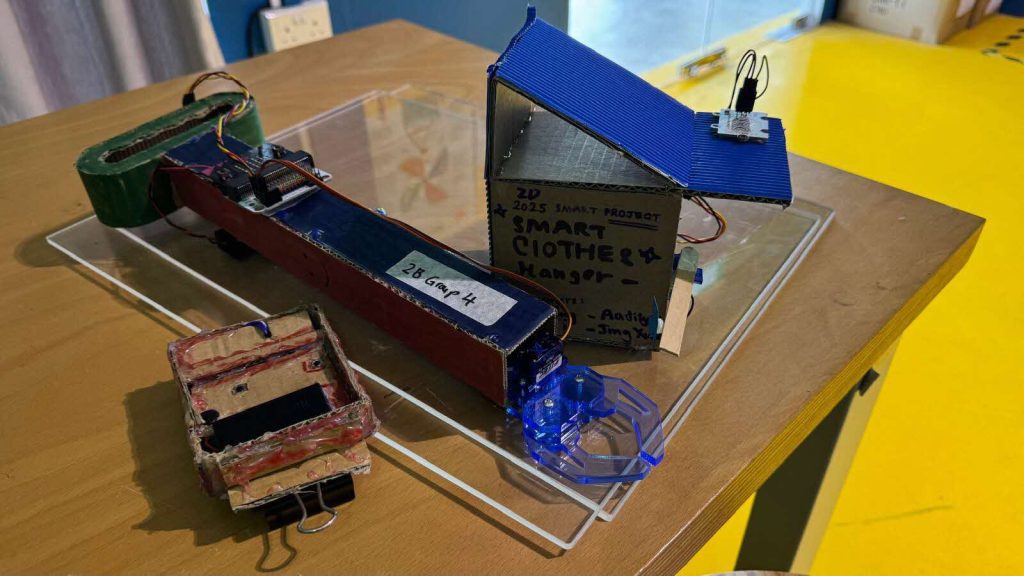
“The JOULES programme showed us how technology can support both people and the planet,” said student Ethan Teoh. “Our device helps save lives and reuses materials, so we’re protecting the environment while helping others.”
Baked by the sun – literally!
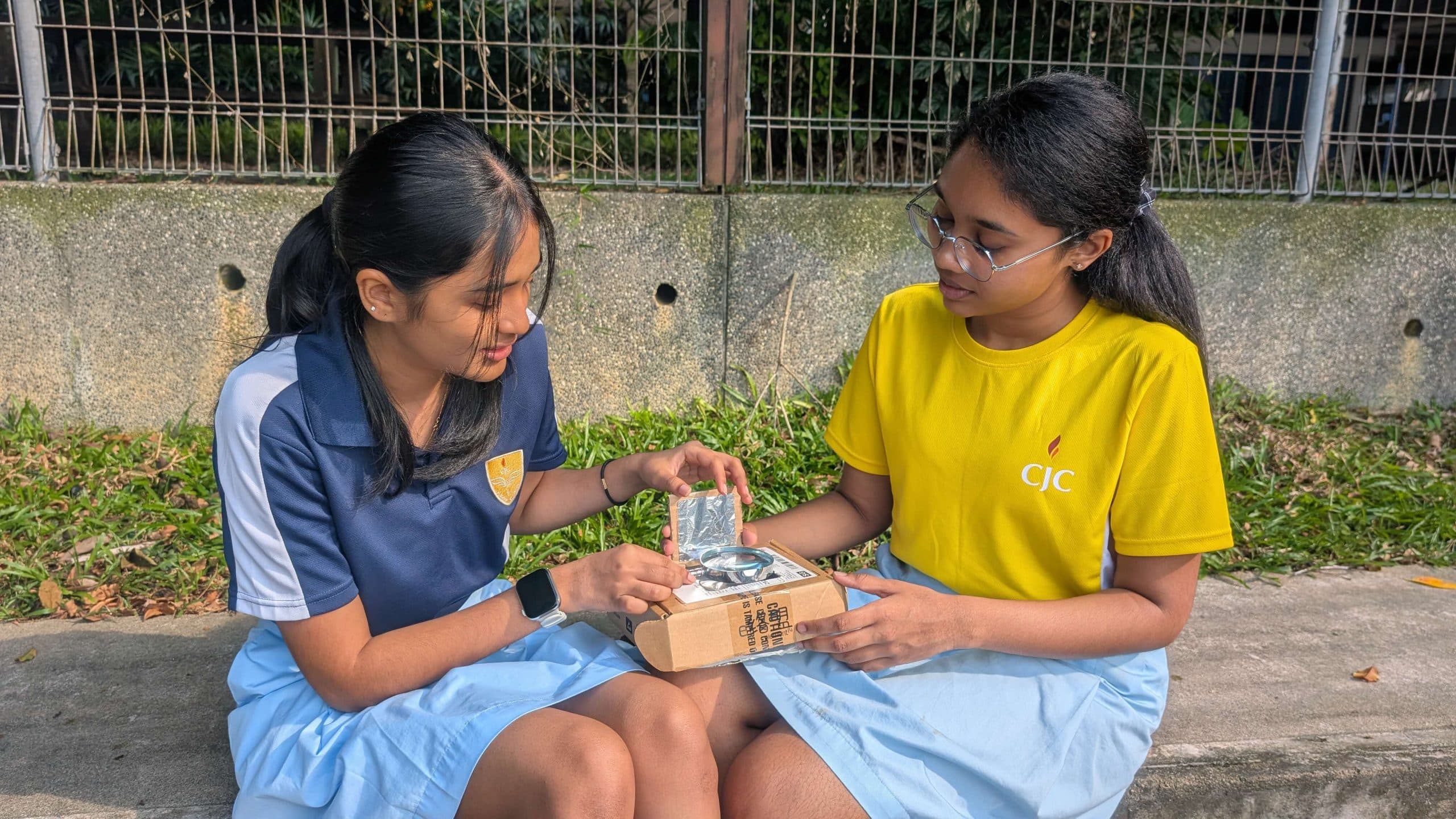
Is it possible to cook using solar energy? Students at Catholic Junior College decided to find out. Through repeated rounds of experimentation, they built and tested various solar oven designs, all made from simple, everyday materials.
The students explored how different materials and configurations can affect heat retention. They discovered that the combination of aluminium foil and a magnifying glass produced the best results, softening marshmallows into gooey perfection in just 30 minutes!
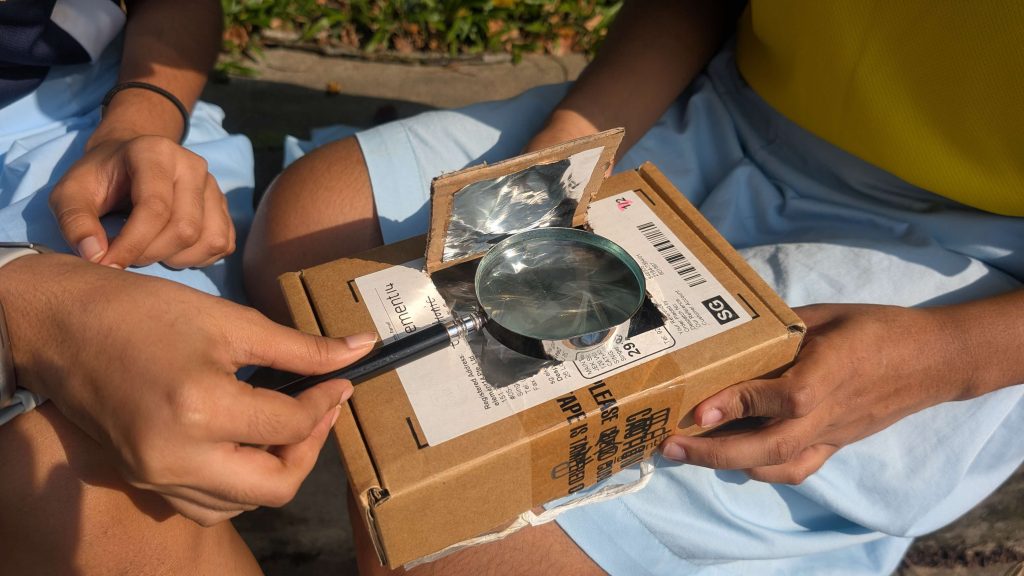
Along the way, they gained insights into heat retention and the concentration of solar energy. They learnt that the reflective qualities of aluminium foil are essential for heat retention, as is the magnifying glass’s ability to direct and focus sunlight.
“This project taught me that sustainability doesn’t have to be complicated or expensive,” shared student Amirtha. “Even simple materials like aluminium foil and a magnifying glass can be used to harness solar energy effectively.”
Photos courtesy of: Compassvale Secondary School, Xishan Primary School, Bukit View Secondary School, and Catholic Junior College.
.jpg&w=3840&q=75)