




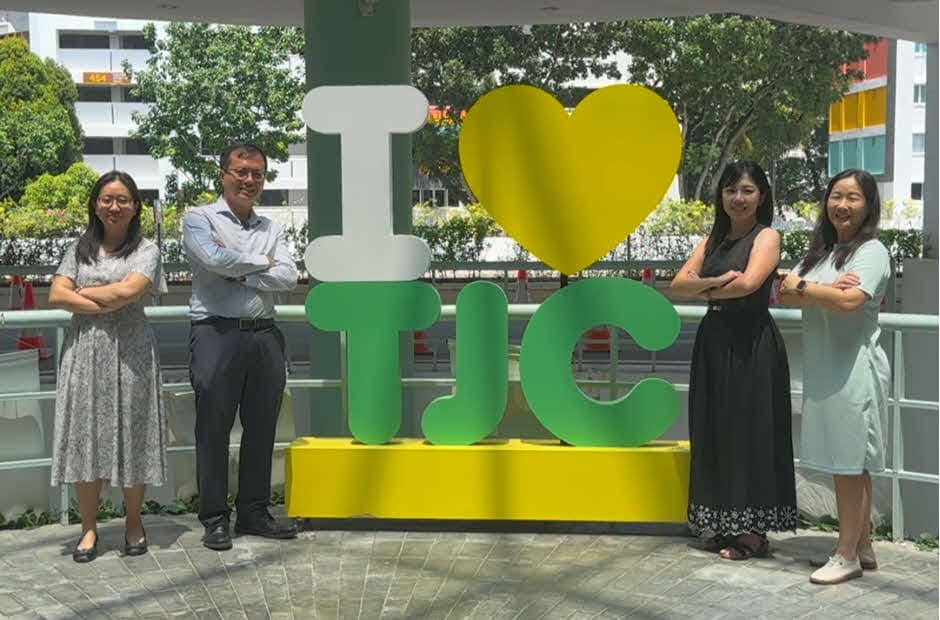
English teachers everywhere know this experience: You want to give your students meaningful feedback on their essays, but a lot of time is spent correcting typical grammar errors. You have the usual suspects: “Fewer” books, not “less”. “Better”, not “more better”. Ms Shermin Chee, a Language Arts teacher, knows this well.
But with a little encouragement from colleagues to try using tech in her teaching, she found a way forward. What if AI could help pinpoint these commonly made mistakes instead, and free her up to work on higher-order feedback?
She discovered she could use optical character recognition tools to turn her students’ handwriting into typed text (but not if it’s too messy, so write neatly, kids).
Then, with AI’s support, she tweaks and tailors feedback to her students. Her students later make corrections themselves, writing their edits in green ink so she can see they’d actually engaged with the suggestions.
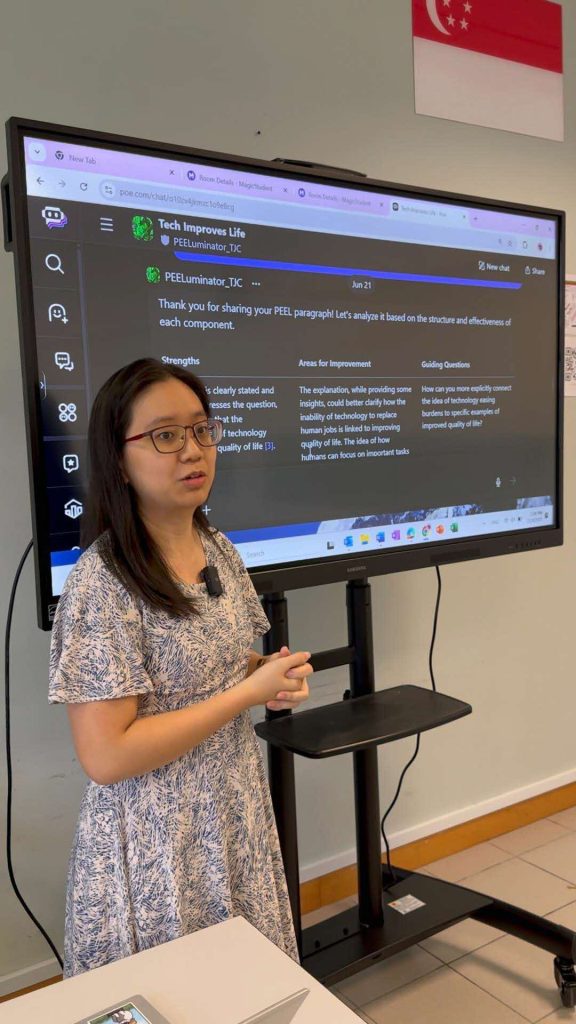
“Now, they’re more careful not to make the same mistakes,” she says. “And I can use the time to teach higher-order thinking, like strengthening their essay arguments.”
Ms Chee’s transformation is part of a growing movement happening at Temasek Junior College (TJC), where teachers are on to something: How to use AI to transform classrooms for the better.
Beyond the hype: What teachers are actually using AI for
The reality of AI in TJC’s classrooms is practical: thoughtful solutions to everyday challenges that have plagued educators for decades.
Mr Tan Seng Kwang, Senior Teacher of Physics in the school, has been leading the way in this.
“If there’s a better way to do work, we should try it, and share it,” says Mr Tan.
When his students roll virtual dice on their tablets, watching atoms “decay” with each roll of the die that shows six, they’re experiencing concepts that would typically rely on their imagination. Mr Tan taught himself to code these simulations using AI, describing what he wants in plain English and letting the technology build it.
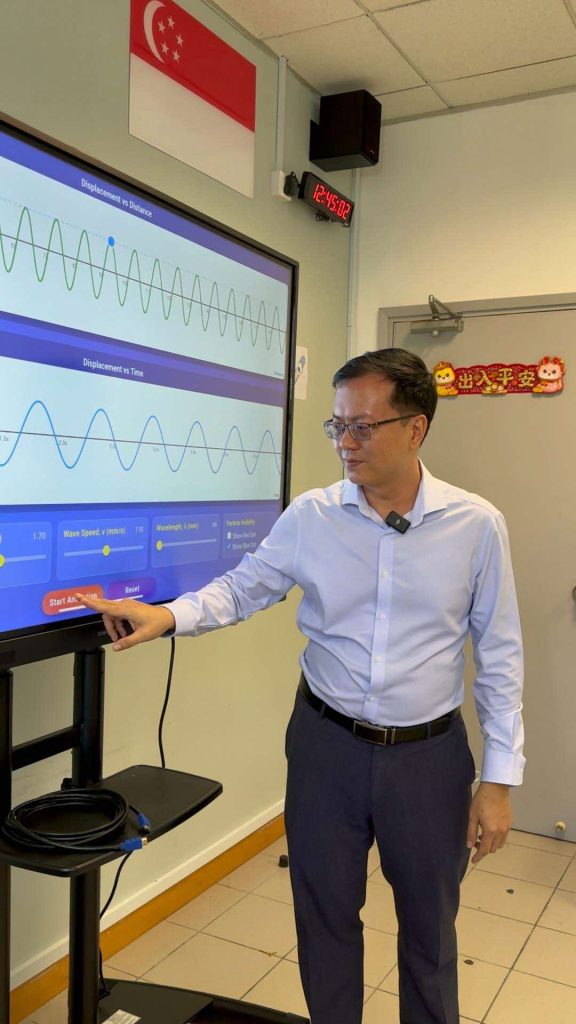
“I used to spend hours writing JavaScript,” he explains, scrolling through interactive experiments. “Now I just tell the AI what I need, and it creates the simulation. Then I share the prompts with other teachers so they can make their own.”
This way, educators can focus on what humans do best: Inspiring curiosity, facilitating meaningful discussions, and building genuine connections with students.
Ms Jolene Zhou, a Project Work teacher encourages her students to tap on GenAI to create higher-resolution prototypes of their ideas. This in turn creates a natural opportunity to deepen conversations about their project. Additionally, as the teacher overseeing student reflections as part of their Values-In-Action programme, she noticed that students wrote much better reflections when they could bounce off ideas with a partner. “But of course if you have a class of 30 students, it’s not feasible for a teacher to talk to every student and give feedback about their community service experiences”, says Ms Zhou. Generic comments felt hollow, but individual responses were impossible at scale.
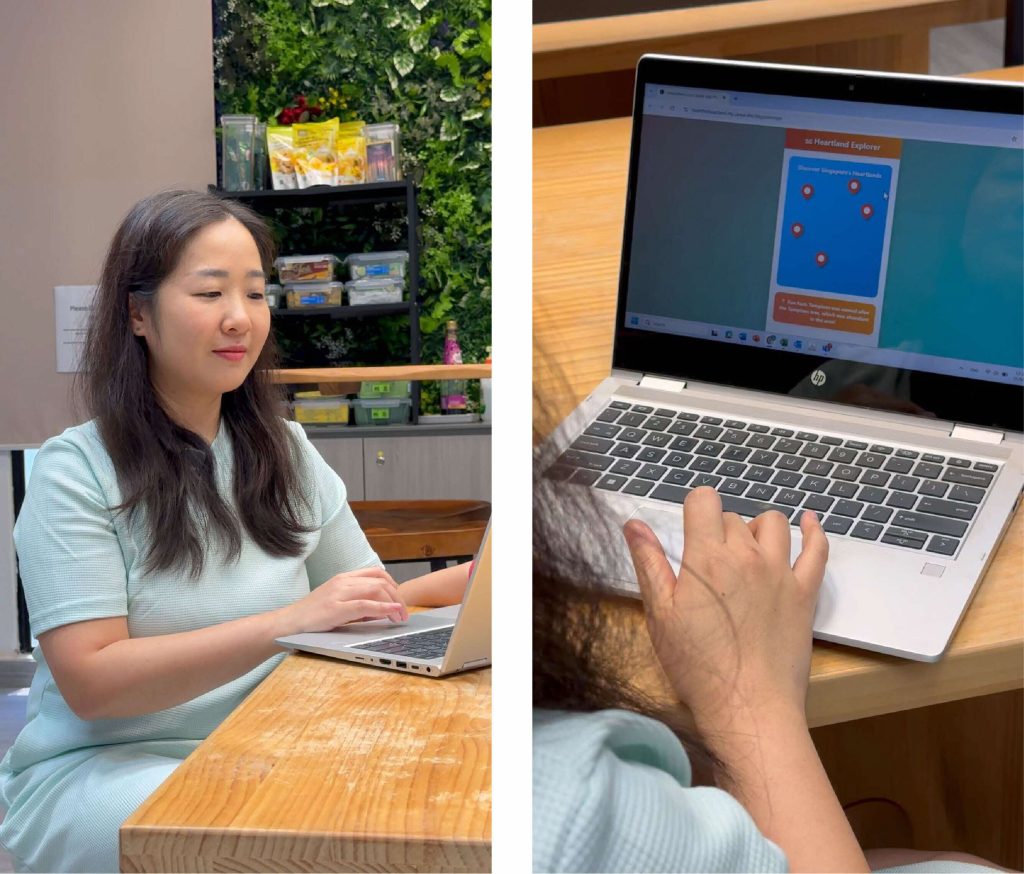
Her solution? Customising an AI assistant to ask probing questions that guide students through deeper reflection. She did this within MOE’s Student Learning Space (SLS), using SLS’ own AI chatbot learning assistant, named SALiS. “Instead of writing ‘I learnt teamwork,’ students now have conversations with SALiS that push them to articulate exactly what they learnt and why it matters,” she explains. “The AI doesn’t give answers. It asks better questions.”
And how do teachers know which AI tools are safe? They refer to MOE’s AI in Education Ethics Implementation Framework. A mouthful, but helpful. It sets out key implementation considerations for using AI in education so that it preserves teachers’ and students’ agency, remains inclusive, is accurate and unbiased, and is safe. It offers considerations to ensure that use of AI for Education tools (including Commercial-Off-The-Shelf tools) is fit-for-purpose, safe and pedagogically sound.
The secret ingredient: A culture of sharing
Here’s what makes TJC’s approach sustainable: Their teachers talk to each other about what works and what doesn’t, showing us how teaching is a team sport.
“There’s a culture of very generous sharing,” Mr Tan explains. When he discovers a good way to use AI, or tips for the Student Learning Space (SLS), there’s no gatekeeping. He demonstrates it at the next professional learning session.
This collaborative spirit didn’t emerge by accident. When ChatGPT first appeared in 2022, TJC’s leadership sensed it was going to be a big deal, so they created structured opportunities for teachers to experiment with it, like through their Technology for Learning committee.
The result is beautifully cross-pollinated innovation. Economics teachers now generate supply-and-demand curve simulations using Physics teachers’ vibe coding techniques. Ms Zhou and Mr Tan gave a lecture on how to use AI for quick prototyping for Project Work. Everyone benefits from everyone else’s discoveries.
“I’m not a tech expert,” admits Ms Kok Hui Ching, another Physics teacher. “I’m the follower, he is the shifu,” she says, using the Mandarin word for ‘master’ to refer to Mr Tan with a laugh. “But that’s okay. He shows me what works, I try it with my students, and I share what I learn. We all get better together.”
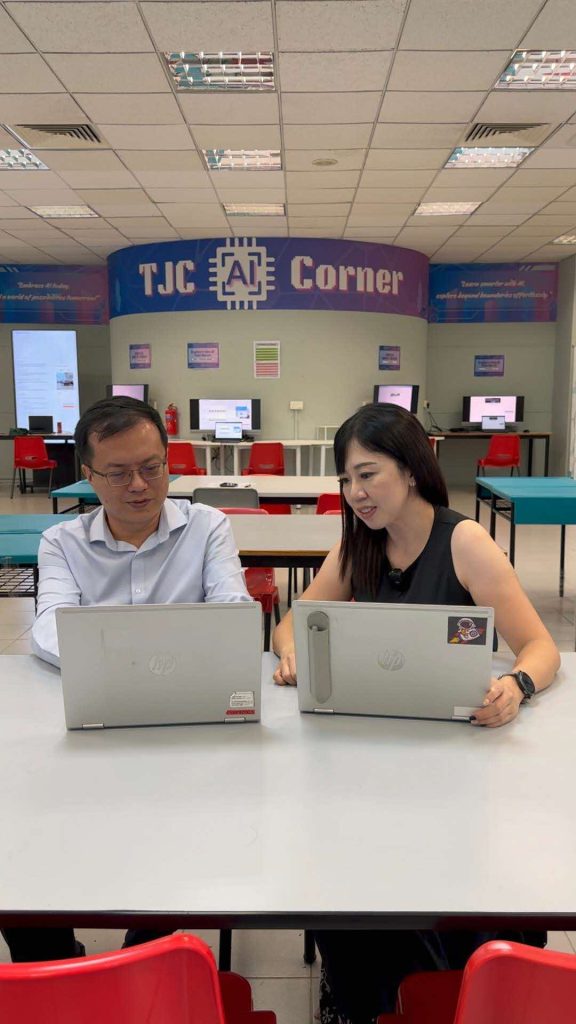
The culture flows from teachers to students too
The enthusiasm here is contagious. The Hack Club – a student interest group that meets purely out of passion, with no CCA points attached – runs workshops for peers, teaching everything from basic prompt engineering to advanced prototyping. Under Ms Kok’s guidance, the Hack Club built an AI Corner in the library.
One of Hack Club’s founders, Rameshkumar Dhanvine – who recently graduated – is bringing us a step closer to holograms thanks to an AI-driven design framework he developed for optimising light manipulation. It won international recognition at the International Science and Engineering Fair 2025. And it shows that these young people are learning to see AI as a tool for creation and critical thinking, not just consumption.
Advice for other schools?
For teachers feeling a little unsure of the AI hype, TJC offers some encouragement. Maybe the answer isn’t expensive software packages or mandatory training sessions – it’s creating conditions where teachers feel safe to experiment, fail, and share what they learn.
Successful technology integration happens when human collaboration comes first. Teachers who trust each other are more willing to try new tools, admit when something doesn’t work, and iterate together toward better solutions.
“We’re not trying to replace teachers,” says Mr Tan. “We’re trying to free them to do what only humans can do – inspire wonder, build relationships, and help students think critically about the world.”
.jpg&w=3840&q=75)
.jpg&w=3840&q=75)