




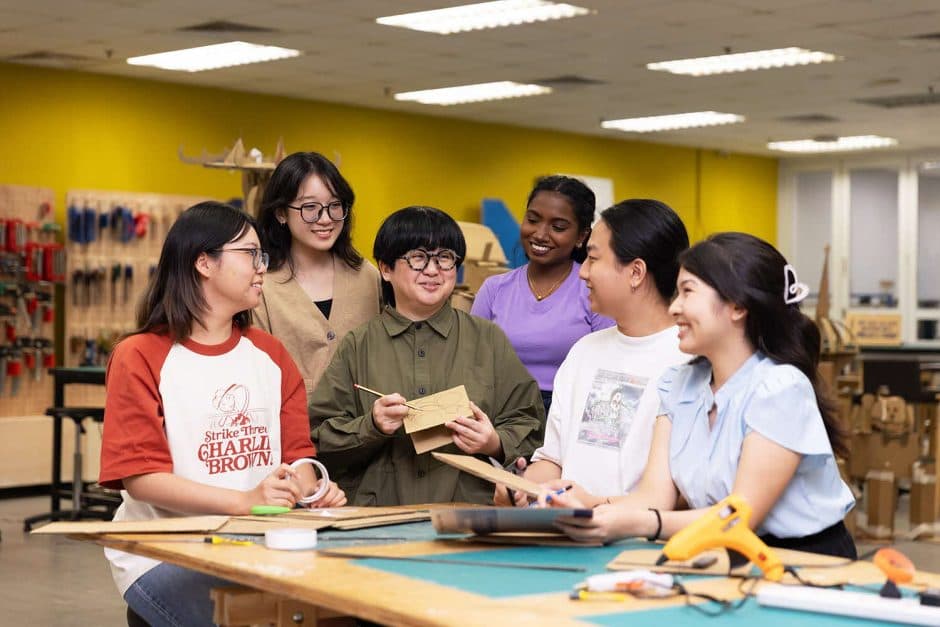
Should schools be places that spell endless possibility? For Ms Ng Wen Lei, Senior Manager at Nanyang Polytechnic’s School of Design & Media, that question isn’t philosophical – it’s practical. And personal.
Years ago, when her A-level results fell short, she felt adrift. “I lost hope,” says Ms Ng. “Then how? Where to go? I despaired.” But flipping through a polytechnic brochure, she spotted a design course, and with nothing left to lose, enrolled in the course. At Nanyang Polytechnic, she found herself immersed in hands-on tools and technical skills. For the first time, she wasn’t just learning – she was making, designing, even taking on freelance projects.
“I realised I could do things. Make things. Earn from my skills,” she says. “It showed me that failure is not the end. There are always options.”
This belief – that creativity offers choices, and choices bring hope – now sits at the core of how she teaches.
“Creativity is having hope in options,” she says. “It means believing that one of many possible paths might work, and having the confidence to try.” It’s a mantra that doesn’t come from theory alone. It’s something Ms Ng has lived, and continues to practise as a lecturer.
Art meets education
Much of Ms Ng’s strength as an educator comes from the life she lived before returning to Nanyang Polytechnic to teach full-time. A practising artist and former artistic director of digital art programme Noise Metaverse, she spent years curating immersive digital experiences and experimenting with form, narrative, and audience engagement.
Her studio practice informs how she teaches: layering experiences, scaffolding discovery, and helping learners navigate the unfamiliar. “I borrow techniques from the art world and apply those methods to unpack creativity for students,” she explains. She’s especially drawn to the ways artists across history tried to be creative – not just what they made. “People think creativity is something you either have or don’t. I want my students to see that it’s a skill. It can be learnt.”
And the many hats she wears – educator, designer, artist – are evident in her pedagogy. “As an educator, I scaffold lessons and clarify learning objectives. As a designer, I think about solving human-centred problems. That’s where empathy comes in. And when it’s Nanyang Polytechnic’s Open House or student orientation? That’s when I put on my artist hat and let creativity run wild.”
That ability to move fluidly between roles becomes a blueprint for her students.
From design anxiety to applied possibility
Ms Ng’s students often start where she once stood: uncertain, afraid of failing, and unsure of how they fit into the creative world. She responds with empathy and structure. “First, you understand your student,” she says. “Then you find opportunities for them to shine.”
That support comes with rigour. In Ms Ng’s classes, students don’t just brainstorm; they prototype, pitch, and present, usually to real clients. “If students are never allowed to make mistakes, they won’t learn how to recover from failure. The best time to try and fail is now.”
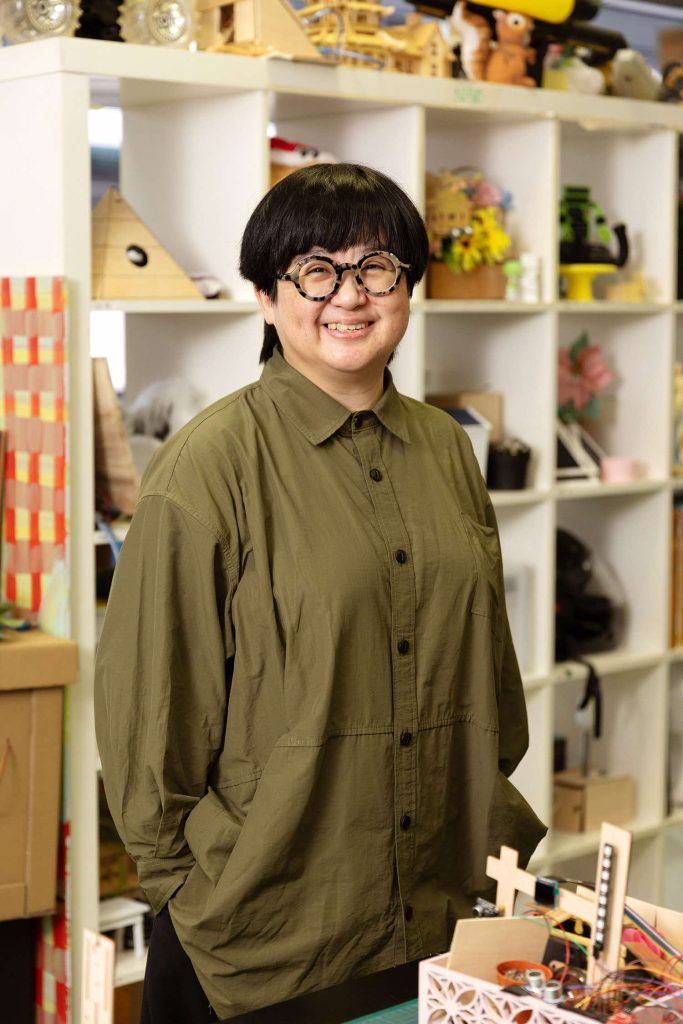
“Creativity is having hope in options. It means believing that one of many possible paths might work, and having the confidence to try.”
Ms Ng
Shallini Sivakuma, one of Ms Ng’s students, recalls experiencing this jolt firsthand. She entered the polytechnic’s Interaction Design course reluctantly; it was her eighth choice. Tasked with a client brief to enhance a local aquarium shop’s digital presence for the Heartland Innovation Challenge, Shallini panicked. “I cannot do fish,” she told Ms Ng.
Instead of stepping in with solutions, Ms Ng guided her with questions. “She never gave me answers,” Shallini says. “She asked me questions that made me think differently.” The resulting project won third place in the competition. It also helped Shallini find her footing. “She made me feel capable when I couldn’t see it myself.”
‘Separate identity from your output’
This kind of growth isn’t accidental. Ms Ng believes that by focusing on what students can do – instead of what they can’t – they build momentum. “Let’s not dwell on what they’re not good at,” she says. “Let’s start from their strengths and grow from there.”
But it doesn’t mean soft-pedalling hard truths, because accepting criticism can lead to better outcomes. Some of Ms Ng’s best teaching pivots have come from her students’ feedback; “they once told me, ‘your lessons are really boring’,” she shares with a laugh.
It made her realise that she had been too focused on content delivery, neglecting the experience of learning. “I was downloading too much. I forgot to engage.” She reworked her lessons entirely instead of taking it personally. Now, students explore sight deprivation through blackout museum visits, or experiment with multisensory design by tasting gourmet canapés. “Negative feedback can hurt,” she says. “But it’s essential. We’re all growing.”
It’s one of the reasons she teaches students to separate who they are from what they make, because design feedback isn’t personal, she emphasises. “In creative work, you need to separate your identity from your output. Otherwise, every critique feels like a judgement of you.”
Her students are encouraged to see their designs as drafts, not declarations. “It’s just a starting point,” she says. “The process is iterative.”
Creativity that adds value to life
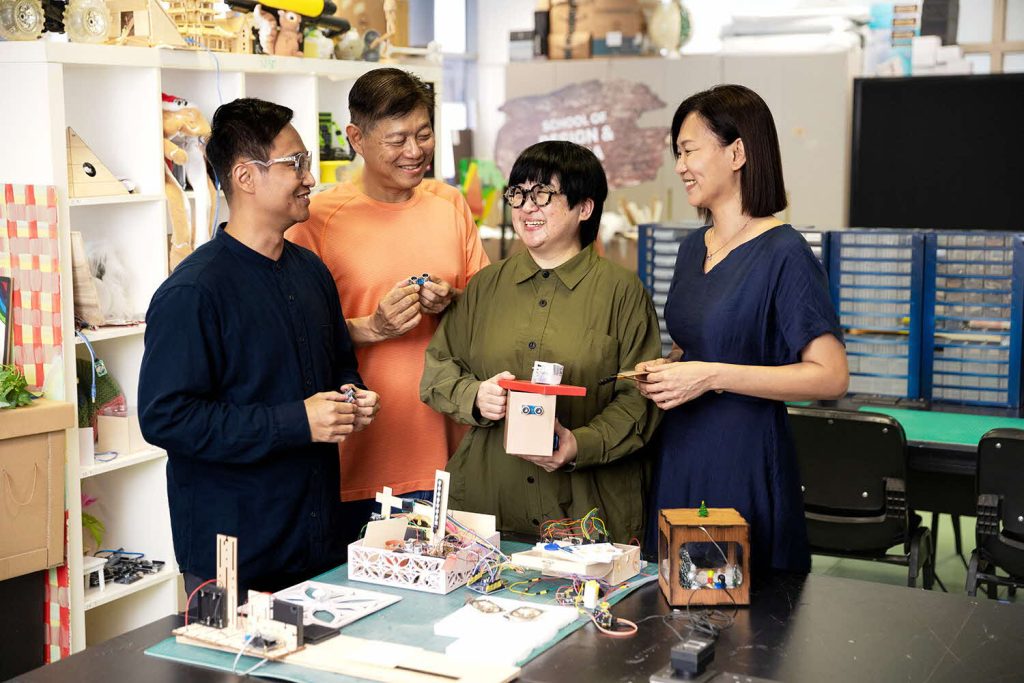
Ms Ng also teaches students to look outward. Her “ecosystem mapping” technique trains them to consider broader relationships. In the Beyond Soil project, students created an app that let consumers adopt plants at local farms. By tracking growth and receiving produce deliveries, users became part of a farm’s life cycle. The initiative won three Indigo Design Awards in 2023.
Projects like this allow students to contribute to meaningful change. In the Heartland Innovation Challenge, 52 students partnered with 15 SMEs: enhancing business visibility, designing new platforms, and improving sales. “It’s not just about being creative,” Ms Ng says. “It’s about adding value to someone’s life.”
She brings this same clarity when balancing roles. “Not all students will become artists. That’s why I help them contextualise creativity to real-world needs,” she explains. They learn to ask: What does the client need? How can we increase sales, improve wayfinding, or enhance a digital experience?
She guides students to see how creativity can solve human problems, reminding them that fun has its place too. “That’s another time I get to wear my artist hat,” she says. “And let creativity run.”
This blend of creative liberation and purpose comes from mentors who recognised her potential and gave her room to grow when she felt lost as an A-Level student. Ms Ng remembers how their support helped her find new possibilities and changed her life trajectory. Now, she passes that gift to others.
“If school is not the place to give you hope, then where else?” she reflects.
.jpg&w=3840&q=75)
.jpg&w=3840&q=75)