




As a secondary school teacher, Mdm Georgina Low has seen first-hand how students at that age sometimes struggle to put their devices away after classes. This has convinced her that self-regulation must be nurtured.
That belief shapes how the East Spring Secondary School teacher manages screen time at home with her own children, aged three and six.
Screen time in Mdm Low’s household always comes with clear boundaries. Device use is generally reserved for Fridays and weekends. On other evenings after the children return from preschool, the family settles into dinner and engages in simple activities like drawing, reading or chatting about what they learnt that day.
So when her six-year-old son occasionally asks for screen time on a Monday, Mdm Low reminds him of the family’s usual routine, and lets him decide whether he would rather have screen time then, or save it for the weekend where the family can enjoy it together. “He usually chooses to wait,” she says with a laugh. “Young children naturally struggle to stop playing or using something that is enjoyable.”
Mdm Low does not expect her young children to decide for themselves how long they should spend on a device, what they should watch or when they should stop. “As adults, we are here to provide structure such as a schedule and what to watch, emphasise the boundaries and as much as possible, model the healthy habits that we want to see.”
Turning screen time into family time
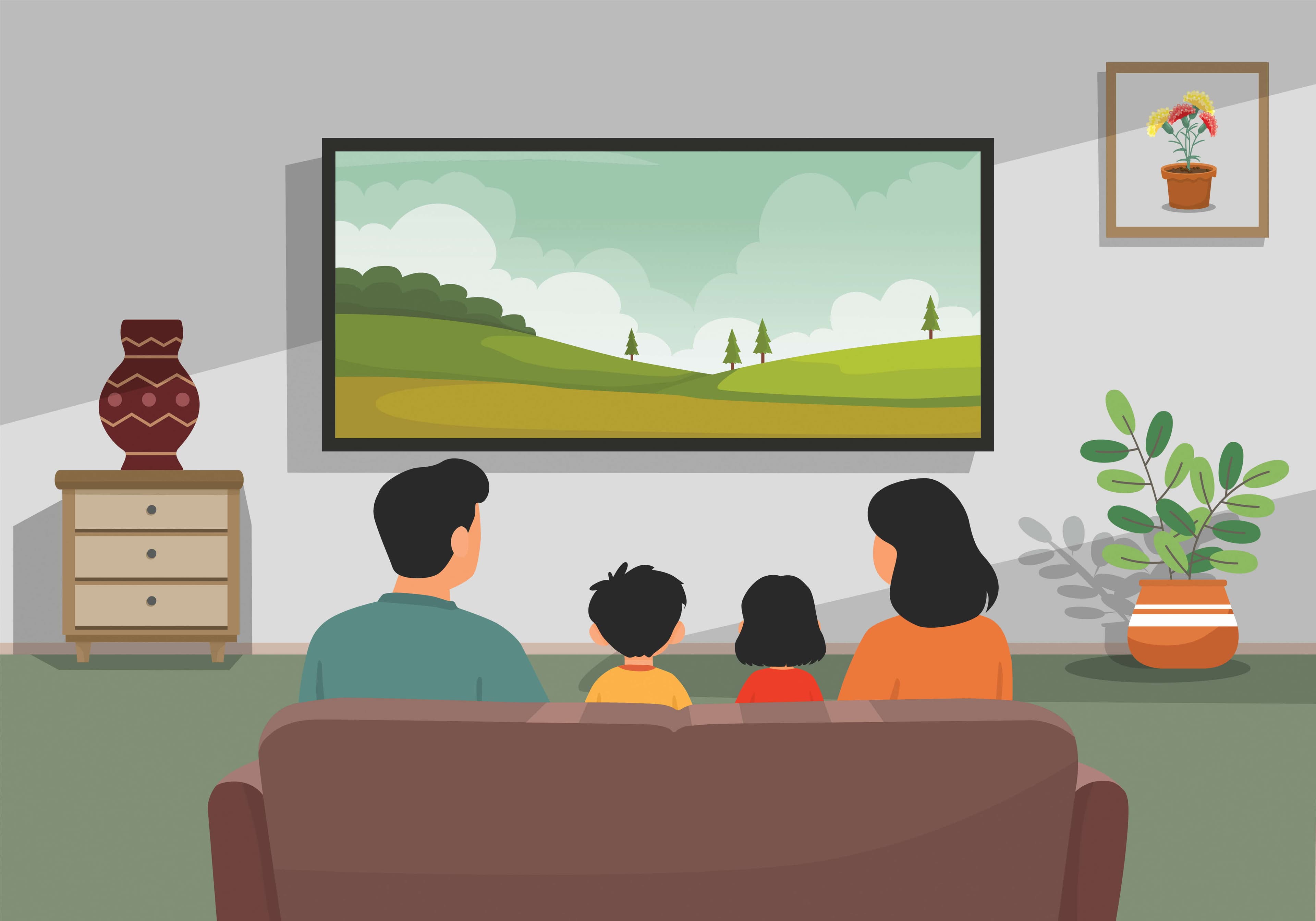
When the screens do come out on the weekends, her children watch age-appropriate movies and programmes such as Numberblocks and Dr Binocs. As much as possible, the whole family watches them together.
“I see it as a platform for the family to bond and spend time with each other,” says Mdm Low.
Co-viewing creates opportunities for conversations, like the time her son connected a scene in a movie to a science concept he had come across and was curious about.
During mealtimes, adults role-model good habits for the kids by putting their phones away.
We put our phones away, and when I chit-chat with my husband, my children will naturally join in,” says Mdm Low.
She also believes being consciously present with the children matters. “Even if the parents are at home but not engaging them, the children may be bored and need something to do.”
On the weekends, the family makes a point of getting out of the house. They visit the library, playground or supermarket, and do things that screens cannot quite replicate fully: the texture of shared experience in the real world.
Syncing up on screen time
Mdm Low, who confesses that she is the stricter parent, says that both parents need to hold the line together when it comes to screen time.
Over time, she says, her children began to internalise the boundaries. They learn what the response will be, and more importantly, the rationale. Gradually, testing of boundaries becomes less frequent.
Managing new devices, however, is a separate challenge. Mdm Low cites the time her son received a second-hand tablet from a family member and quickly discovered the app store and the many possibilities it held.
“I explained to him the rules of usage – every time he is interested to download an app, he has to show it to me first,” she says. She then checks its recommended age rating, reviews and the type of experience it offers before deciding if she would let her son download it. This is a small but deliberate step that keeps her involved in what her son is exposed to.
Her son now uses the tablet to access apps to learn chess and Spanish, as Mdm Low found the gamification features useful to keep his curiosity alive and him eager to learn.
“I also understand that we cannot be learning all the time when we use technology,” she points out, “so sometimes, we use it for entertainment.” The key is to make intentional choices on the use of the app.
Finding the balance
Mdm Low believes that there is no single way of managing screen time. Every family has different priorities, and every child is different.
For her, balance starts with deciding what matters most at home. In her household, that means sufficient sleep, physical activities and family conversations. Screen time fits around these priorities, not the other way round.
“When our children have enough sleep, opportunities to play, time to learn and quality moments with the family, technology naturally becomes just one part of their everyday lives,” she says. “It complements those experiences instead of replacing them. That is the balance we are trying to achieve.”
As both a parent and an educator, this is something she believes schools and parents need to work on together. Mdm Low works with parents to understand her students’ routines at home, including the activities they do over the weekends, and to set clear, manageable expectations for screen time. The goal is to provide structure for where the child is at – not control for its own sake.
“We will then monitor how the routine is working and have follow-up conversations to make adjustments where needed, particularly as exam season approaches,” she says.
In school, teachers are on hand to monitor device use and step in when needed. If a child regularly struggles to put a device away, the teacher will speak with them first, and if the pattern persists, parents are notified.
“We discuss some strategies to help the child manage device use at home and in school,” Mdm Low says. At home, it is equally important to reinforce those boundaries and expectations, so children are not receiving one message in the classroom and another at the dinner table.
For Mdm Low, developing healthy digital habits starts with parents deciding what matters to their family, rather than the perfect screen-time limit. The rest follows from modelling those priorities and staying present as their children learn to navigate the digital world.
Looking for more resources? Explore:
- Raising a Digitally Smart Child
- MOE’s views on Digital Devices and Purposeful and Healthy Screen Use
- Ministry of Health’s Guidance on Screen Use in Children for age-appropriate screen use recommendations.
.jpg&w=3840&q=75)