



Applications of Artificial Intelligence (AI) tools are vast, as it is a rapidly evolving technology. But how exactly are primary schools in Singapore incorporating AI into classes, and how are they teaching AI literacy? Schoolbag finds out it’s a delicate task, carefully designed and carried out with close supervision from teachers.
Northoaks Primary School’s purpose-driven use of AI
The Science department integrates AI features in the Student Learning Space (SLS) to enrich students’ learning experiences. One such tool is the Learning Assistant (LEA), known as SALiS. Students interact with SALiS to ask questions, clarify scientific ideas, and receive timely guidance as they work through scientific concepts and tasks.
For instance, in a Primary 5 lesson on Plant Reproduction, students used SALiS to design a “super crop” that could withstand environmental challenges while continuing to reproduce. Through this task, students explored how plant structures, functions and reproductive processes could be applied in a real-world scenario.
“Students are guided throughout the task, to think critically, analyse the constraints, and propose creative solutions that extend beyond ‘textbook’ answers. The activity encouraged them to understand the scientific concepts more deeply,” says English Language teacher Ms Thuhaila Sainy, who is also the Head of Department (HOD) of Information and Communication Technology (ICT).
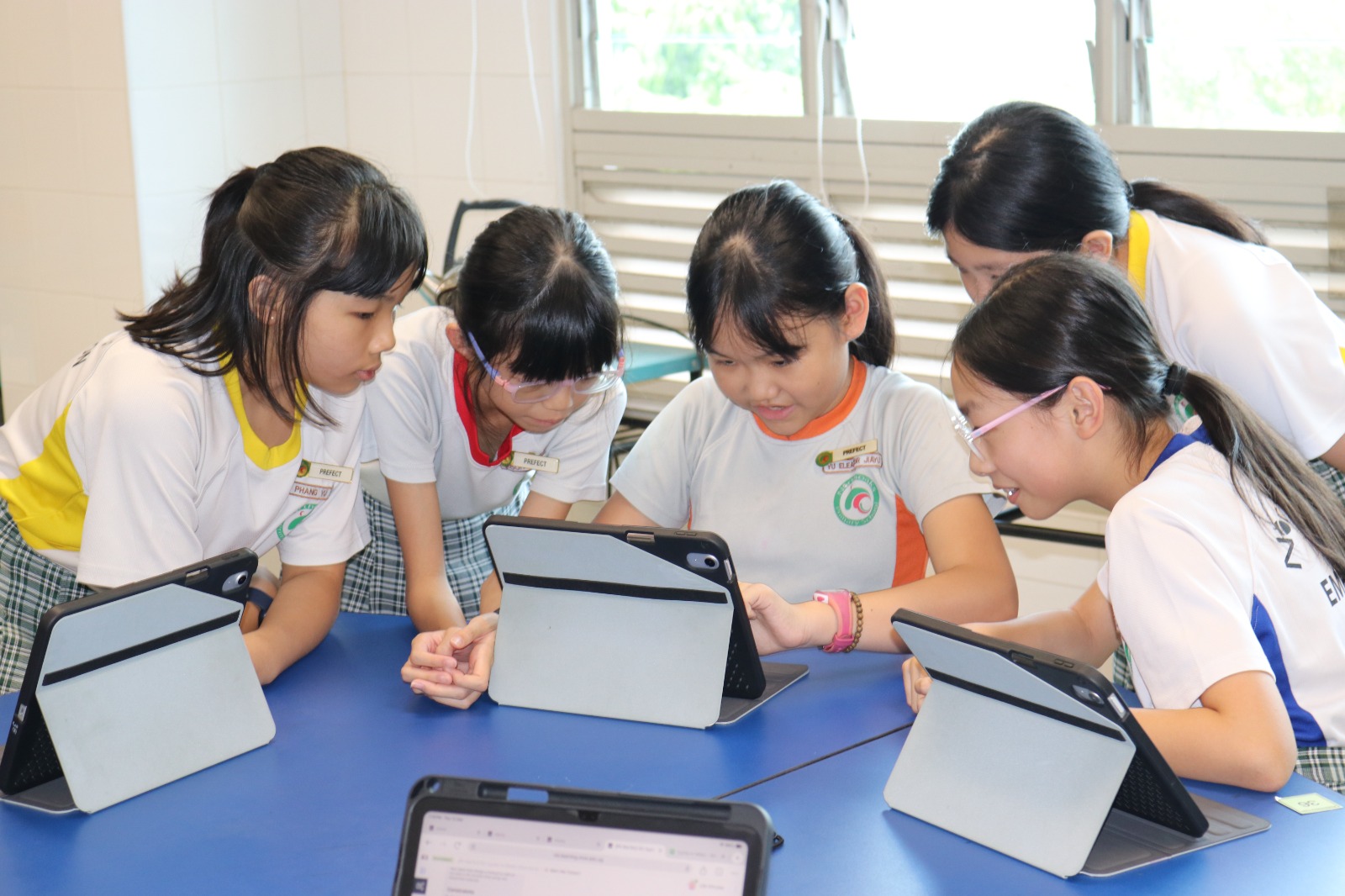
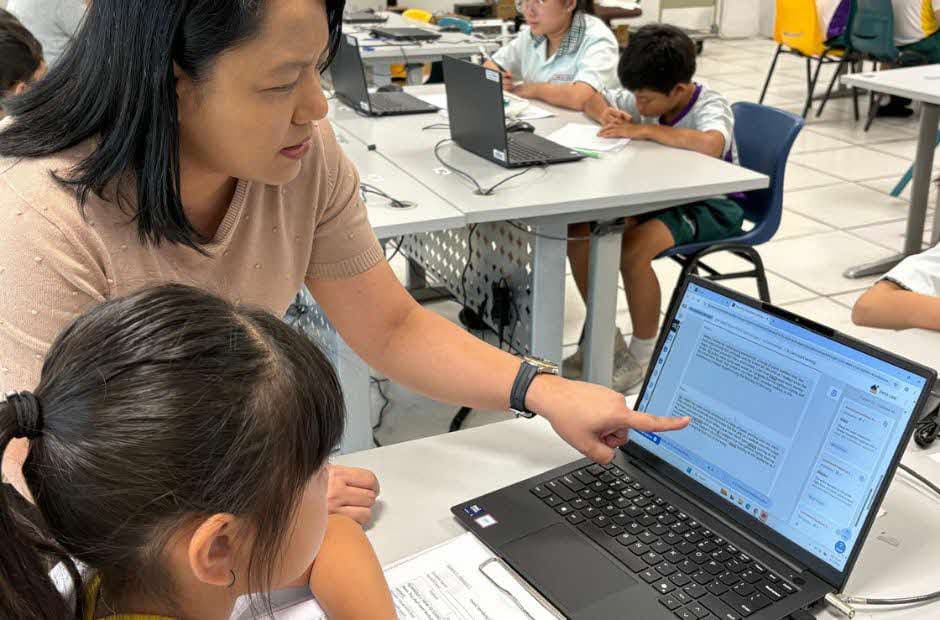
From research to investigation – students use SALiS to plan purposeful experiments.
Since many AI tools employ a chatbot-style interface, the school is intentional about teaching students to use AI-enabled tools within SLS, such as SALiS, in a discerning and purposeful manner. Teachers also help students recognise that AI-generated responses may not always be accurate. To encourage thoughtful use, teachers limit the number of interactions students have with the LEA, and design tasks where AI prompts further thinking rather than providing direct answers.
Additionally, students are guided to evaluate AI output critically, such as by cross-referencing with other sources to verify credibility.
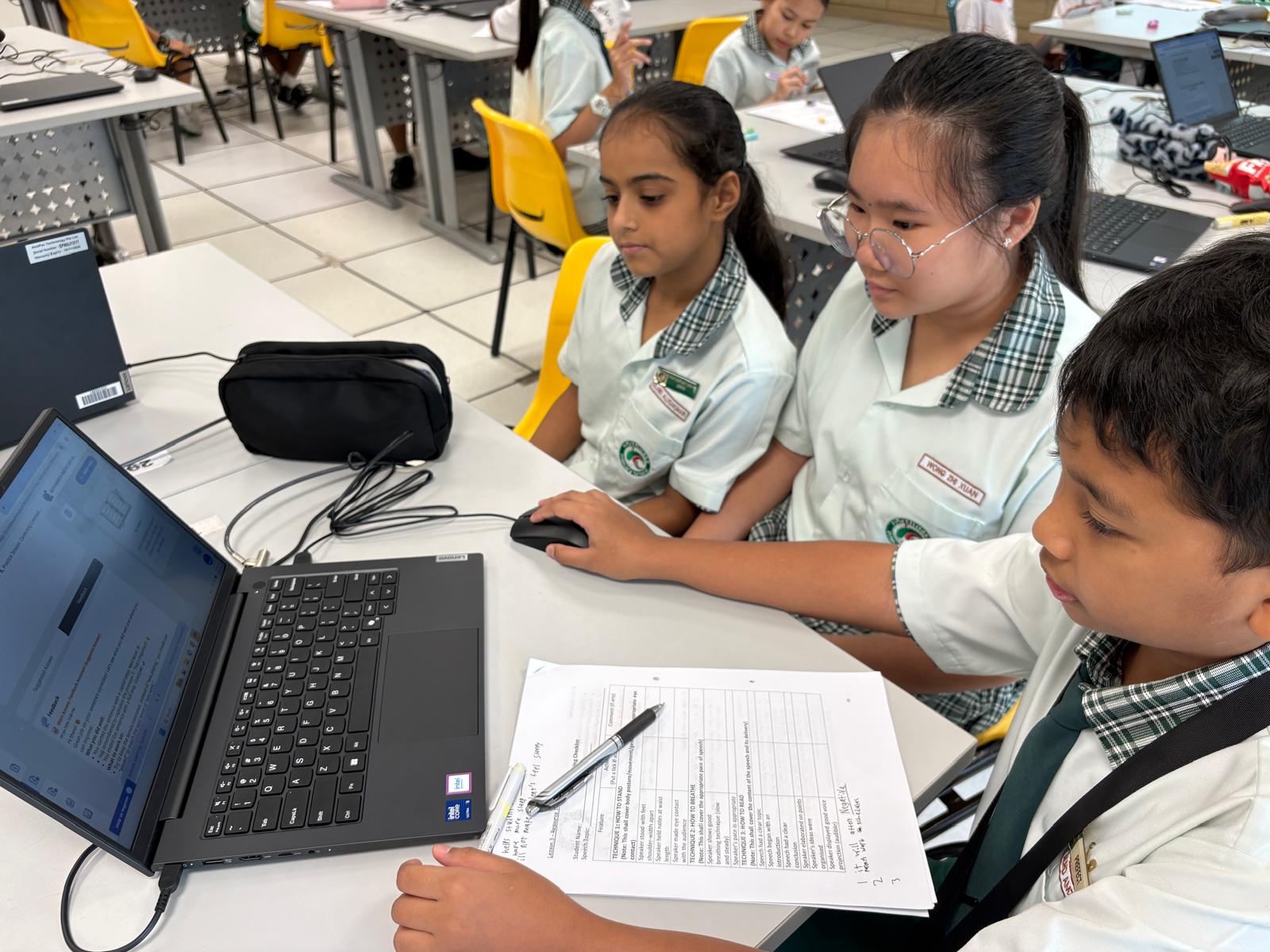
Students discuss AI-generated feedback on SLS to refine their group responses.
“It is important for students to develop strong habits of critical thinking and sound judgement especially as they move into secondary school, where AI-enabled tools may be used more independently and in more complex tasks,” says Vice-Principal Mr John Ow.
The school’s Cyber Wellness education also touches on the safe use of AI, reminding students not to share sensitive information. For upper primary students, part of the content also includes how to communicate respectfully when using SALiS.
“The AI tools in SLS have built-in safeguards, so that our students learn to use AI safely and responsibly in a controlled environment,” adds Ms Thuhaila.
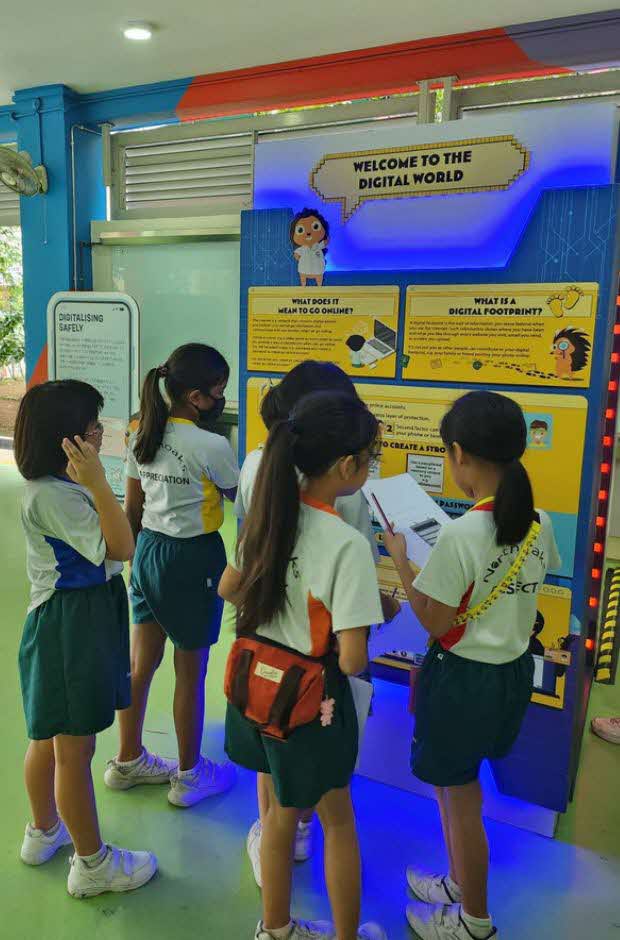
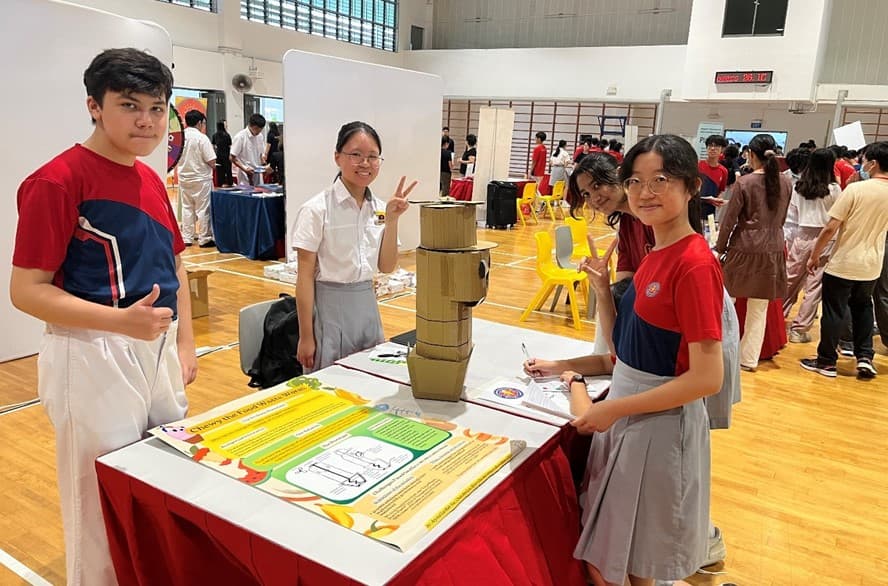
Students learn about safe and responsible online use at digital safety booths during recess.
AI ethics is an integral part of AI literacy at Yew Tee Primary School
Having joined the AI Singapore Primary School Pilot in 2023, Yew Tee Primary School is now in its third year of equipping students with AI literacy.
More than familiarising themselves with technical AI concepts through self-directed learning, students attend compulsory AI ethics lessons and log their reflections.
“We encourage students to reflect on the moral and social implications of AI in everyday life and ensure that their use of AI aligns with core values like respect and responsibility,” says Mdm Pauline Quek, Head of Department of ICT.
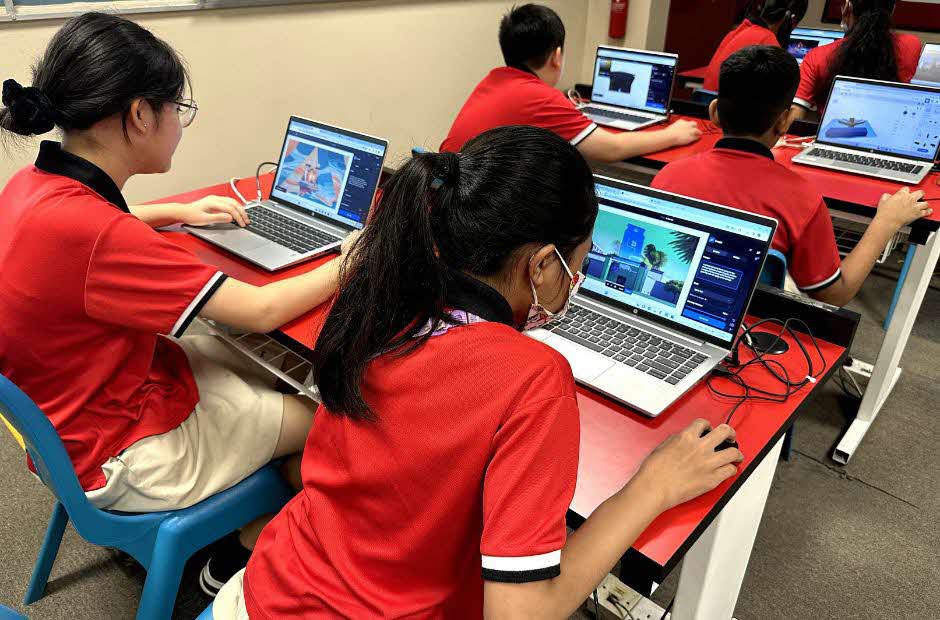
Students use AI tools during an art lesson, where they learn about creative ownership and responsible digital innovation.
“The use of AI in art also provides opportunities for discussion on ethical use, creative ownership and responsible innovation, supporting the development of e21CC competencies alongside artistic growth,” said Senior Teacher (Arts) Mr Tok Wei Yuan.
Through integrating AI and coding into the curriculum, the school continues to provide students with meaningful opportunities to apply their learning to authentic, real-world challenges.
As part of the school’s Applied Learning Programme (ALP), students progressively develop computational thinking from Primary 1 through to Primary 6. Learning journeys include age-appropriate coding experiences, design challenges and level-wide hackathons that build students’ confidence in problem-solving and innovation. The ALP culminates in a project where P5 and P6 students apply what they learnt to solve a real-world problem.
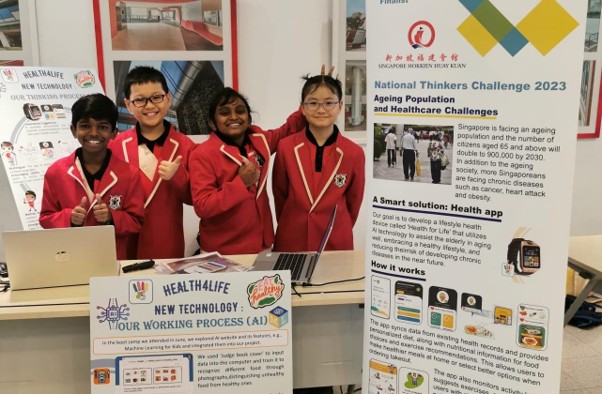
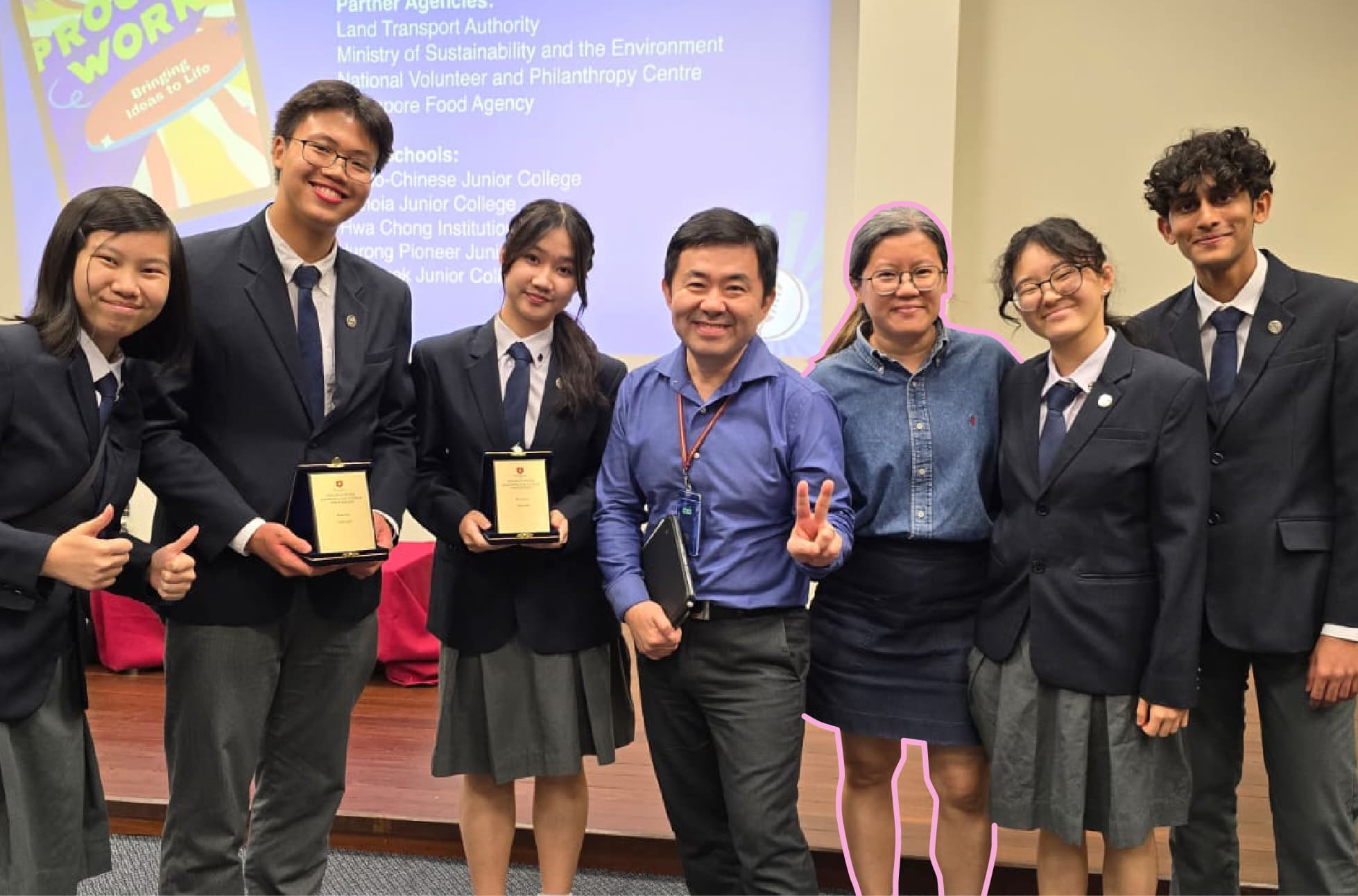
Students at the National Thinkers Challenge organised by the Singapore Hokkien Huay Kuan.
Back in 2023, a group of Primary 6 students used image-recognition principles to design Health4Life, an AI-powered health watch and companion application that helps seniors distinguish between healthier and less healthy meal options.
The P6 cohort this year applied the image-recognition principles and Design Thinking process to address an everyday challenge faced by elderly diners at hawker centres: returning and sorting used utensils. Guided by their teachers and mentors from the Singapore University of Technology and Design (SUTD)/Engineering Product Development, students designed and developed prototypes by training AI-powered cameras and programming robots using coloured cards that represent different types of utensils.
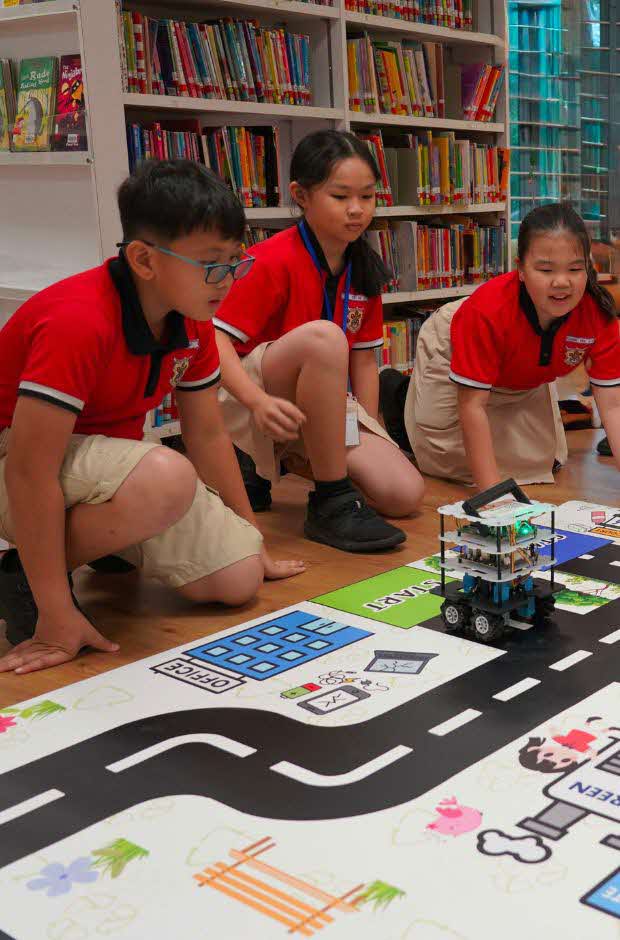
Under the guidance of teachers and SUTD mentors, Primary 5 students program a robot to solve real-world community challenges.
“While students may understand AI theoretically, they often struggle to visualise how machine learning (ML) translates into physical movement or social solutions,” says Mr Sim Bee Keat, subject head of ICT. “Through this experience, students see firsthand that the robot’s success depends on how accurately they have trained the machine learning model using their coloured cards. It reinforces the idea that AI relies on the data provided by humans.”
Students also gained a deeper understanding of how AI technologies can be applied to improve lives and address community needs, while strengthening their collaboration skills.
“Most importantly, these projects encourage students to think about how AI can be a force for good in the community. Students go from being passive consumers of AI to active, critical participants, learning that AI is only as good as the human judgment and data behind it,” adds Mr Sim.
Photos courtesy of: Northoaks Primary School and Yew Tee Primary School