



Across a guitar ensemble and an angklung group, four students share how performing arts CCAs shape the way they listen, adapt, and pull their own weight during performances.
Zi Ling and Maya learn it takes a team to carry a melody on the angklung
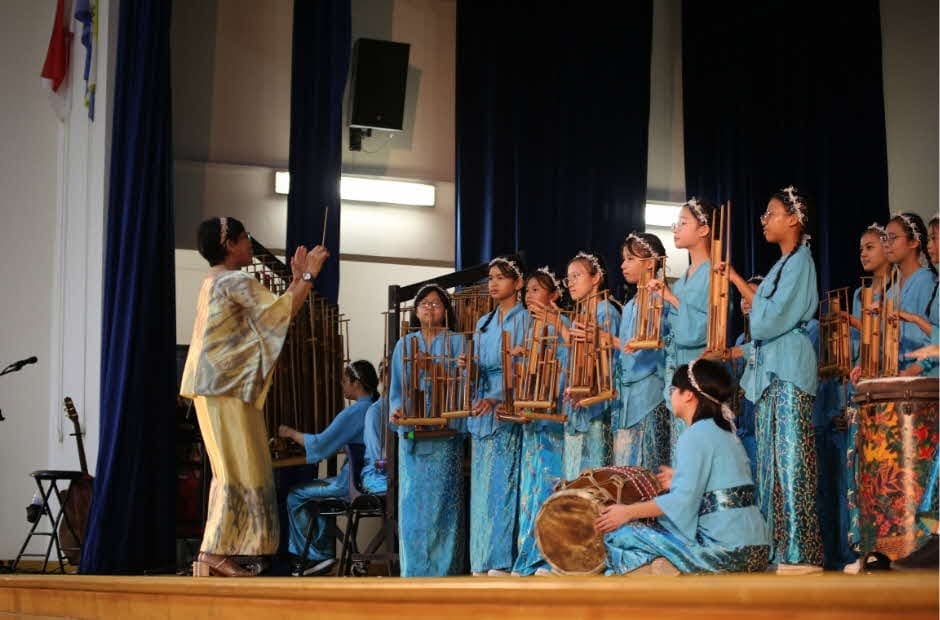
When St. Anthony’s Canossian Secondary School’s Angklung Ensemble plays, no one carries the melody alone.
“Everybody only controls one note,” says Secondary 4 student Hiew Zi Ling. “So, to play a song, we must listen to each other, watch the conductor, and shake our instruments at the right moment.”
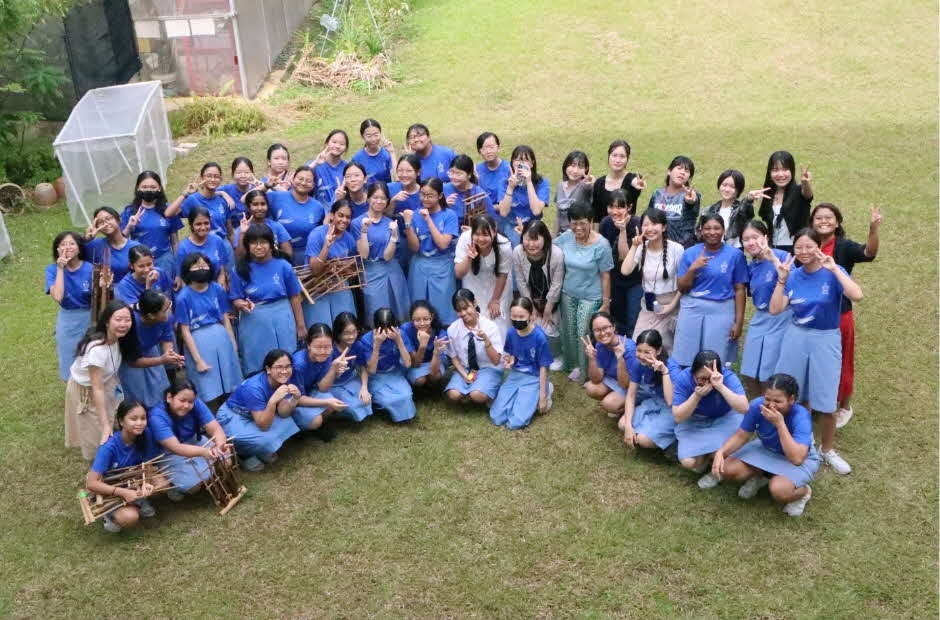
“Everybody only controls one note,” says Secondary 4 student Hiew Zi Ling. “So, to play a song, we must listen to each other, watch the conductor, and shake our instruments at the right moment.”
As a student leader, Zi Ling looks out for juniors who are still adjusting. “Everyone has their own way of learning,” she says. “And I’ve learnt to be patient and to encourage them.”
For Zi Ling, the Angklung Ensemble stood out when she was in Secondary 1 because she and a close friend did not share classes and wanted to join a CCA that gave them time to bond. “I stumbled across an angklung performance during the Singapore Youth Festival,” she says. “The bamboo instrument looked so unique, and I found it fascinating how such a simple instrument could make such clear, resonant sounds.”
With little to no musical background, she thought the angklung would be easy to learn at first. “Playing the angklung in an ensemble means keeping time, working as a team, and paying close attention to everyone else’s cues,” she says.
Zi Ling recalls a junior who cried during a practice after one of the student leaders corrected her for not swaying during a segment that required players to move as they played.
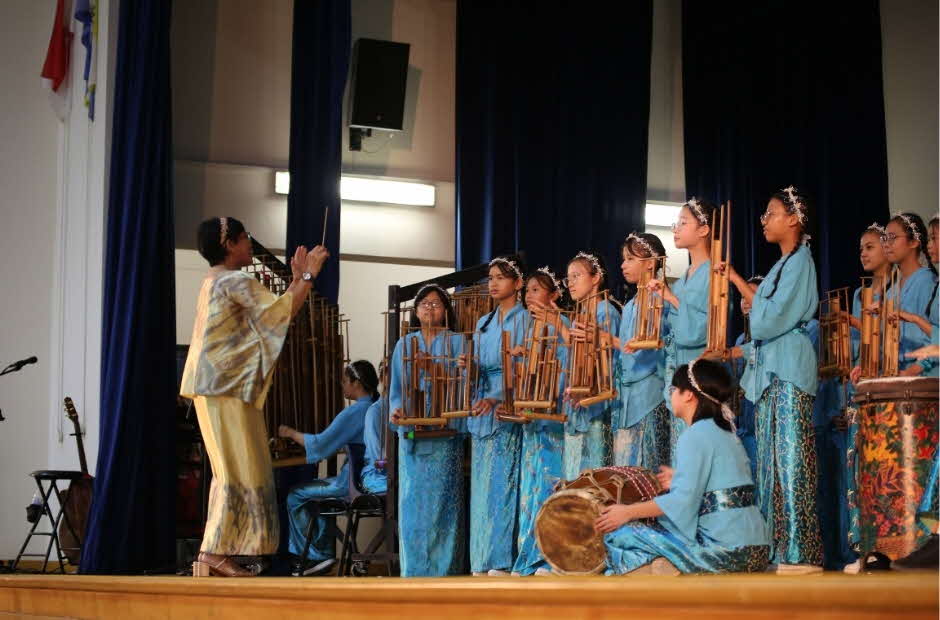
“We had the wrong approach,” she reflects. “I didn’t step in, and we didn’t pay enough attention to how she might be feeling.” Zi Ling did not do anything to reassure the junior at that time, but she and the student leaders later brainstormed different ways to respond if they faced a similar situation in the future. “It was a learning experience for me – now I know to be more sensitive towards other people.”
Another student, Maya Lynn Pereira, grew up with music at home. “My dad works as a DJ,” explains the Secondary 3 student, “so I grew up listening to all kinds of music.” When her cousin, who played angklung in another school, shared how much she enjoyed it, Maya decided to audition to join the CCA in Secondary 1.
At National Day Dinner at Fengshan Community Club held last year, the ensemble played to residents. “The crowd was cheering and singing along, and they were clapping really loudly,” recalls Maya.
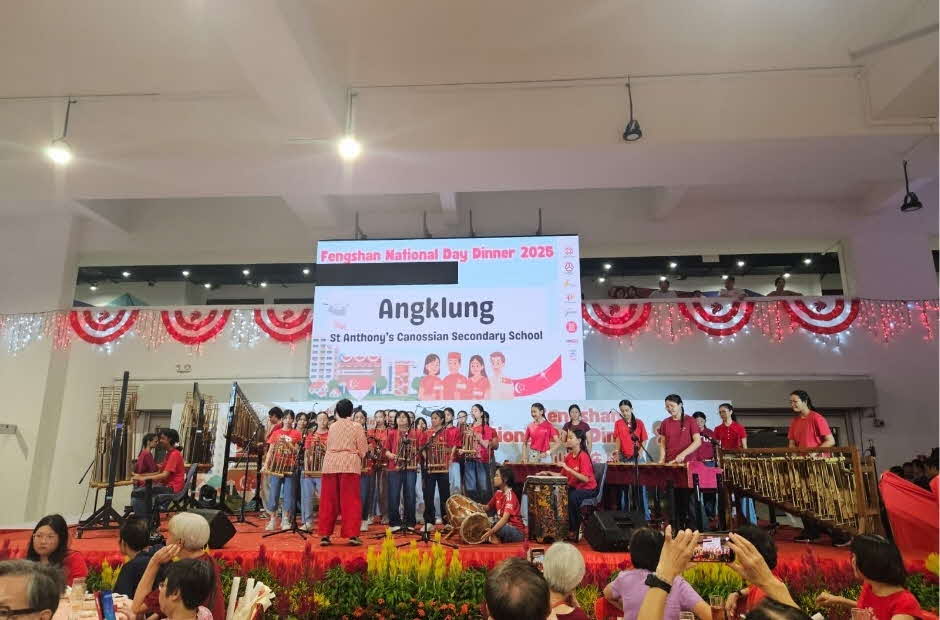
August 2025.
Ms Esther Boo, one of the teachers-in-charge saw how the performance drew the audience in. “When the students were playing ‘Rasa Sayang’, the whole audience sang along in unison,” she shares.
“It was heartwarming,” Maya adds.
What stayed with the adults, however, was not just how well the students performed – but how they carried themselves.
Fengshan CC’s community partner, Ms Cynthia Teo, noticed the same attentiveness offstage too. “The students were helpful and cooperative throughout the event working alongside our grassroots leaders – especially during the setup and shifting of equipment on and off stage,” she shares.
It was the same habit the students had built in rehearsals: watching one another closely, stepping in when someone needed help, and moving as a group.
Anslyn and Jannah learn to play for more than just themselves
Primary 6 student Anslyn Ong Le Qi and Primary 5 student Nur Jannah Binte Mohamed Ridwan joined Admiralty Primary’s Guitar Ensemble to make music with their friends.
When they were both in Primary 3, Anslyn was drawn to the guitar after learning piano, while Jannah grew curious after watching her cousin play the instrument. At the start, both focused on finger positions, rhythm, and holding the guitar comfortably.
As practices continued, playing in a band demanded more than individual effort. Moving forward together meant noticing where others were at and adjusting their learning pace as a group. “Sometimes a bandmate needs extra help from the teacher,” says Anslyn. “So, we give them time to catch up.”
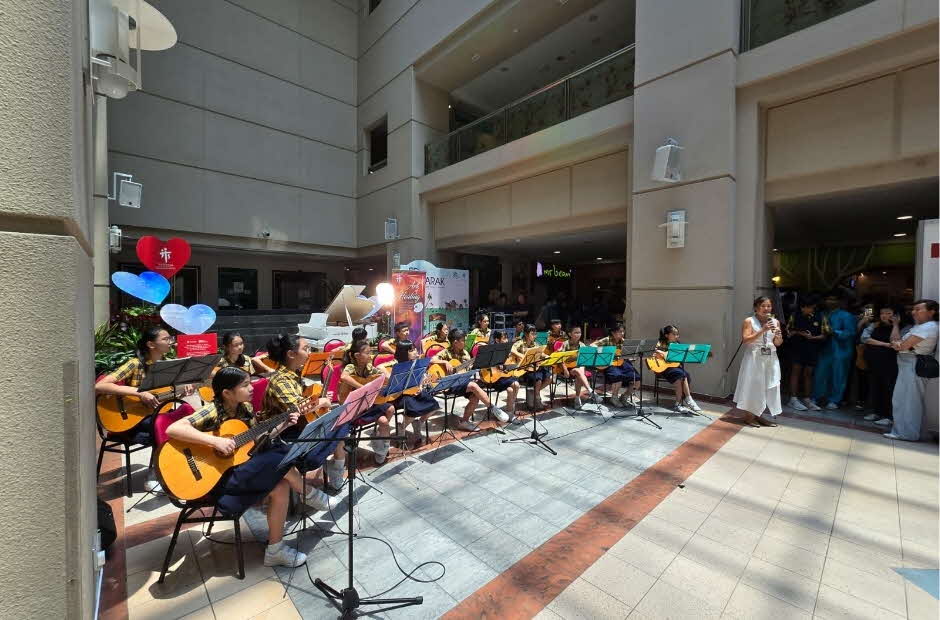
The students later performed for in-school cultural celebrations as well as outreach concerts in hospitals, including Tan Tock Seng Hospital and Woodlands Health.
Ms Tiong Lee Ti, a management executive at Woodlands Health who helped coordinate the performances, observed how the music shaped the space. “People stopped, and stayed to listened,” she shares. “It created a shared moment in the middle of an ordinary day.”
For many students, it was their first time performing in a public space. Jannah recalls: “It was scary because there were so many people, and it wasn’t a place we were used to,” she says. “It felt different from playing in school – like we were entering other people’s lives, even briefly.”
Others in the ensemble felt it too. That sense of sharing the space with strangers changed how Anslyn approached her playing. “When you’re playing in public, you think more about how it sounds because other people are sharing the space with you,” she says.
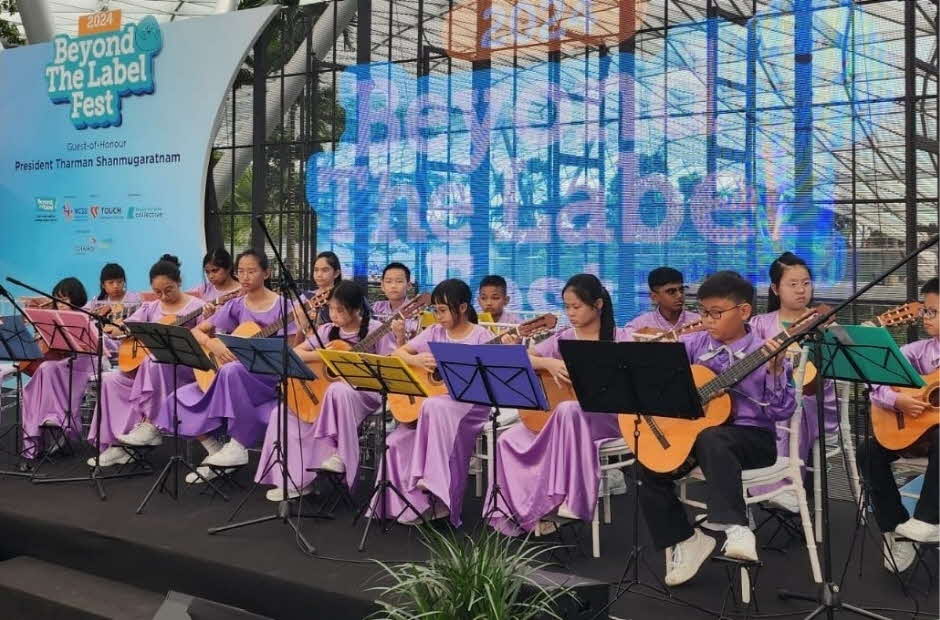
That awareness didn’t end with the performance. “She often comes home talking about the people who listened,” says Anslyn’s mother. “It’s not just about practising anymore; she puts more thought into how her music can positively affect others.”
Photos courtesy of: Admiralty Primary School and St. Anthony’s Canossian Secondary School