



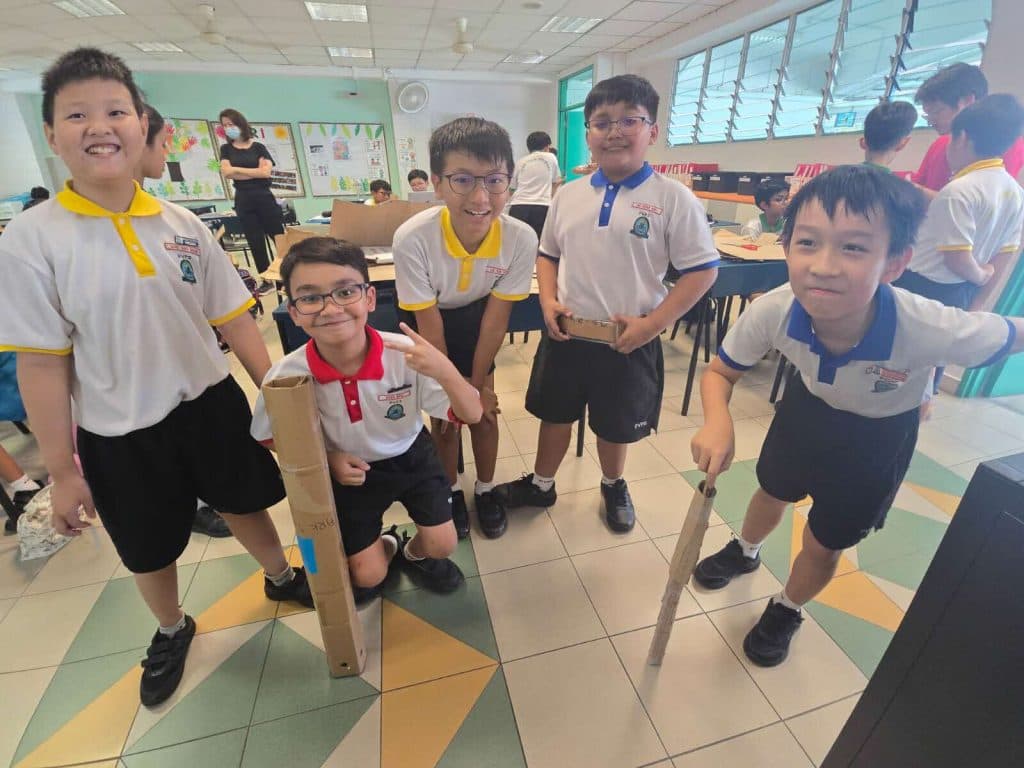
After countless tweaks and adjustments, Primary 5 student Mikhail Zheng Xi and his teammates finally heard what they had been hoping for. A sharp beep let out by the sensor on their walking stick prototype, about three meters away from a table. Around the classroom, cheers erupted.
For the Park View Primary School (PVPS) students, what began as a semester-long Applied Learning Programme (ALP), “One Love, Many Lives”, had become a lesson in empathy, teamwork and perseverance.
Their initial task, as part of their ALP, was simple: identify a real-world problem and create a tech-based solution. Then, a chat with an elderly cleaner in school had sparked their motivation to develop a solution to make life easier for seniors.
“We found out that some elderly people are visually impaired, and require a walking stick to move around. The uncle we spoke to also said it was sometimes difficult for him to move around, especially when going up the stairs,” Mikhail recalled. “That’s when my group got the idea to build a sensor stick that could help detect and alert the user of obstacles.”
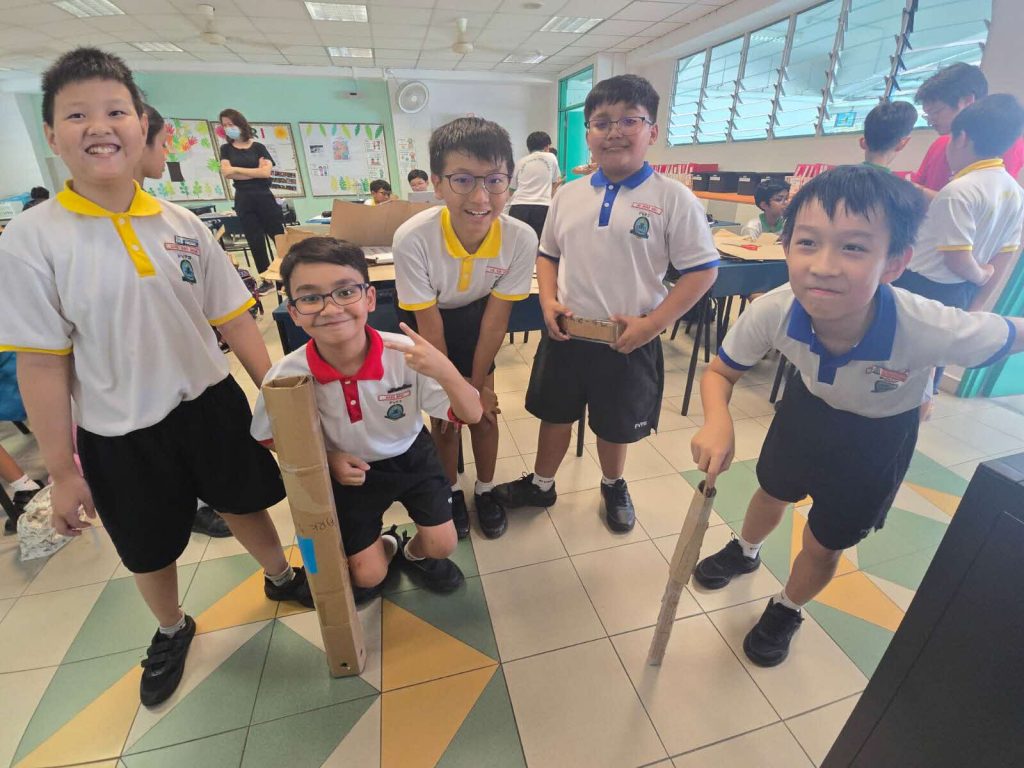
Primary 5 students test their walking stick prototypes
Over several weeks, the students worked tirelessly to refine their Microbit sensor stick for its intended use. When their prototype finally worked, Mikhail said they felt really proud. “It was nice to see someone benefit from what we made. It helped us understand the struggles that elderly people go through.”
Learning through experiences and heart work
That kind of empathy and understanding, said principal Ms Jamie Lie, is exactly what the school hopes to nurture through hands-on experiential learning.
“We have a vision – to build character, and champion service and excellence,” she elaborated. “At the end of our students’ six years here, we want them to have discovered their unique talents and strengths, and to use that knowledge to contribute meaningfully to society.”
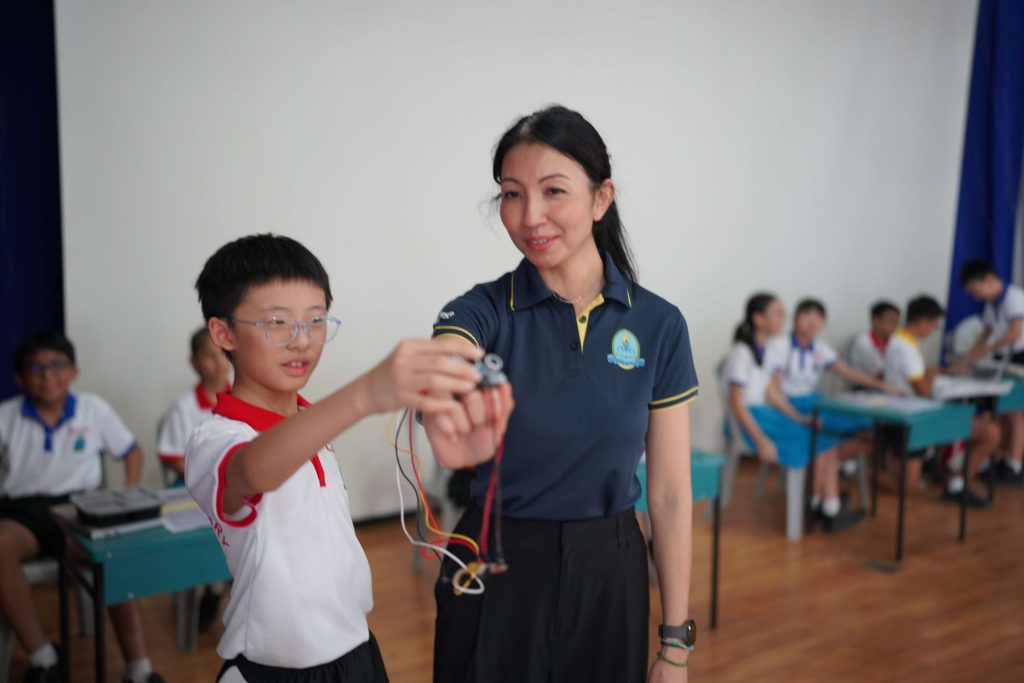
PVPS Principal Ms Jamie Lie tests out an assisted device at the P5 ALP during Learning Festival@PVPS
The philosophy that academic success goes hand-in-hand with heart work – nurturing empathy, purpose and a sense of community – is intentionally woven into various aspects of the school’s curriculum.
Each cohort has its own set of programmes designed to help students “level up” in character development. And teachers from different departments work closely to “kill many birds with one stone” and create integrated learning experiences for students, said Ms Lie.
“We want our students to see that learning doesn’t occur in silos,” she explains. “When we integrate subjects like Science, Math, English, Physical Education (PE) and Character and Citizenship Education (CCE), students start to see how what they learn can all come together.”
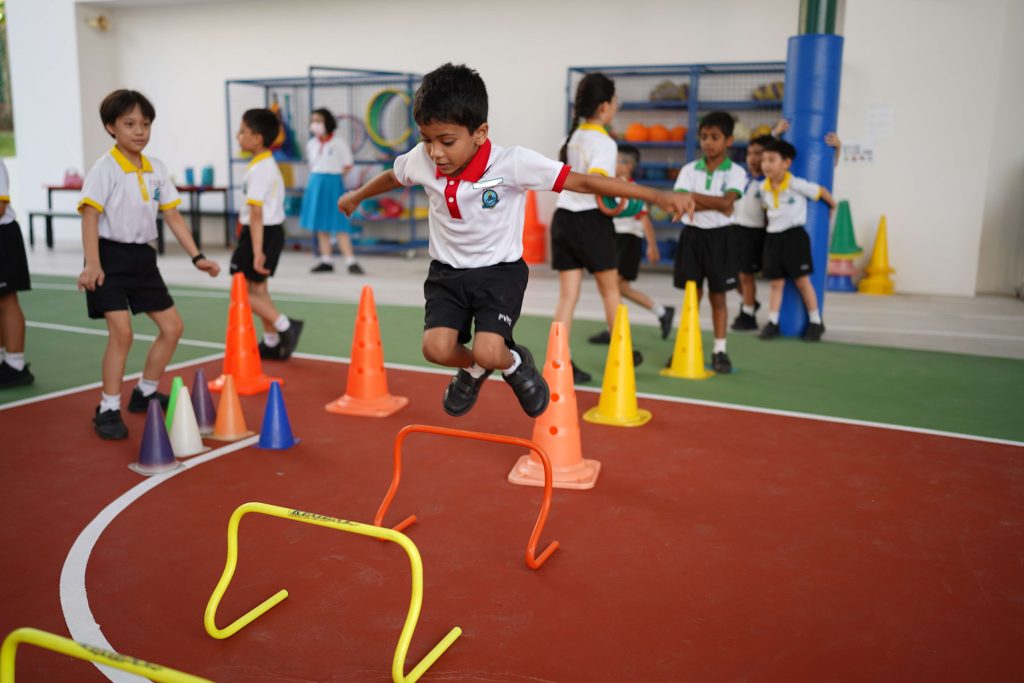
Recess games designed by the Primary 4 students help ease their Primary 1 peers into the school
For example, in a project titled “Recess@Play”, the Primary 4 students design recess games for their Primary 1 buddies, combining skills from PE, Math, English and Design Thinking. By interviewing the younger students on their play preferences and adapting the games to suit their needs, the older students practise problem-solving, empathy and leadership – all while helping their juniors settle into primary school life.
Another example is the “Adopt-a-Plot” for Primary 3 students, where they grow vegetables in the school garden. Initially developed as a Math and Science activity, it has evolved into a semester-long project that now includes English and financial literacy, allowing students a taste of entrepreneurship.
“We realised the activity could go so much further – why not have the students pitch a business idea and communicate the nutritional value of the vegetables persuasively? This way, they also pick up soft skills like communication, and how to use the right tone when convincing an audience,” shared Ms Lie.
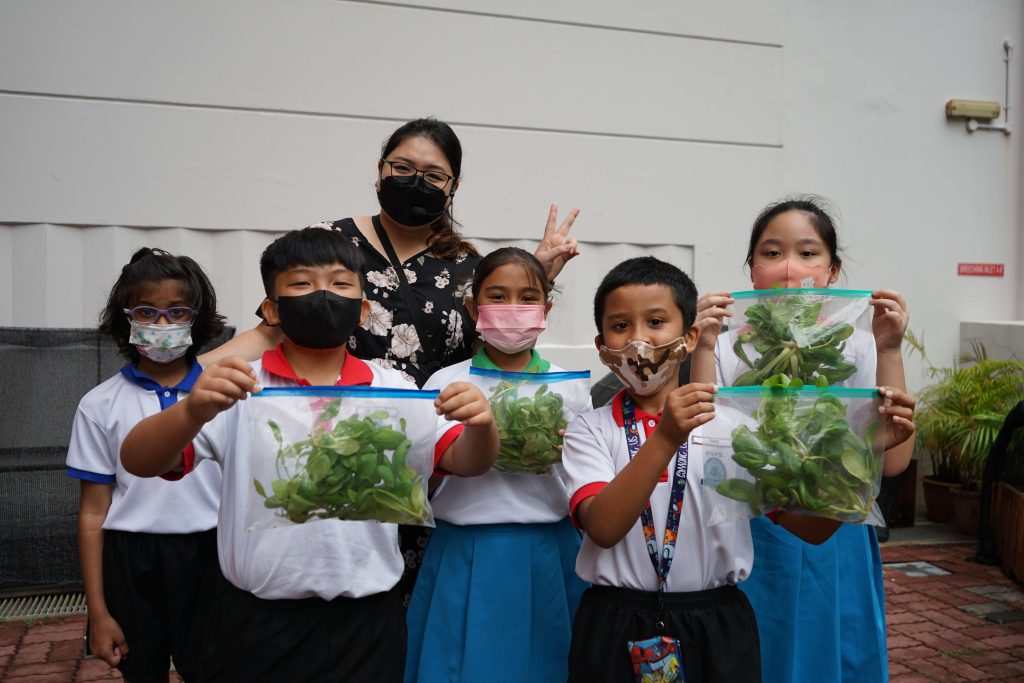
Primary 3 students grow, measure, and pitch the nutritional value of the vegetables, picking up skills in Science, Math, communication and entrepreneurship all at the same time
Learning beyond the classroom
By upper primary, students take their learning beyond the school gates. For instance, the “One Love, Many Lives” ALP helps Primary 5 students connect with the elderly, while encouraging them to apply technology with empathy and purpose.
Mrs June Law, Year Head at Park View Primary School, shared that the experience often opens students’ eyes to the needs of those around them, including their own grandparents. “Through this project, they begin to understand why the elders in their family might need more support. That shift in awareness is very meaningful – especially in a society like ours that’s ageing,” she said.
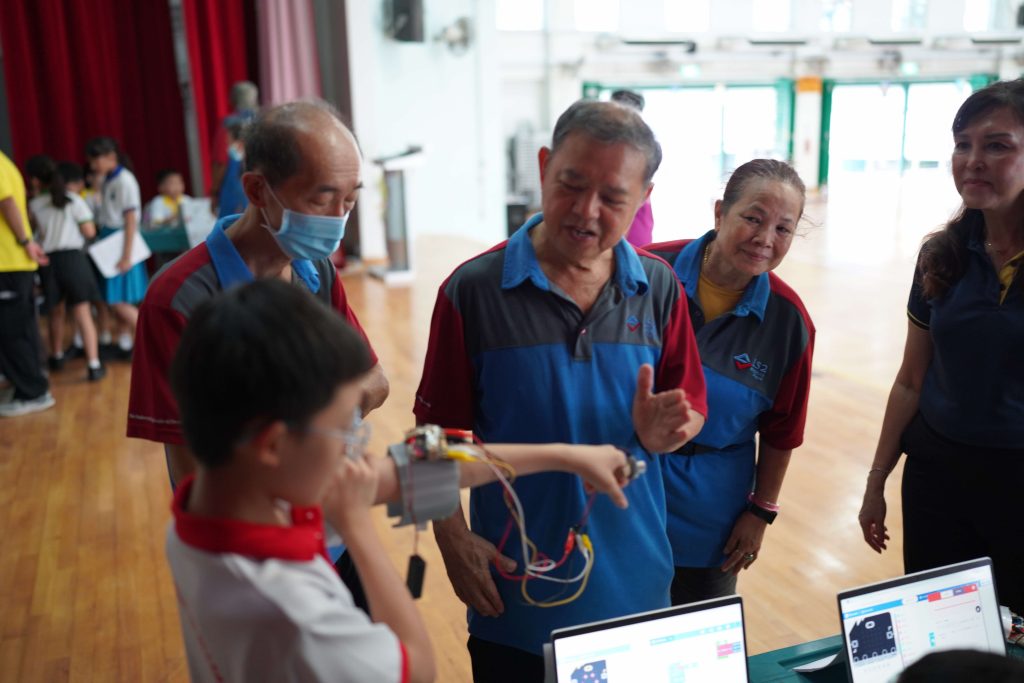
The school cleaners, who provided valuable inputs to help the students develop meaningful assistive solutions for the elder, check out a student’s project at the P5 ALP during Learning Festival@PVPS
Mrs Law added that it is heartening to see the students’ confidence grow. “When they presented their final product, they were genuinely proud that what they created could make a difference. Even when they faced challenges, they would come forward to ask for help and explain what wasn’t working. These are small but important signs of taking ownership in their project,” she said.
Parents as partners in learning
Ms Lie shared that that sense of shared purpose extends to the parents too – a reflection of the strong kampung spirit that runs through the Pasir Ris community.
Every year, when the school calls for parent volunteers, the response is overwhelming. For events like the school’s Olympics, where students take part in inter-house competitions, the school has even had to gently turn parents away.
“We had over 100 volunteers once. I had to say no to some because we didn’t have enough roles for everyone,” Ms Lie said.
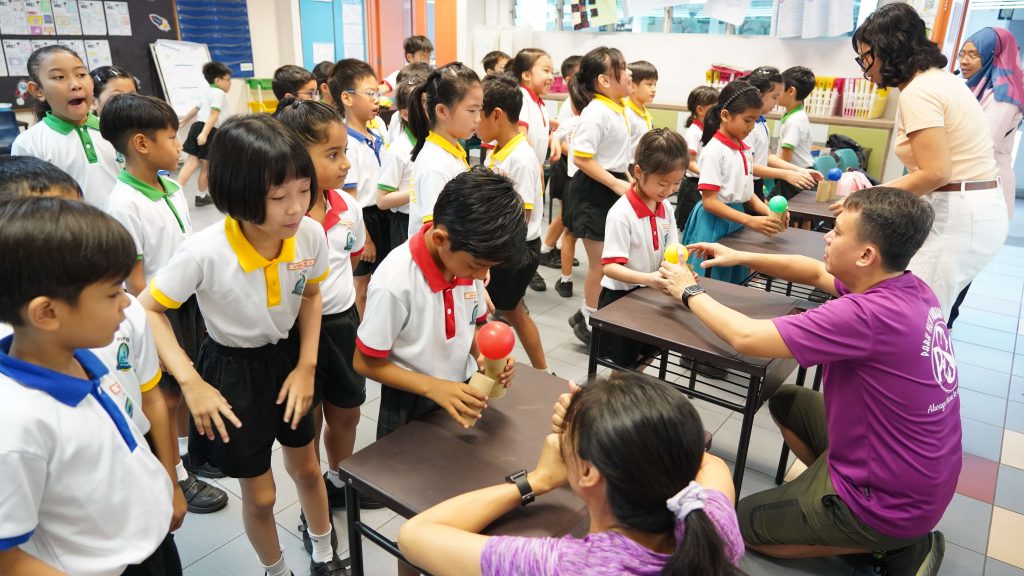
The kampung spirit in action: parent volunteers turn up in full force during the PVPS Olympics
Besides parent volunteers, the wider community also gets involved. Alumni and students from the nearby Tampines Meridian Junior College often volunteer as chaperones and mentors.
For Ms Lie, it all circles back to the school’s belief that education is not just about building academic skills, but shaping character.
“The students can be the strongest volleyball player or the best mathematician, but it has to be grounded in values. Children need to understand their strengths aren’t just for themselves – they’re for uplifting others too,” she said.
And for students like Mikhail who saw how his team’s invention could make a real difference to the people around him, those words have already taken root.
Photos courtesy of: Park View Primary School