





Fifteen hours. That’s Runner Kao’s daily screen time report. The social worker turned content creator admits that the number is staggering – it’s nearly all of his waking hours! But it’s hard to bring it down when his livelihood depends on it.
Parent influencers face a daunting task: Limit their kids’ screen time while building careers online. Mummy influencer Fizah Nizam often works on the go, with device stuck to her hand. When she tells her daughter to put her iPad down, she gets this reply: “You tell me, ‘don’t use the iPad’, but then why are you on the iPad?”
For influencer Tommy Wong, it’s also about reconciling his online career with values he wants to instil.
All three parents’ homes have become living labs for digital parenting, testing grounds for strategies every modern parent needs in the fight against extended screen times. The result? Hard-won wisdom from the front lines.
What failed: Don’t try this at home
1. Loose warnings and flexi boundaries
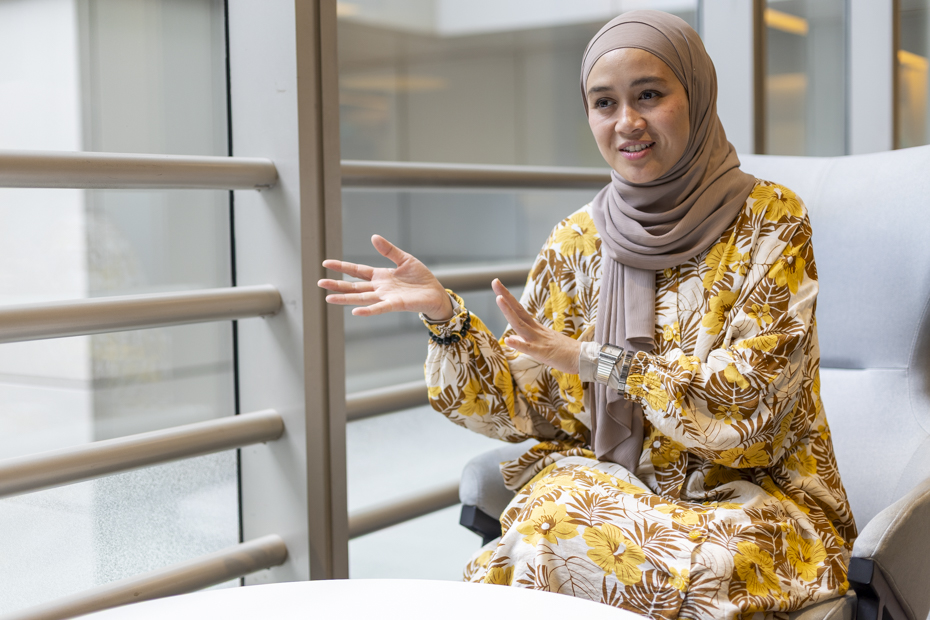
Like many well-meaning parents, Ms Fizah tried to set boundaries around screen use. But she was fuzzy about the number of hours she would allow, and she might also let devices babysit her kids when she was busy.
Tight deadlines characterise the content creator and film producer’s life. “I admit there were days when I was weak, and I’d tell the kids, ‘Sorry, I really need to get this done. Take the iPad,” says Ms Fizah.
She might throw in words of caution like “don’t play for too long”, which were ineffective. When she stepped in depended on her resolve for the day, which depended on her work schedule. Ms Fizah’s daughter, aged 10, would get “lost in her own world for hours” on the screen. And even when the device was switched off, Ms Fizah noticed her girl perpetually zoning out. “It was like she was floating in water. The after-effects linger.”
The wake-up call came – literally – from her daughter’s school. “I think Sahara has some issues with her eyesight,” the teacher said. After the school health screening a few weeks later, their fears were confirmed. “It shocked me. Her degree was really high!” Ms Fizah exclaims.
2. Just rinse and repeat for my second-born, right? Not quite.

“There’s macro-level parenting – you want to be a loving father, you want them to tell you their problems, and play with you. But on the micro-level, every kid is different. There’s no guidebook telling you what works best for each kid,” says Mr Tommy Wong, the guy who birthed cheeseburger joint NBCB while his wife was pregnant with their first boy.
To be consistent, Mr Wong imposed the same screen rules – and consequences – on both sons. At that time, he didn’t take into account their age gap of two years. “A punishment might be the same, but the outcome was different,” says Mr Wong; the older one could reason and negotiate; the younger boy just cried.
3. Rigid rules that were hard to police

How do you set limits in a limitless online world? Mr Kao Rong Sheng, better known as Runner Kao, struggled with this.
“I could say, only one hour for games, one hour for YouTube. But it’s very hard to keep track,” says Mr Kao, who might lose himself in his work and hours would just fly by. Even more challenging was controlling what his two boys, aged 13 and 11, consumed online. “It’s hard to restrict. The feed moves so fast. By the time we look at what they’re watching, they’ve already swiped through five videos.”
What works: Tried-and-tested strategies
1. Reframe what the device is for
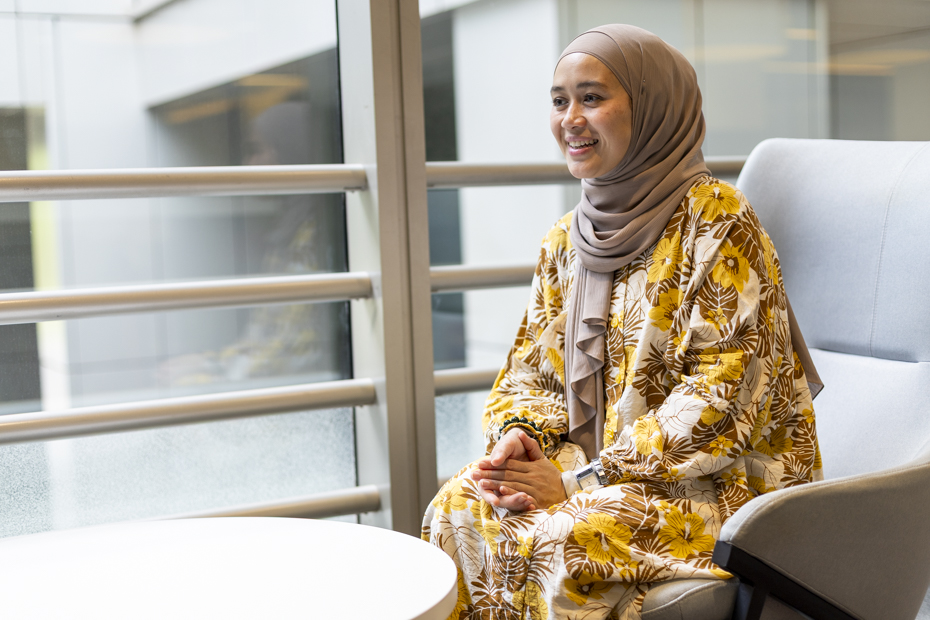
Ms Fizah decided to come up with clearer screen rules that her children could apply.
First, she observed how screens were affecting each child. Her eldest daughter gets absorbed in creative content but becomes irritable from watching loud, fast-moving visuals, while her son gravitated toward action content that requires monitoring.
What if she specified the use of the screens, where her daughter was to use the tablet for creative work, and her son was to use his to watch a countable number of pre-approved videos?
Once Ms Fizah introduced a purpose for their screens, the iPad was no longer just a babysitter. It was a tool for engagement.
For her artsy, craft-loving daughter, it was a canvas for her creativity and treasure trove of craft tutorials; she even designed a digital greeting card for her family to send during Hari Raya.
Meanwhile, her second-born son, who’s now nine, was obsessed with Godzilla and man-eating dinosaurs – “quite violent stuff”, says Ms Fizah with a laugh. So they redirected him – and the algorithm – from the gore to videos about palaeontology.
You don’t have to ban screens, notes Ms Fizah. Actively curate content to be meaningful to each child’s inclinations, to turn passive consumption into active, educational engagement that extends into the real world.
2. Teach decision-making skills, and own the consequences

One weekend, Mr Wong’s boys had just crossed their one-hour screen time limit. Mr Wong was about to turn off the nature documentary mid-plot, but his elder son pleaded, “The lion hasn’t eaten the deer yet.”
So, Mr Wong agreed on an extension. And once the onscreen lion had finished his meal, the kids happily turned over the screen. “We can choose to see it positively: They want to finish what they started. That’s something to be encouraged.”
Mr Wong shares his decision-making process so they understand what makes a valid reason and what doesn’t, and eventually learn to think for themselves. “At some point they’ll have access to all sorts of dopamine highs – social media, games… Will they know how to make good decisions without me? How are they going to manage themselves?”
“I want them to think critically about their choices,” Mr Wong explains. So he negotiates options with the older boy, and gently explains consequences to the younger one. By learning to weigh their options early, they will build their capacity for self-regulation, instead of relying on external controls.
3. Moderate your response and build trust

Knowing the ins and outs of social media, plus his own runaway screen time, Mr Kao finds it futile to monitor his sons’ device use 24/7. Rather, he focuses on building their relationship of love and open communication.
“I’m thankful they voluntarily share with me what they see online. Even the concerning content.” This has included questionable content that appear in their WhatsApp groups, that they could have consumed on the quiet, but they would instead raise them up to him and ask for his views.
He is careful about how he responds, not chiding nor punishing them for what appears on their screens. These are all learning opportunities, he says, to discuss controversial topics or steer them to healthier channels and content.
“I’d rather I watch the content with them, and know what they’re doing, so I can guide them,” says Mr Kao. To him, that trust, and willingness to engage with his children’s digital world, form the foundation for building healthy digital habits together.
.jpg&w=3840&q=75)
.jpg&w=3840&q=75)