



Art teachers guide students through creative work where uncertainty is part of the process. They know that feeling firsthand as artists themselves. But it is not often that we see their work being showcased and get a rare glimpse into their own creative processes.
So, Schoolbag popped by the 13th Biennial Art Teachers’ Exhibition, to speak to four teacher-artists whose works are being exhibited. This edition of the event required participating teachers, for the first time, to create new works in response to a theme instead of submitting existing pieces. This meant starting from scratch – testing ideas, experimenting with materials, and deciding what to keep, change or discard as the work developed. They reflect on what it means to sit with that uncertainty, and how the experience shapes the way they guide their students.
“Making art keeps me grounded as a teacher.”
Mdm Jessica Lai, Art Teacher, Peirce Secondary School
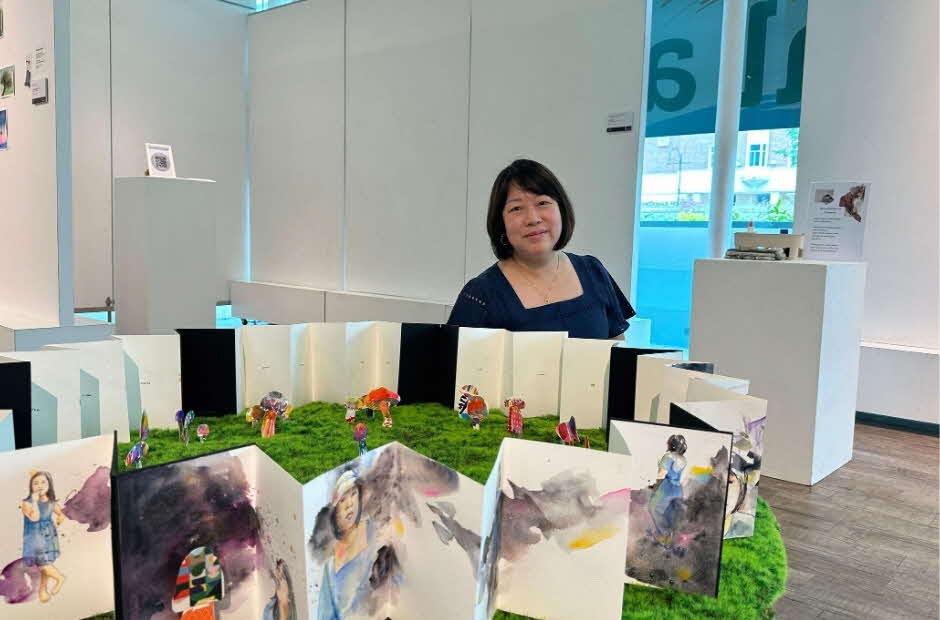
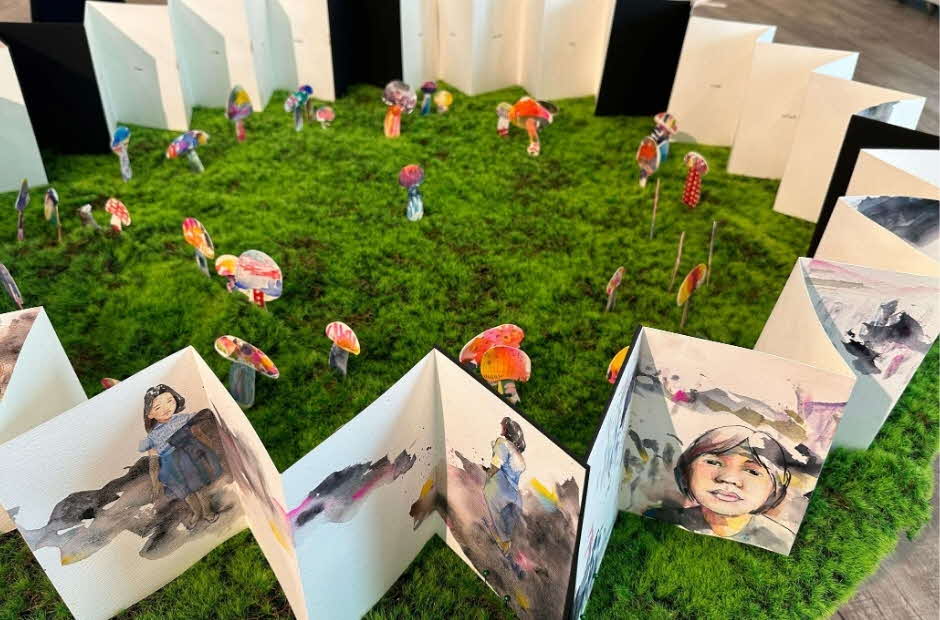
“My artwork is a watercolour piece made up of an accordion-style book that loops into a circle, with collaged mushrooms placed at the centre. It draws on Alice’s Adventures in Wonderland, especially the moment when Alice is asked, ‘Who are you?’ and must decide whether to take a bite of the mushroom. That in-between state – questioning identity and deciding whether to act – stayed with me. Working through that sense of being ‘in between’ made me more aware of how often students sit in that same space when they are learning.”
“When I make art for myself, the process feels intuitive. I move easily from one idea to the next.
Taking part in this exhibition made me slow down and look more closely at my own thinking. Starting a new artwork meant breaking ideas into smaller parts and paying attention to each decision as it unfolded.
Sitting with that uncertainty reminded me what learning feels like, and why it’s important for students to see that thinking doesn’t always come neatly or quickly – even if that means learning alongside my students.
When students understand that feeling unsure is part of learning, they become more willing to try, trust their ideas, and find their own way forward.”
“Intention comes before tools.”
Mr Tay Li Cheng, Art Teacher, Raffles Institution
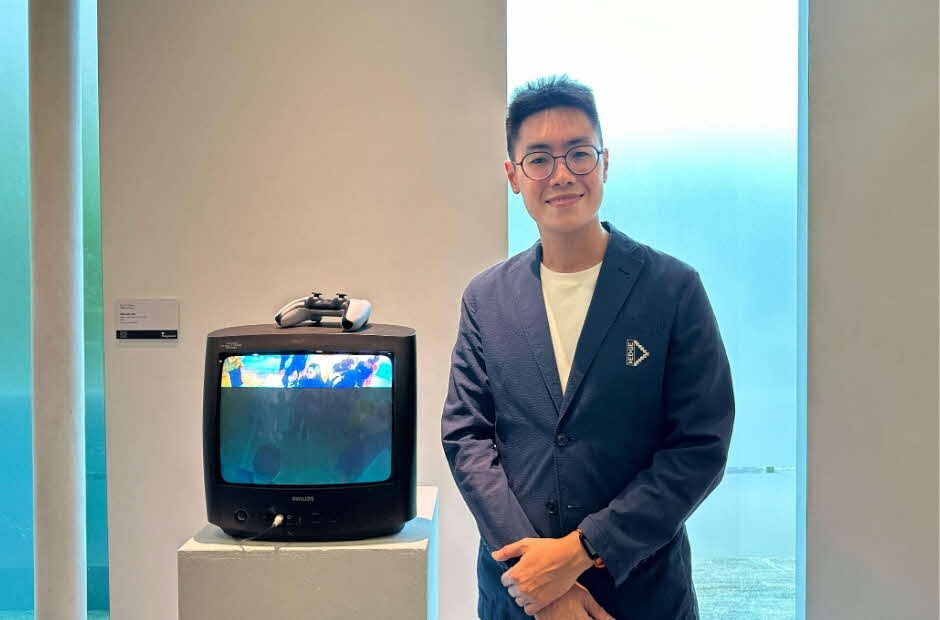
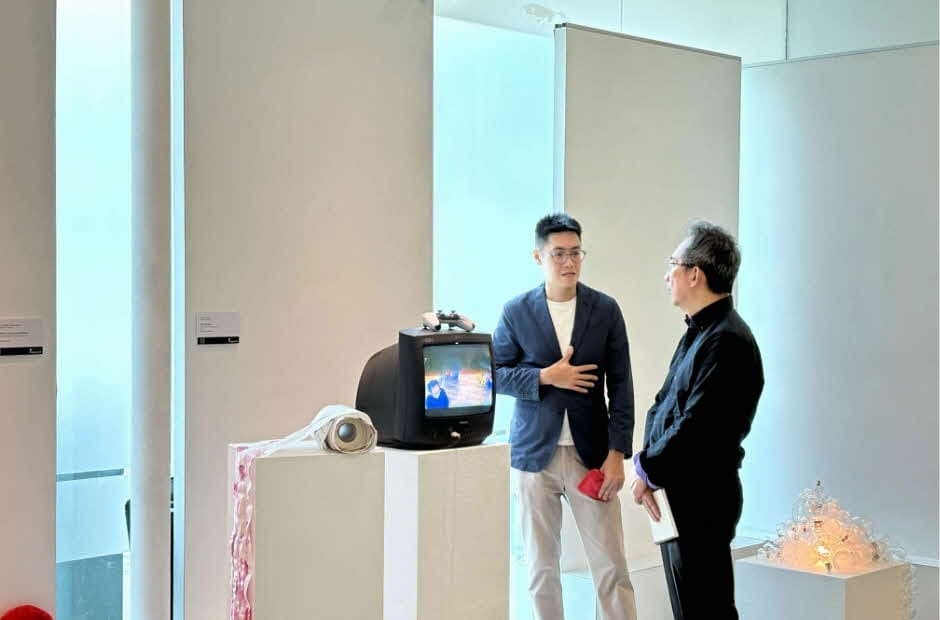
“My artwork features a vintage box-style television placed on a pedestal, with a CCTV camera projecting the viewer’s own image onto the screen. Using a game controller, the viewer can distort their own image on screen.
On the surface, the work looks simple, but it is meant to invite reflection and play. I hope viewers walk away asking questions about what they have just experienced, rather than only what they have seen. I want viewers to think about the illusion of control – they use the controller to manipulate the image on screen, but the image being altered is their own.”
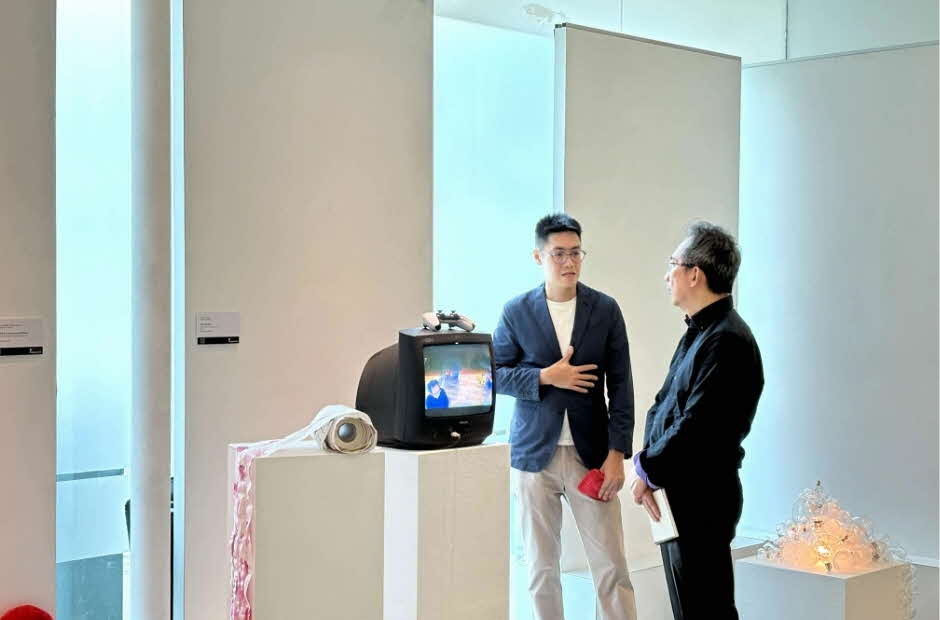
“That idea carries into how I think about arts education. In a time when tools can generate images quickly and easily, what matters most is intention – the ‘why’ behind the work.
In my lessons, I ask students to begin with a question to answer, instead of deciding straight away what form their artwork would take. Through reflection and documenting both discoveries and missteps, students learn to judge whether they have responded meaningfully to their original intention, instead of focusing only on how good the art looks.”
“Letting go of my intended outcomes changed how I see teaching.”
Ms Aini Azidah, Art Coordinator, Jurong Pioneer Junior College
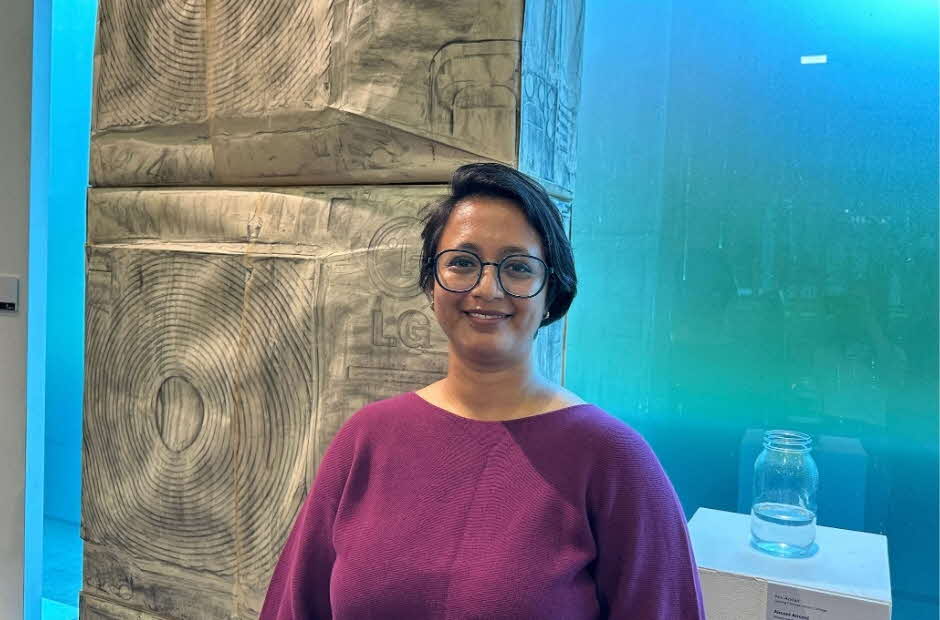
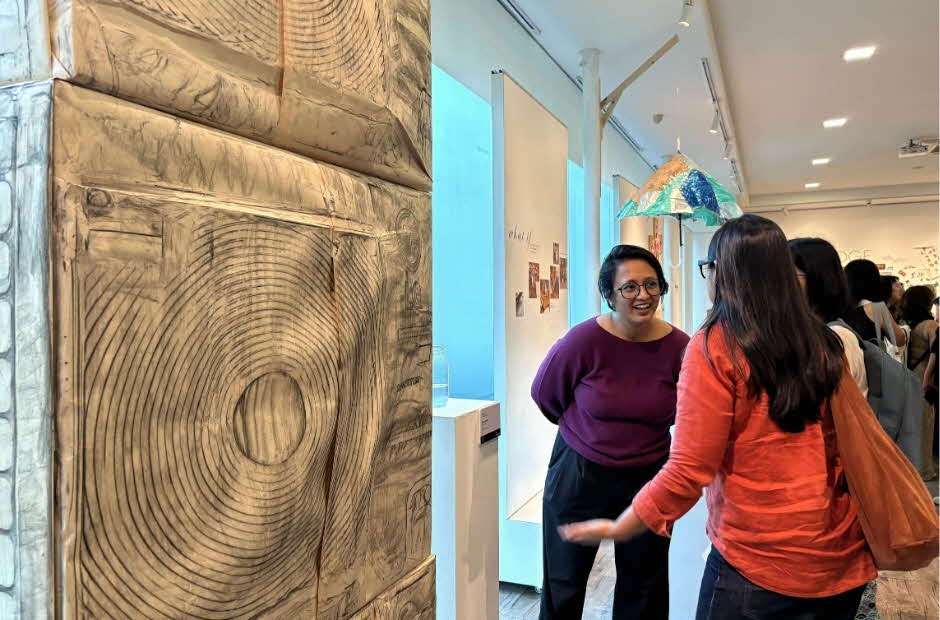
“My work is a sculptural piece made from textured charcoal rubbings of air-conditioning compressors on paper. I also collected condensation from air-conditioning units around my school and included it as part of the installation. I was drawn to air-conditioning because it’s everywhere in Singapore. So, I wanted to document it as best as I could.
I started out wanting to use the condensation as ‘paint’, but along the way I became more interested in the aircon unit’s form and texture. Allowing the work to take shape gradually felt different from how I usually work, because I’m used to knowing what I’m working towards from the start.”
“That hesitation made me more conscious of how I support students at the start of a task – giving them time to explore materials, reassuring them that uncertainty is part of the process, and focusing less on getting it ‘right’ immediately.
When students feel safe just starting, they are more willing to revise and keep going.”
“Structure gives students the confidence to play.”
Ms Sheila Chow, Art Teacher, Bendemeer Primary School
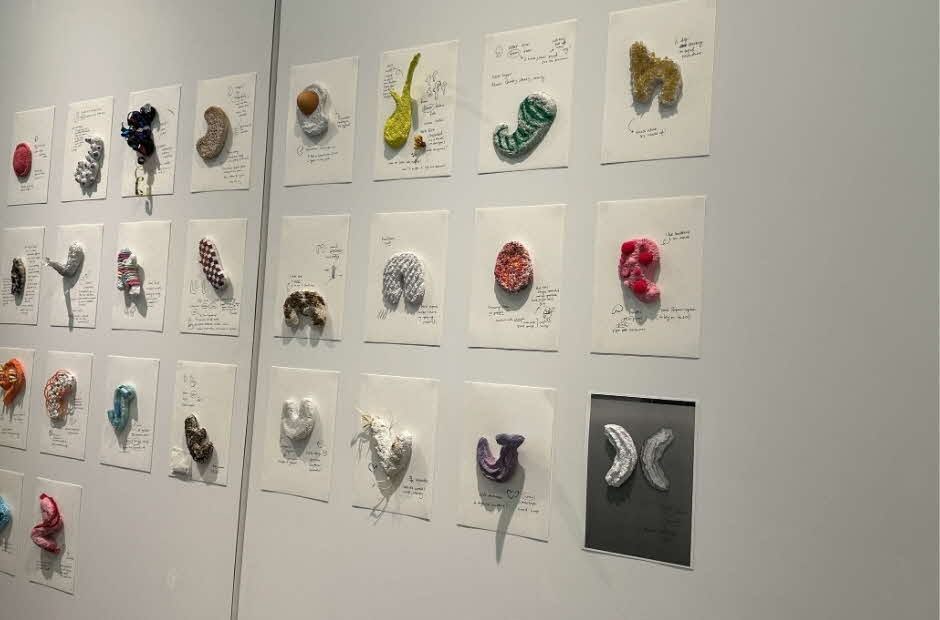
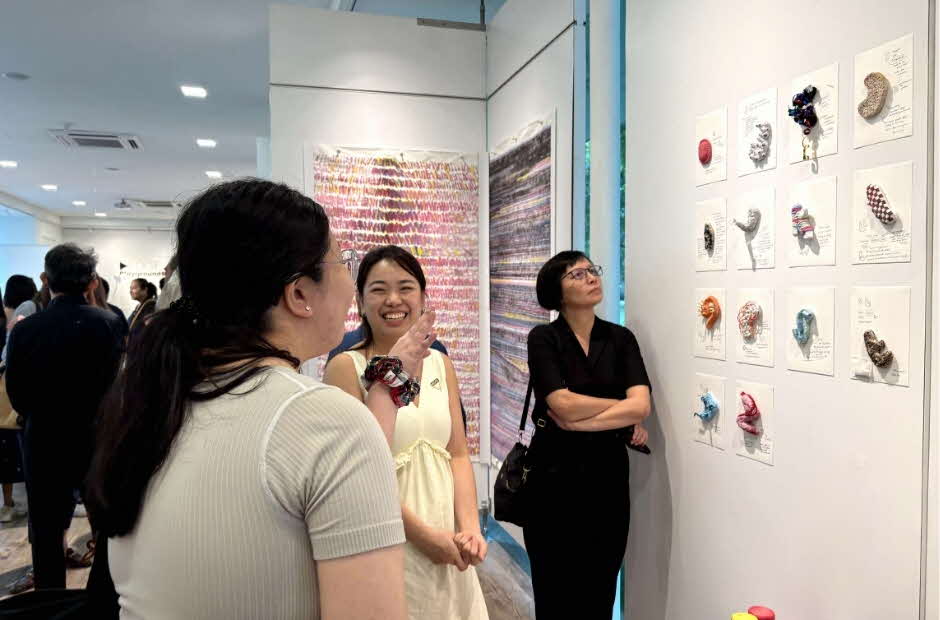
“My work began with papermaking. After attending a workshop, I wanted to try working with something other than flat sheets of paper. So, I started sculpting organic, bean-like forms from paper pulp. At first, it was exciting to have that freedom, but after a while I wasn’t sure what form the material should take next.
When I returned to the ‘beans’ and tried to develop the work further, I realised that I needed a system to move forward. I chose the alphabet as that system, using each letter to spark an idea for the paper pulp forms, such as A for ang ku kueh.”
“That experience sharpened how I think about teaching. It reminded me that guidelines and rubrics can function more like goalposts than rules – they give students a sense of direction without telling them how to get there. When students understand where the boundaries are, they feel more confident to explore, take risks, and experiment.
In that way, growth is not about removing structure but learning to work within it. Structure doesn’t always take away creativity; it can create a space for play.”
.jpg&w=3840&q=75)