





It started like any sibling argument: raised voices, bickering, then silence. But this quarrel wasn’t at home – it was centre stage at Hai Sing Catholic School’s school hall, where student Heather Chew leaned in, drawn into the “drama”.
“It felt like I was watching my own family in a play,” says Heather.
Drama that draws students in
That sense of recognition is exactly what educators are aiming for through the Family Education Interactive Drama Programme, jointly developed by MOE and Families for Life to support students’ learning in Character and Citizenship Education (CCE).
Schools such as Dunman Secondary, Juying Secondary and Hai Sing Catholic School are bringing Family Education to life through the Interactive Drama Programme, offered in both live and pre-recorded formats for lower secondary students.
In the live version, performers stage a play, pause at key moments, and invite students to step in with their views and responses. The pre-recorded version lets classes watch the performance on video, with students role-playing scenes and reimagining them in their own way.
In both formats, teachers connect the drama experience back to lessons, helping students reflect and apply the learning in meaningful ways.
From script to self-awareness
Students have warmed up to this “dramatic” new form of lesson facilitation.
Hai Sing Catholic School’s Esteebelle Chuan says, “Usually in school, we learn about the world or history, but not really how to communicate or understand each other. This way of learning was eye-opening.”
One session made Esteebelle think about not taking her parents for granted. “I now try to do small things for my parents – like making them a drink or checking in with them. It shows I care.”
Heather, her classmate, adds, “I realised that even small things I brush off during arguments can really hurt my family… I want to be kinder and more patient.”
In the classrooms that deploy the pre-recorded video format, the role-play segments in small groups were energising, especially for learners who thrive on active learning. Says student Sophia Truong from Dunman Secondary, “I’ve become more confident about speaking up at home. This programme taught me how to voice my thoughts respectfully.”
After watching the scene where a grandfather struggles with his new smartphone, schoolmate Justin Toh connected it to home. “I live with my grandmother, so patience matters when I teach her how to use new tech,” he says. “This programme showed me that what seems easy to us can be challenging for them.”
Why teach Family Education?
Today’s families navigate modern pressures – constant connectivity and social media, shifting work and care arrangements – that can strain time together and affect how we relate at home.
In Family Education lessons, students are encouraged to reflect on their relationships and interactions in the family setting. Students also learn the skills and dispositions to handle different stressors while staying anchored in a healthy regard for their family: seeing from another person’s perspective, communicating with care, and choosing small, actionable steps that strengthen bonds.
Families are made up of different members – from two-parent households to single-parent families, to those with grandparents as primary caregivers – but all play a vital role in shaping a child’s growth, notes Ms Jenny Chua, Lead Specialist for Guidance Branch at the Ministry of Education.
“A well-functioning family built on loving and healthy relationships provides an anchor for the growth and development of children, and enables them to make sense of their experiences in life,” she adds.
As Ms Chua puts it, students can value the family’s critical role in shaping who they become, honour the values that sustain family well-being, and, through everyday acts, contribute to stronger relationships – even as we acknowledge that no family is perfect.
CCE teachers give their thumbs-up

local scenarios.
CCE teachers themselves have been upbeat about the impact of this programme.
Because they are scripted and performed locally, teachers say recognition is immediate, which they then channel into learning. Mr Senthil Silvarajoo, HOD CCE at Juying Secondary recalls, “In one session, a student said, ‘This is happening in my house.’ For others, the scenes reminded them of what their parents or siblings might do – and that opens up conversations.”
“Even the quieter students spoke up,” says Mr Gabriel Sim, HOD CCE at Dunman Secondary. “We saw students reflecting more deeply and even discovering things about themselves.”
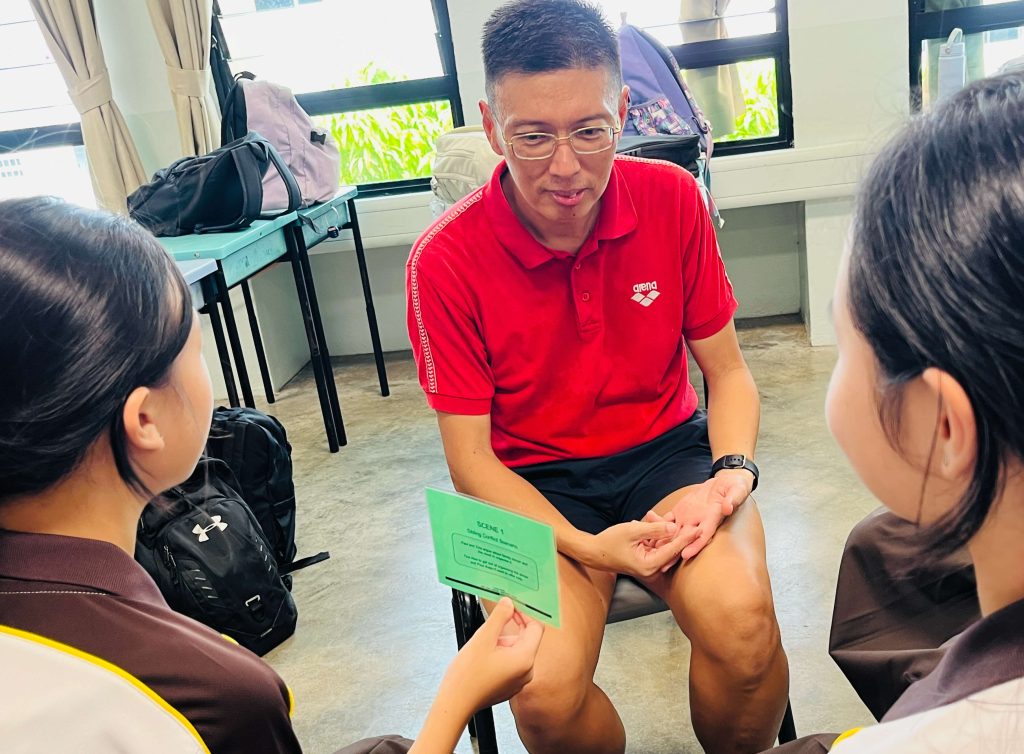
At Hai Sing Catholic School, HOD CCE Ms Michelle Tan aligns the Family Education Interactive Drama Programme with calendared events like Mother’s and Father’s Day and follows up with school-wide activities for students to express gratitude to significant adults in their lives.
She also facilitated a post-session reflection through the Google Classroom platform to give quieter students a voice, helping them to reflect and process the learning from the drama at their own pace.
“We don’t lecture students to be respectful,” explains Ms Tan. “We put them in familiar scenes – mother and son, siblings, grandparents – let them try their instinctive response, pause, and try again. It’s about communication across ages, seeing different perspectives, and saying ‘I’m not perfect – I can do better next time.’”
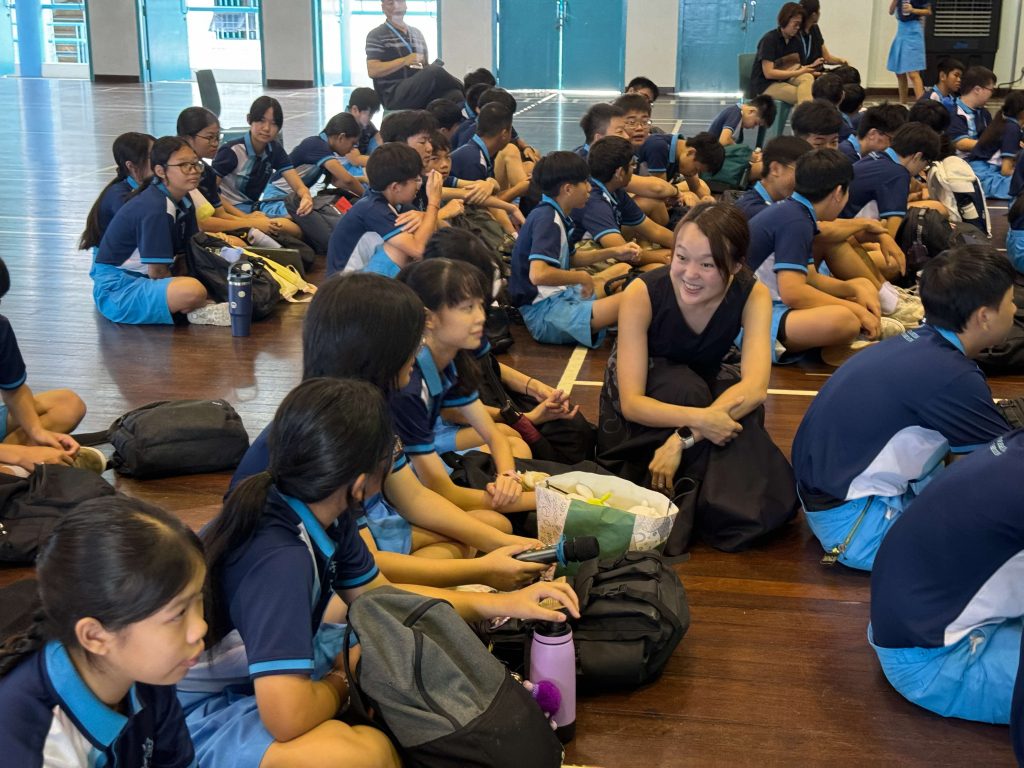
At Juying Secondary, Subject Head, CCE Ms Lek Hui Ying wraps the pre-recorded video format with a pre-lesson and a post-lesson package. The pre-lesson uses hot-seating to build perspective-taking so students slip into role-play faster on the day; the post-lesson gives space for more personal sharing and “other conflicts” to surface.
“We hope our approach gives students a coherent experience,” she elaborates. “They see that these (Family Education lessons) are not isolated messages but connected threads about empathy, relationships, and growth.”
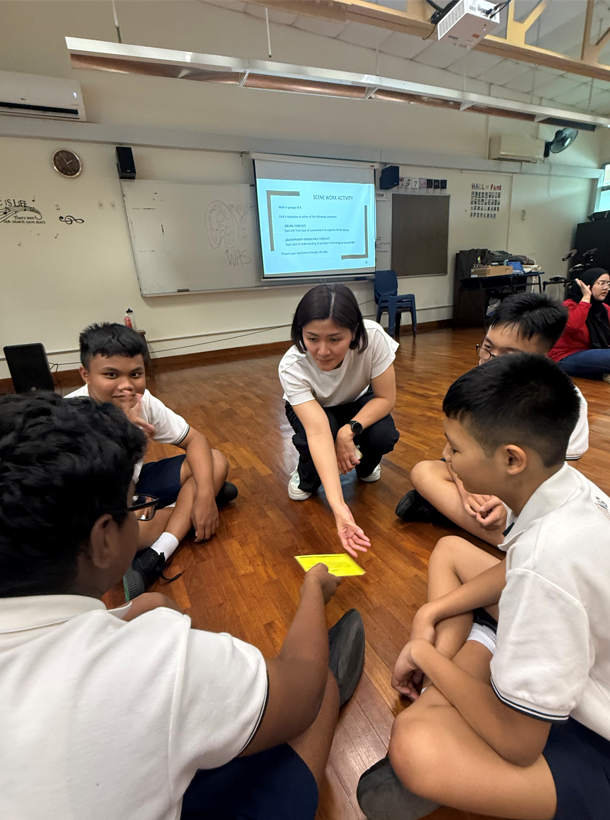
Through programme implementation resources, teachers are guided to support the students’ well-being through these sessions, remaining calm and offering additional emotional support if necessary. If needed, students may also seek the school counsellor’s support.
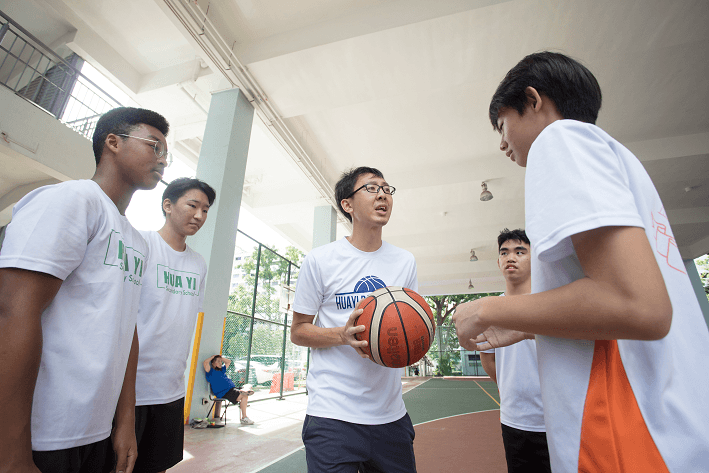
“The programme doesn’t offer idealistic solutions. It focuses on what’s doable – small words and actions students can actually apply,” says Dunman Secondary’s Mr Sim.
He also encourages students to “bring the conversation home” by asking themselves one question: “What is one message you would like to share with your parents?” This simple prompt, he believes, keeps the learning alive long after the “curtain falls”.

.jpg&w=3840&q=75)