



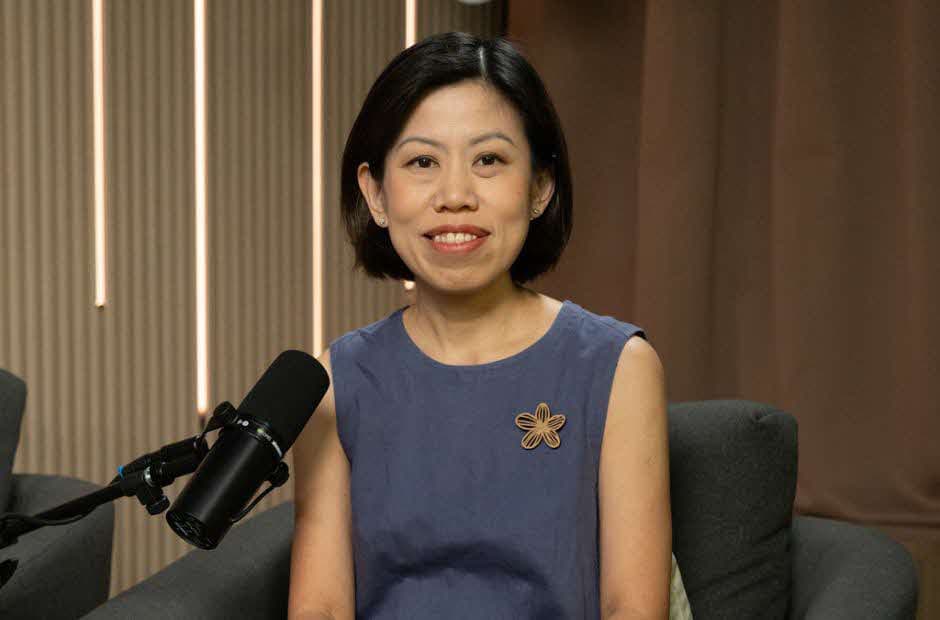
Having worked with students across the different levels – primary, secondary and junior college – Ms Winnie Tan is no stranger to dealing with cases of hurtful behaviours and bullying. The Principal of CHIJ St. Nicholas Girls' School says investigating these cases has gotten increasingly complex over the years due to a number of factors.
“Children are exposed to a lot more things, and they may have different perspectives on a topic,” elaborates Ms Tan. “Parents are also more involved in the education of their children, which is a positive thing.” This results in many different perspectives, be it from the alleged perpetrator or the victim, that the school has to consolidate and consider during investigations. “Bringing everyone together to see the different perspectives – that takes time.”
Children of different age ranges present different challenges for investigations
Unwelcome words or actions are not immediately labelled as bullying, as children, especially younger ones, may not be able to fully comprehend that what they are doing is causing hurt to others. That is why investigating intentions matter.
Ms Tan cites an example of a child who might want things to be done in a certain way. “Some children like people to follow their instructions and may unknowingly put someone else in an awkward or uncomfortable position where they feel hurt. We need to help them realise that their action or words have hurt someone else, and resolve and mend the relationship from there. Having said that, if investigations reveal that there was a clear intention to cause hurt from the onset, disciplinary actions could be carried out to help the child learn that his or her behaviour has consequences, so that they will think twice before doing the same thing again in future.”
Teenagers present a different set of challenges as they are more mature and their emotions are more complex. They may also be able to conceal intention, making it difficult for educators to determine if they really meant to hurt the other party – especially if there is no concrete evidence, such as physical assault.
Ms Tan recalls a case that couldn’t be resolved, because the perpetrator refused to admit that he/she was deliberately hurting the victim and there was no definitive evidence. “While the school and friends continued to support the victim, we were unable to come to a resolution. But years after the students graduated, the perpetrator confessed to the teacher during a gathering he/she was not ready to admit to their hurtful actions then, and that he/she felt very bad to have caused so much pain for the teacher and the other student.”
Each reported case of hurtful behaviour or bullying presents its own set of challenges for the educators and staff who are involved in investigating it. Thus, investigation time differs with the complexity of the case.
Why are both disciplinary and restorative practices important?
In cases where hurtful behaviours such as physical violence and name-calling are involved, Ms Tan makes it clear that the safety of the child is always the first priority. “There is no good reason for anyone to engage in any kind of physical violence. Safety plans and structures, such as time-outs, are in place to separate the involved parties, to let them have a cooling-off period. This gives them the time and space so teachers can work with the separate parties to process what has happened as part of the investigation process,” she says.
Ms Tan reiterates that disciplinary consequences are not meant so much as a punishment, but to help the students learn that actions have consequences. “Consequences such as having certain privileges taken away or being in time-out makes them aware of boundaries and rules,” she says. “Counselling and other forms of support always accompany these disciplinary measures, so it is an educative process. We work on the belief that students can learn from their mistakes and grow.”
Beyond disciplinary measures, Ms Tan emphasises that what is more crucial is to help repair the relationship as much as possible. “Building and maintaining relationships is an important life skill,” she says. “We want to cultivate a kinder society, where we always consider the feelings of others. And that can only happen when you have a relationship with a person.”
Of course, there are cases where the involved parties are not ready to reconciliate, and we do not force it, as this may worsen any tensions already present. “In such cases, the school makes it clear that students have to remain respectful when interacting with each other, while we continue to work with parents to help the involved parties process their emotions and consequences of their actions,” adds Ms Tan.
How parents can partner schools in cases of hurtful behaviour or bullying
Ms Tan shares that she has come across many cases where the parents are very empathetic, and that in turn played a big part in the restorative part of the process in tackling hurtful behaviours and bullying.
“Even though their child is the one being hurt, they show care and concern for the other child. It is great role modelling for their own children to see that, even though I'm the one being hurt – and I acknowledge and care about my own emotions – I still have the room and space to show the care and the concern for the person who hurt me. It helps their child learn to be that bigger person. And it is not easy,” elaborates Ms Tan.
Parents are understandably anxious when cases of hurtful behaviours or bullying happen to their child. They may feel like investigations are taking too long and take to other platforms, such as social media, to pressure the school to pay more immediate attention to the matter.
“It is understandable,” says Ms Tan, “but this takes the time away from allowing schools to focus on the children as well as work together with the parents, to managing public responses. Unless there is immediate danger, schools take time to work with parents towards longer-term resolutions, rather than offering quick fixes that may not get to the root of the matter.”
The school should be the first point of contact when such incidents need to be reported, and schools have processes in place to keep parents informed. When cases make it out into the public space based on one perspective, and there is public judgment from people who are not involved and do not have the full picture, it prevents the school from being that safe space for students to learn from their mistakes and grow.
Ultimately, there needs to be a common understanding as a society that the much bigger goal we want to work towards is to create a kinder, more compassionate society. “The graciousness needs to come from not just the school, the parents, but the whole community too,” adds Ms Tan.
Watch Canteen Chats Episode 6: When your child says, I was bullied, where Ms Tan speaks with Lion Mums actress, Lina Ng, as well as a counsellor and a father from Centre for Fathering, to explore responses to such difficult situations.
Also read: